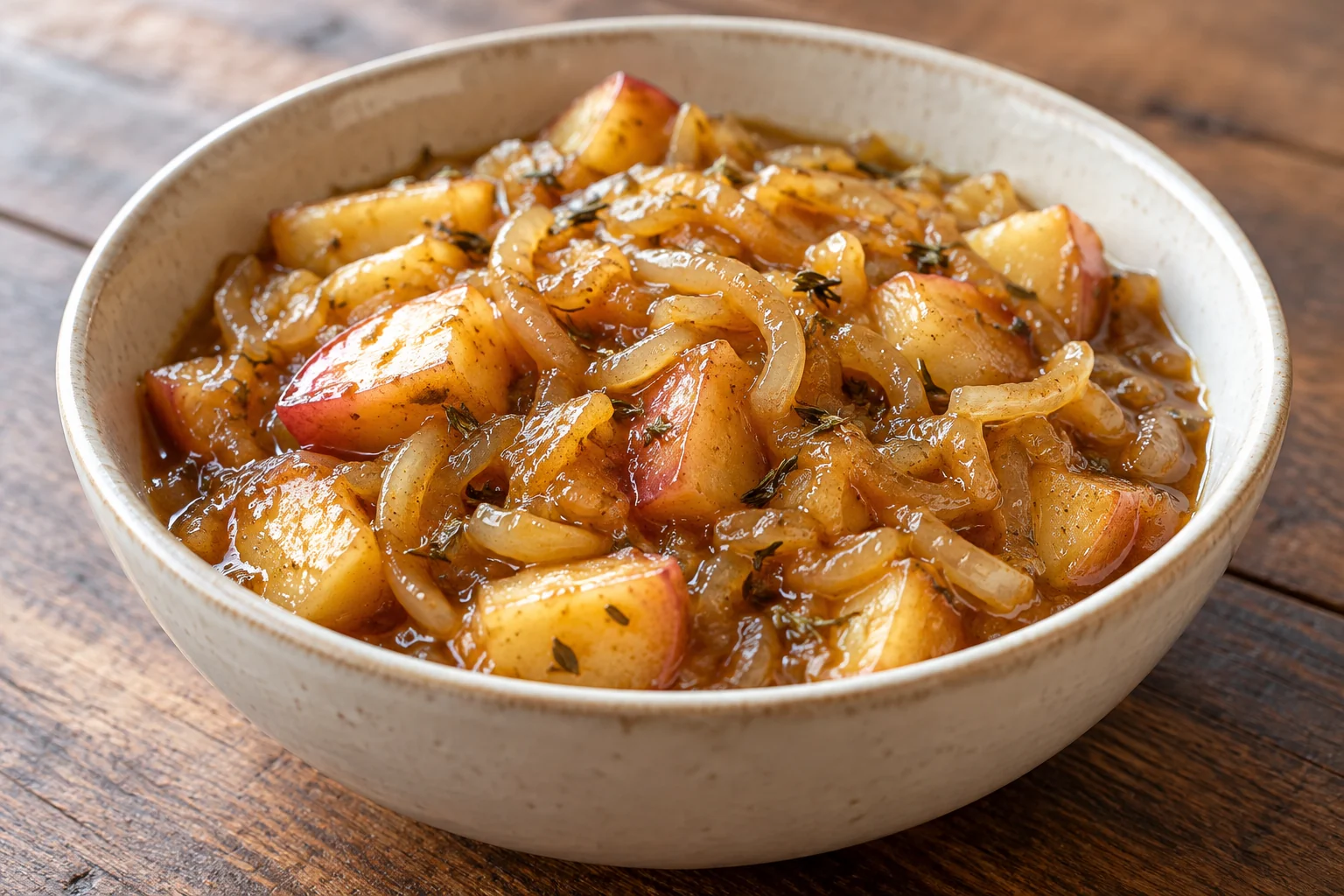
A useful apple sauce for savory food needs more than sweet fruit. Here the onions provide a soft base, cider vinegar gives a clear finish, and the apples remain partly textured. The complete recipe above supplies the exact quantities. This walkthrough explains how to manage the pan so the onion softens without burning and the fruit becomes spoonable without turning into a dry paste.
Apple, onion & cider sauce makes 6 servings, with 50 min estimated total time. View the standalone recipe page.
Cut for two different textures
Slice the onion finely enough that it can bend and collapse in the pan. Cut the cored, skin-on apple into small, fairly even dice; large chunks take longer to soften and make the finished sauce awkward to spoon. Weigh the apple after removing the core. The skin is intentionally retained in both the recipe and nutrition calculation. You do not need a perfectly smooth puree, so a little contrast between apple pieces and onion strands is part of the dish.
Build a golden onion base
Keep the first stage over medium-low heat. The measured oil should coat the onion lightly, while frequent stirring exposes different surfaces to the pan. Look for translucent strands and a few golden edges rather than a dark brown layer. If the edges blacken while the centers remain firm, lower the heat immediately. Burning cannot be repaired by adding vinegar later. A smaller heavy saucepan is easier to control here than a very broad skillet that loses moisture too quickly.
Cover until the apples yield
The measured water and a lid create the moist stage that softens the fruit. Stir twice during the covered simmer, scraping the bottom gently. Test an apple piece with the back of a spoon: it should crush with modest pressure. Firm apples may need the longer end of the timing range. Adding the vinegar after this stage separates softening from final flavor adjustment and keeps you focused on texture before reducing the sauce.
Reduce to a spoonable finish
After adding the vinegar, leave the pan uncovered and use a gentle simmer. Mash only some of the apple with a fork. A spoon drawn across the base should leave a trail that closes slowly, with liquid still surrounding the fruit. Stop before the mixture sticks in dry clumps. The five-minute rest thickens it further. Do not judge the final texture while it is bubbling vigorously, when escaping steam and movement can make it seem thinner than it really is.
Serve and store as a fresh sauce
Divide the entire batch into six equal portions after stirring, so each contains both fruit and onion. Serving it with bread, pork, beans or another main changes the meal nutrition; those foods are not part of this panel. Cool leftovers in a shallow container and refrigerate within two hours. The vinegar quantity is for flavor, not a tested preservation process. Keep the sauce refrigerated, use within three to four days, and reheat leftovers to the temperature stated in the card.
Common questions
Why is the sauce sharp?
Vinegar tastes more concentrated when the sauce has reduced too far. Follow the measured amount and stop at a moist spoonable texture. Apple varieties differ in sweetness; do not assume the same flavor from every batch or add uncounted sugar while expecting unchanged nutrition.
Can I blend it completely smooth?
Yes, once it is cool enough for your equipment, but that changes the intended chunky texture. Follow the blender manufacturer’s instructions for warm mixtures and vent safely. Blending does not make the sauce shelf-stable.
Technique & food-safety references
These primary references support the technique, safety and storage guidance. The recipe and cooking explanations are original Recipe Pinboard content.


