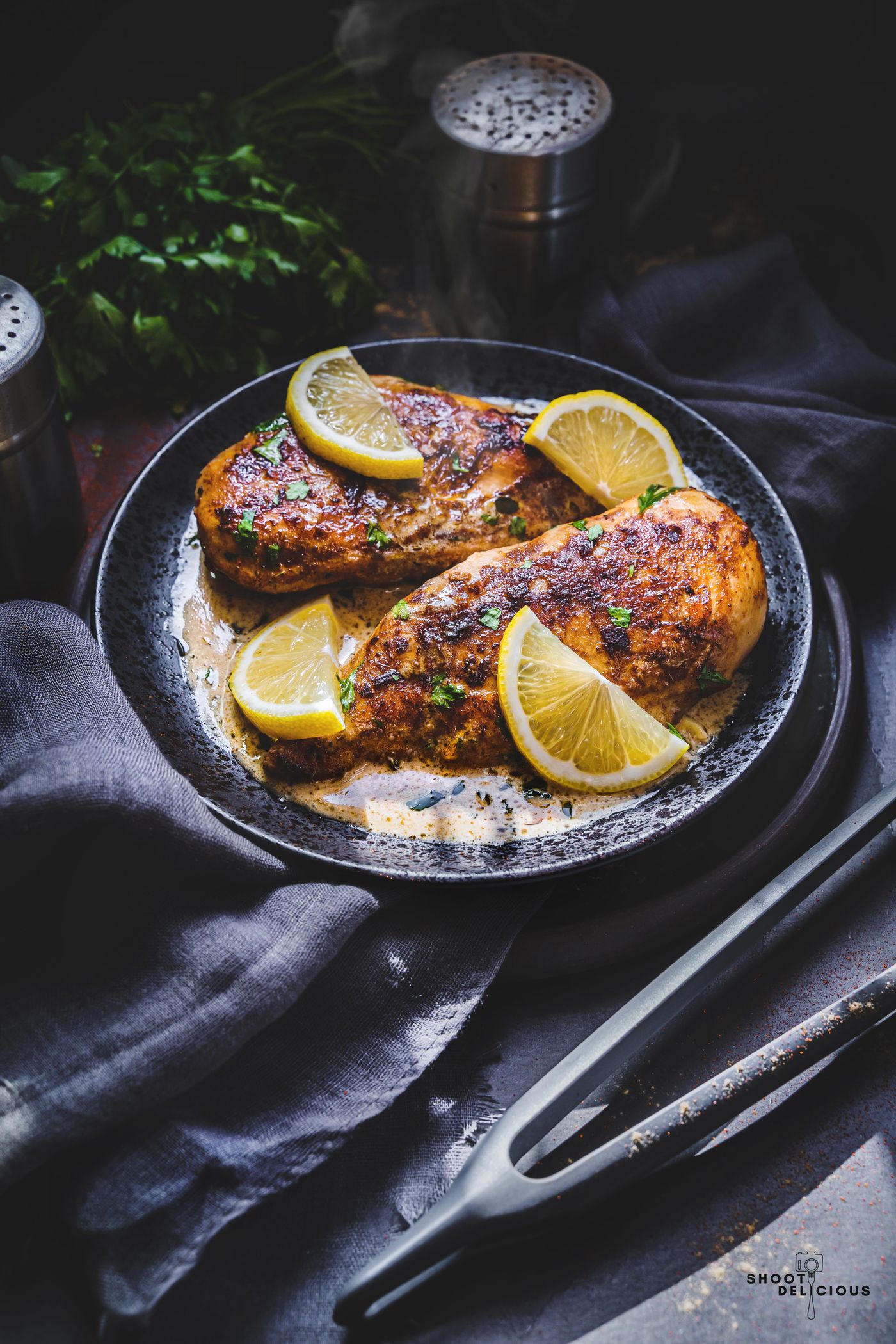
The central challenge in lemon skillet chicken is coordinating two jobs: cooking lean chicken evenly and turning the pan drippings into a bright sauce. The existing recipe makes four portions from 680 g chicken breast and is planned for 30 minutes. A little organization before the pan heats matters more than adding extra ingredients.
Lemon & herb skillet chicken makes 4 servings, with 30 min estimated total time. Open the complete ingredient list and method.
Prepare the chicken and the sauce ingredients
Divide the chicken into four even portions, then gently pound each to the specified ½-inch thickness. Thickness is the useful measure here: two pieces with equal weight can cook differently if one has a thick central hump. Pat the surface dry and season with the recipe’s 3 g salt and 0.5 g black pepper.
Measure the 120 g reduced-sodium broth and 45 g lemon juice before cooking. Keep the 9 g minced garlic, 14 g butter, 6 g zest and 8 g chopped parsley ready separately. Garlic cooks quickly, so searching for a measuring cup after it enters the hot skillet invites scorching.
Give the first side time to brown
Heat the 27 g olive oil in a large skillet over medium-high heat. Lay in the chicken with space between portions. A tightly packed pan traps moisture, making it harder to develop the browned surface that also flavors the sauce. If your pan cannot accommodate four pieces without overlap, cook in batches and allow extra time.
The recipe suggests 5–7 minutes per side, with heat adjusted as needed. Use that range to plan, then use a thermometer to determine doneness. Insert it sideways into the thickest part of a thin piece; each portion must reach 165°F (74°C). Transfer cooked chicken to a clean plate.
Build the sauce in the same skillet
Reduce the burner to medium before adding the garlic. Stir for 30 seconds, then pour in the broth and lemon juice. The liquid loosens the browned bits attached to the pan; scrape gently with a suitable utensil while the sauce simmers for 2–3 minutes. Brown residue is useful. Black, acrid residue is not a flavor base worth preserving.
Swirl in the butter, zest and parsley after that short simmer. Butter adds body, zest supplies lemon aroma without another pour of juice, and parsley finishes the sauce with a fresh herbal note. Return the chicken and its collected juices, spoon the sauce over it, and serve.
Troubleshoot the sauce rather than overcooking the meat
This is a light pan sauce, not a thick gravy. If it looks watery before the butter goes in, let the existing simmer do its work while the chicken waits off the heat. Conversely, if the pan is nearly dry, a small splash of water can restore a spoonable consistency without increasing salt or acidity.
A sauce can taste sharper when reduced too far because the lemon and seasoning become more concentrated. Do not automatically squeeze in more lemon at the end. Taste a small spoonful of cooked sauce alongside chicken, since the sauce is meant to season the meat rather than be eaten alone.
Make modest variations and plan the plate
Parsley can be replaced with chopped dill as an optional flavor variation, using the same 8 g as a starting point. Keep the lemon juice and zest amounts unchanged for the first attempt. Changing the chicken to thick, unflattened breasts or bone-in pieces would require a different cooking schedule, so neither is a direct swap for this method.
Serve with something that catches the sauce, such as separately cooked rice or potatoes, or add a simple vegetable alongside. Those are serving suggestions rather than ingredients included in the four-portion recipe. Have accompaniments ready before the chicken returns to the pan.
Store the chicken with its sauce
Refrigerate leftovers promptly in shallow covered containers, within two hours of cooking, or one hour above 90°F. Use within 3–4 days. Reheat to 165°F, keeping the chicken with its sauce and adding a little water if needed. Gentle reheating helps limit further drying; do not leave the skillet on the counter to cool completely.
Common questions
Why is my chicken pale?
Surface moisture, crowding or insufficient pan heat can prevent browning. Dry and space the portions, but still use internal temperature rather than color to decide when the chicken is safe.
Can I make the sauce in advance?
You can measure its ingredients ahead, but its distinctive flavor comes from the pan used to cook the chicken. Assemble the sauce after searing, as the recipe directs.
Food-safety references
These official references support the safety and storage guidance. The recipe and cooking explanations are original Recipe Pinboard content.