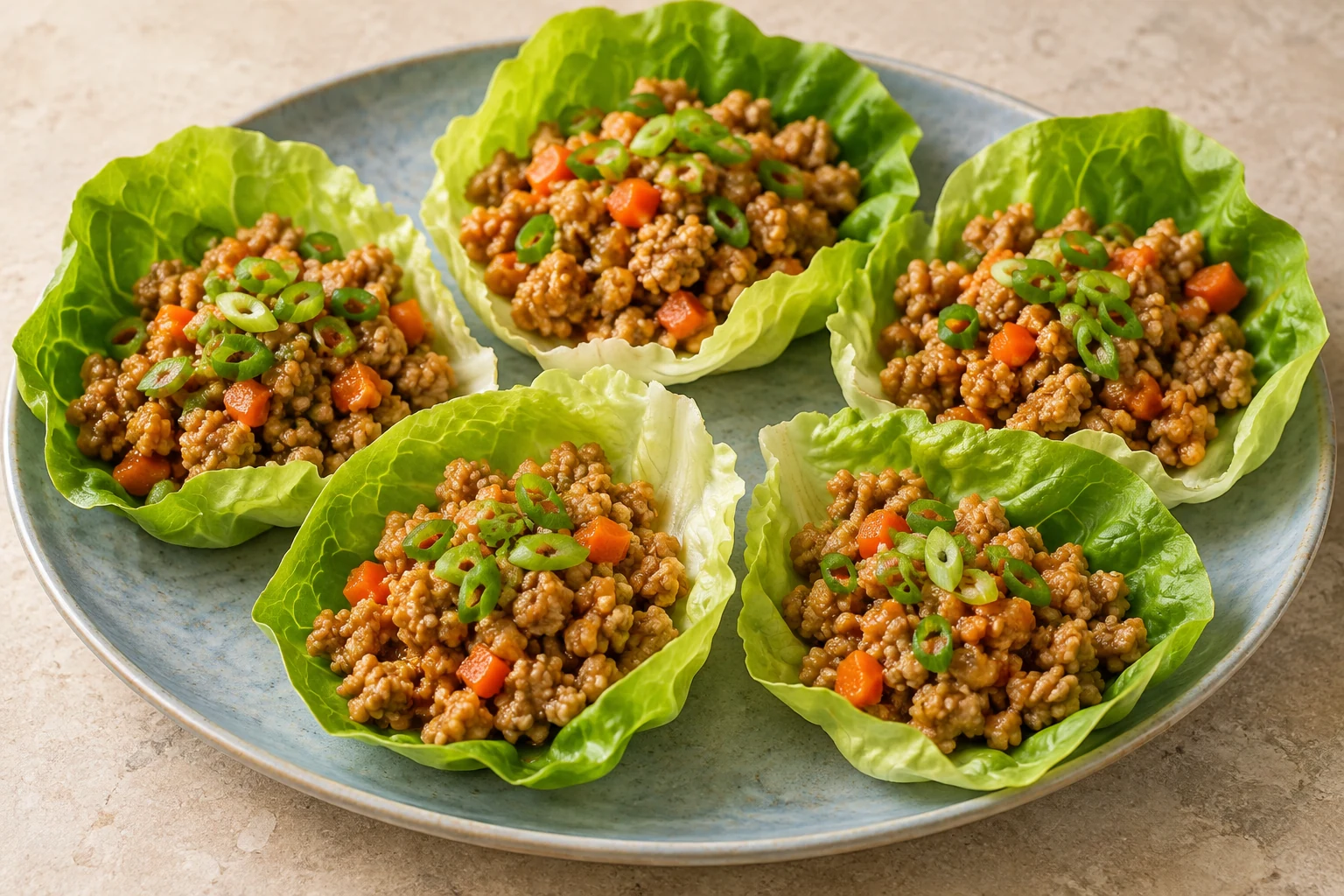
A good lettuce cup is easy to pick up because its filling is finely textured and moist without dripping. This recipe uses ground chicken, carrot, ginger and a short soy-vinegar finish, with no added thickener. The useful work is controlling the pieces and the liquid, then keeping the warm filling separate from the delicate leaves until dinner.
Ginger chicken lettuce cups makes 4 servings, with 25 min estimated total time. View the standalone recipe page.
Prepare the leaves and carrot first
Wash the butter lettuce and dry the leaves thoroughly, taking care around their thin edges. Water caught near a leaf’s base can loosen the filling even when the chicken is cooked correctly. Lay out the twelve leaves so you can distribute the mixture evenly instead of overloading the first few cups.
Dice the carrot finely. It shares a seven-to-ten-minute cooking stage with the chicken rather than receiving a long simmer of its own. Large carrot cubes can remain hard and roll out of the leaves. Mince the garlic and grate the ginger before heating the pan; both need to be ready when the chicken goes in.
Break up the chicken without drying it out
Heat the neutral oil over medium-high heat and add the pound of ground chicken. Use a spatula to divide it into small crumbles, then add the carrot and aromatics as directed. Aim for pieces that can sit together in a spoonful, not a handful of large meatball-like chunks.
Stir during cooking so the garlic and ginger do not sit against one hot patch for the entire interval. The chicken does not need a dark crust to work in this dish. If the aromatics begin catching, lower the heat and keep the mixture moving. Browning alone cannot establish that ground poultry is safely cooked.
Use temperature before the short sauce stage
The ground chicken must reach 165°F (74°C). A small-tip thermometer is useful for checking several substantial portions of the mixture without touching the hot skillet. The seven-to-ten-minute estimate is a planning guide; the size of the crumbles and the width of the pan affect how quickly they cook.
Once cooked, look at the pan bottom before adding the soy sauce and vinegar. Some moisture is normal, but a large pool will dilute those four tablespoons of seasoning liquid. Let obvious excess moisture evaporate with the pan uncovered, keeping the heat moderate enough to protect the garlic.
Keep the seasoning light enough to spoon
The two-minute simmer after adding reduced-sodium soy sauce and rice vinegar brings the liquid through the crumbles. Stir so no section of chicken gets all the concentrated sauce. The finished mixture should gather readily on a spoon, with a sheen of moisture rather than a puddle under every portion.
Take the pan off the heat before adding the teaspoon of sesame oil and sliced scallions. Those are finishing ingredients in this method, so there is no need to fry the chicken again after they enter. Taste a little filling with a lettuce leaf: the unseasoned leaf changes how concentrated the filling tastes.
Assemble at the last moment
Spoon warm filling into the leaves just before eating. Leave a clear rim around each portion so there is somewhere to hold the cup. Twelve leaves for four servings gives three cups per serving, but leaf sizes vary; portion the filling evenly rather than forcing every leaf to carry the same large mound.
For leftovers, store filling and dry leaves separately in the refrigerator. Chill the chicken promptly in a shallow container and use within three to four days. Reheat the filling to 165°F before assembling fresh cups. A filled leaf loses its useful crispness as it sits against warm, salty chicken.
Common questions
Why does the filling fall out?
Large chicken clumps, coarse carrot pieces and overfilled leaves are common causes. Keep the dice small and the filling below the leaf’s rim so the lettuce can bend around it.
Do I need cornstarch for the sauce?
This recipe contains none. Its small amount of liquid should coat the crumbles after the brief simmer; address excess pan moisture rather than adding a new thickener.
Technique & food-safety references
These primary references support the technique, safety and storage guidance. The recipe and cooking explanations are original Recipe Pinboard content.