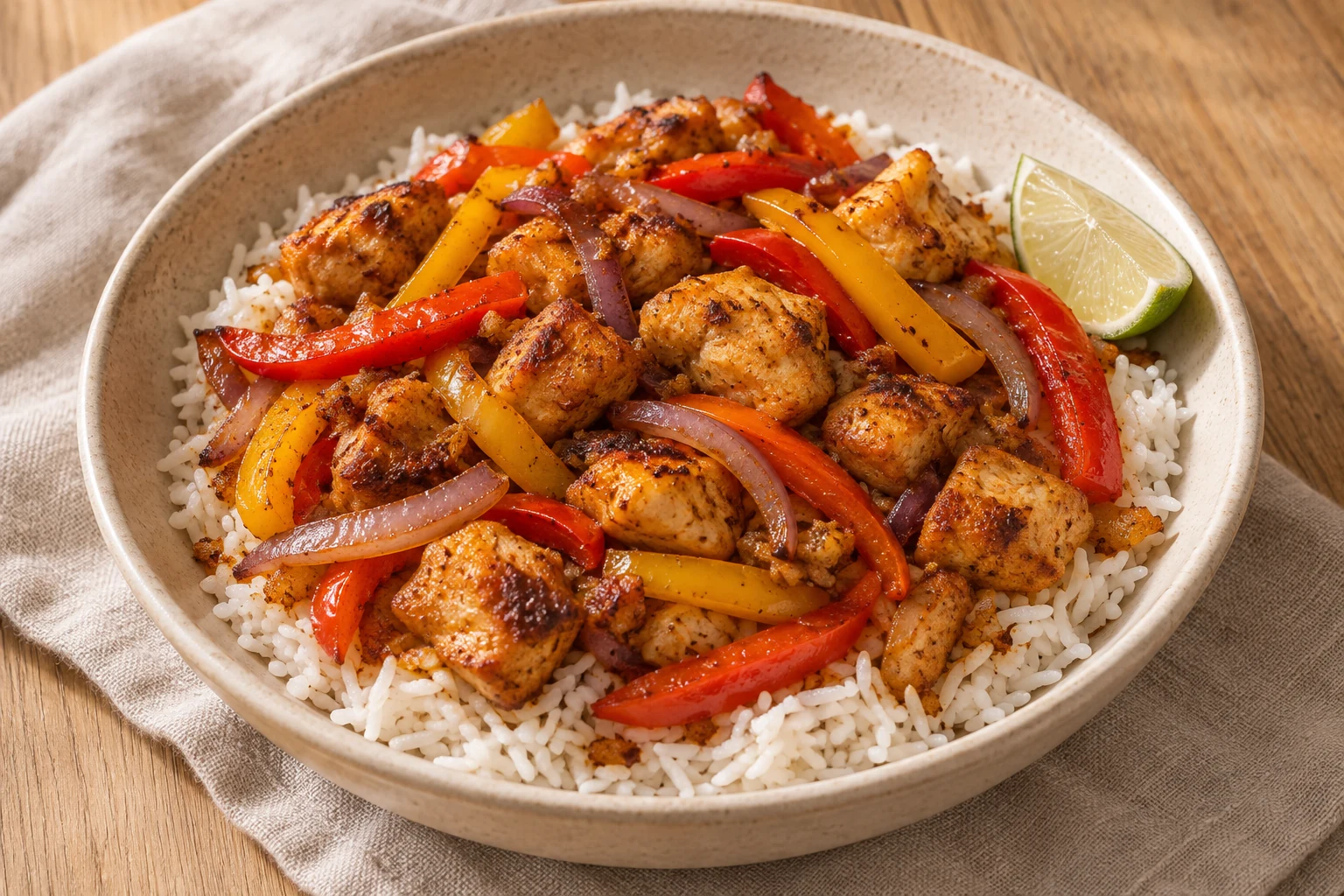
These bowls depend on three textures arriving together: tender chicken thigh pieces, softened peppers with some browned edges, and rice that separates under a fork. The lime finishes the bowl at the table. With the rice cooking alongside the skillet work, the recipe’s 35-minute plan is plausible, but a smaller skillet requiring extra batches will take longer.
Smoky chicken & pepper bowls makes 4 servings, with 35 min estimated total time. View the standalone recipe page.
Start the rice before the skillet
The card specifies dry long-grain rice, one cup to two cups water. Measure before rinsing so retained water does not confuse the rice measurement. Once the pot boils, cover it and lower the heat; a hard boil throughout cooking can exhaust the water before the centers soften. Use the rice package to resolve any brand-specific timing differences.
Leave the lid in place through the 15–18-minute cook and the five-minute covered rest. Fluff after resting rather than repeatedly stirring while it cooks. If the grains still have a hard center, they need further covered cooking; check moisture before extending the time so the bottom does not scorch.
Make cuts that finish together
Cut the 680 g boneless, skinless thighs into genuinely similar one-inch pieces, opening out folded sections first. Thick folded pieces can remain underdone while smaller edges become dry. Slice the peppers and red onion into reasonably even strips; a few very thick pepper sections will lag behind the rest.
Divide the two tablespoons oil as written. One coats the chicken with smoked paprika, cumin and salt; the other starts the vegetables. Toss until the chicken has a thin, even spice coating rather than isolated dark patches. Keep the raw-chicken bowl and utensils away from the cooked vegetables and finished rice.
Cook the vegetables separately
The peppers and onion get seven to nine minutes over medium-high heat before the chicken enters. Stir enough to expose different surfaces, but let some contact with the skillet develop between turns. Look for softened strips with a little structure left, since they will return for a final warming.
Move them to a bowl rather than pushing them into a heap at the edge of the pan. That frees the cooking surface for the chicken and keeps vegetable moisture from surrounding it. If liquid remains in the skillet, let it evaporate before adding the chicken; browning is harder in a puddle.
Watch the paprika and check the chicken
Arrange the pieces in one layer. Turn them during the suggested eight to twelve minutes so different sides contact the pan. Paprika can darken before a thick piece cooks through, so reduce the heat if the spice coating starts turning black. More heat is not always the answer to a slow center.
Check several larger pieces with a thermometer, placing the tip in the meat rather than against the skillet. Every piece must reach 165°F (74°C). Only then return the vegetables and warm them briefly. The goal is a cohesive chicken mixture, not another full cooking cycle for the peppers.
Finish and pack the bowls thoughtfully
Fluff and divide the rice before spooning over the chicken and vegetables. Keep the lime in wedges as the card directs, allowing each diner to squeeze it over their portion. There is no separate sauce to reduce here; the chicken coating and vegetable juices provide the seasoning.
Refrigerate leftovers in shallow containers within two hours, or one hour above 90°F. Keep rice beside the chicken rather than tightly compressing everything into one deep tub. Use within three to four days, and reheat to 165°F. Hold the lime separately until serving so it stays a fresh finishing element.
Common questions
Why is the chicken steaming instead of browning?
The pieces may be crowded, wet, or sitting in liquid left by the peppers. Give them a single layer and cook in batches if necessary; do not keep increasing the heat until the paprika burns.
Should the peppers be crunchy?
They should be softened after their first skillet stage, with enough structure to survive a brief return to the heat. Their doneness is independent of the chicken’s required internal temperature.
Technique & food-safety references
These primary references support the technique, safety and storage guidance. The recipe and cooking explanations are original Recipe Pinboard content.