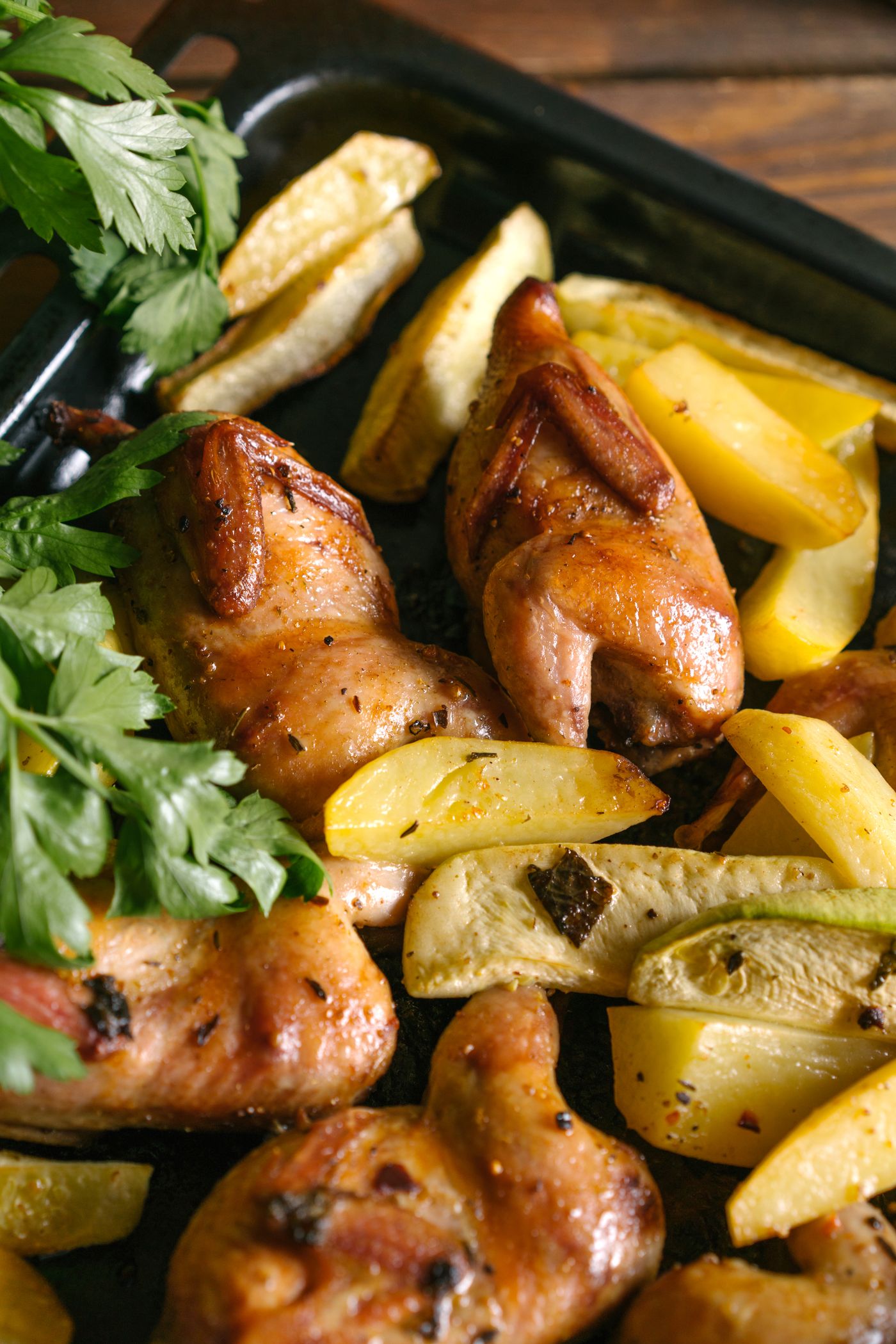
This tray dinner serves four with four bone-in, skin-on thighs and 680 g potato wedges. Its useful design choice is giving the potatoes a 15-minute head start. Allow the full 70 minutes: about 10 minutes of preparation, 45–55 minutes of roasting and a 5-minute rest. Oven preheating and unusually large thighs can require additional time.
Sheet-pan garlic chicken & potatoes makes 4 servings, with 1 hr 10 min estimated total time. Open the complete ingredient list and method.
Choose pieces that match the method
Use four bone-in, skin-on thighs, about 2 lb total, to match the skin-side-up roasting method. The bone and skin distinguish these portions from boneless, skinless thigh pieces; they should not be treated as interchangeable within the stated timing. Similar-sized portions make it easier to bring all four to doneness together.
Cut the potatoes into even 2 cm-thick wedges. A consistent thickness is more important than making every wedge equally long: narrow tips will naturally brown sooner, but unusually thick centers may remain firm. Keep the wedges substantial enough to tolerate the full two-stage roast.
Set up a genuinely roomy tray
Heat the oven to 425°F (220°C). Use a large rimmed baking sheet and parchment that its manufacturer rates for that temperature. The rim contains oil and chicken juices; a flat cookie sheet is unsuitable. Leave room for the chicken you will add later rather than covering the entire surface with tightly packed wedges.
Toss the potatoes with 2 tbsp of the total 3 tbsp olive oil, half the four minced garlic cloves, the 1 tsp dried rosemary, and half the ¾ tsp salt and ½ tsp pepper. Coating in a bowl helps distribute garlic and seasoning rather than leaving a clump on one wedge.
Use the head start and divide the seasoning
Roast the potatoes for 15 minutes before adding chicken. During that interval, pat the thighs dry and rub with the remaining 1 tbsp oil, garlic, salt and pepper. Keep raw-chicken utensils and hands away from ready-to-eat parsley and lemon wedges.
Set the chicken skin-side up among the potatoes. Keep the wedges in one layer rather than piling them beneath the thighs. A wedge covered by chicken spends more time steaming in juices; one with some exposed surface has a better chance of developing a crisp edge. The dish can still have tender, flavorful potatoes without every surface being crunchy.
Check two different kinds of doneness
Roast for another 30–40 minutes, turning the potatoes once. Measure each thigh in its thickest meaty area without touching bone; the recipe and federal guidance specify at least 165°F (74°C). Separately pierce a thick potato wedge. It should offer little resistance through the center.
The chicken and potatoes may not finish at the same moment. Move fully cooked thighs to a clean plate if the potatoes need longer, or remove tender wedges while larger thighs finish. This is a practical adjustment to the stated instruction to allow extra time, not a reason to lower the chicken’s required temperature.
Handle pale potatoes and dark garlic
If the potatoes are soft but pale, first consider tray crowding and accumulated liquid. Turning exposes a different side to the pan, but moving a large pile around cannot create the space it lacks. For a future batch, use a larger tray or two trays, recognizing that a different setup may change timing.
Minced garlic can darken quickly at this oven temperature. Distribute it in the oil over the food rather than leaving loose heaps on exposed parchment. If a few loose pieces burn, avoid scraping them onto the finished portions. The lemon is reserved for serving, so it does not wet the potato surfaces during roasting.
Finish, vary and save
Rest the chicken for the specified 5 minutes. Serve each thigh with a quarter of the potatoes, lemon wedges and a share of the 8 g parsley. For a simple variation, replace the dried rosemary with the same measured amount of dried thyme; avoid adding sugary glazes during this high-heat method.
Chill leftovers in shallow containers within two hours, or one hour in temperatures above 90°F. Keep at 40°F or colder and use within 3–4 days. Reheat to 165°F. Store chicken and potatoes separately if convenient so you can adjust their reheating without repeatedly cooking the already-hot component.
Common questions
How much time should I allow?
The corrected total is 70 minutes, including preparation, the two roasting stages and a 5-minute rest. Oven preheating or larger-than-expected thighs may need additional time.
Can I replace wedges with whole potatoes?
Not within the same timing. Whole potatoes have a much thicker center; use the specified 2 cm wedges to stay close to the original method.
Food-safety references
These official references support the safety and storage guidance. The recipe and cooking explanations are original Recipe Pinboard content.