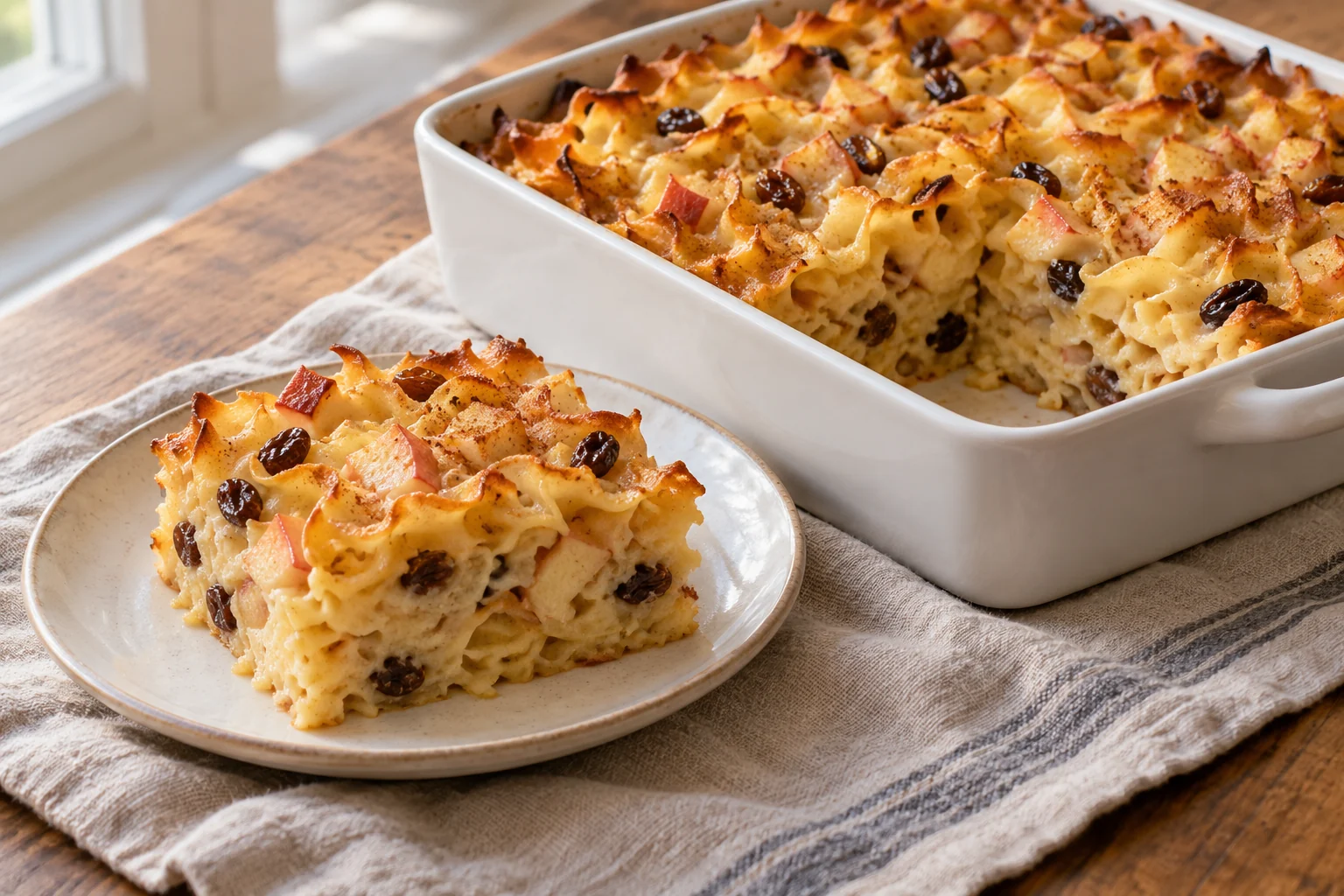
This kugel combines wide egg noodles with a lightly sweetened yogurt-and-egg custard, diced apple and raisins. The exposed noodle edges become golden while the interior stays soft enough to cut into six generous squares after resting. It is an original breakfast formulation, without a cornflake topping or extra serving cream. Allow the full two hours, including the twenty-minute rest after baking. A nine-inch square dish at least two inches deep gives the noodle mixture room without filling a shallow pan to its rim.
Apple and raisin breakfast kugel makes 6 servings, with 2 hr estimated total time. View the standalone recipe page.
Use the specified dry egg noodles
Weigh the noodles before boiling. The estimate uses dry enriched egg noodles, which are different from plain wheat pasta even when the packages look similar. Cook them until flexible and nearly tender, following the package as a starting point and stopping about a minute early. They will continue absorbing moisture in the casserole. Drain thoroughly, then let the strongest steam escape before folding them into the egg mixture. Do not rinse them with an unmeasured flavored liquid or add oil to prevent sticking; neither is included in this formulation.
Prepare the apple in small, even pieces
Wash the apple, remove the core and weigh the skin-on edible portion. Dice it finely enough that the pieces can soften during the casserole's baking interval. Large chunks may remain firm even when the egg mixture has set. Keep any juice released during cutting and add it with the fruit. Mix the raisins through rather than leaving them all on top, where they can dry out. The apple and raisins provide part of the sweetness, so the recipe's measured sugar is deliberately separate from any optional additions.
Whisk the custard before adding noodles
Whisk eggs, yogurt, milk and the remaining custard ingredients until the yogurt is evenly dispersed. Let the melted butter cool slightly before adding it so hot fat does not create small cooked egg flecks. Fold in the drained noodles rather than beating them, which can break their broad ribbons. The mixture should look loose before baking; resist adding extra dry noodles just to make it resemble a finished casserole. Transfer everything into the buttered dish, scraping the bowl, then redistribute fruit that has settled in one corner.
Bake until the middle is set
The upper noodle tips will color before the center finishes. Begin checking within the stated baking range and loosely tent with foil if the exposed edges are getting too dark. Insert a thermometer into the center of the casserole, avoiding the bottom of the dish, and confirm 165°F. The surface should not ripple with liquid egg mixture when the dish is moved gently. A knife inserted near the middle should emerge without uncooked custard. More browning is not a substitute for checking the deeper, slower-heating portion.
Rest, cut and store in portions
The twenty-minute rest gives the casserole time to settle so a serving lifts more cleanly. Cut into six equal portions and use a broad spatula to support the noodles underneath. The estimate counts all apple skin and juices, all dairy and the complete butter allowance, including the dish coating. It does not invent a precise adjustment for starch lost while boiling noodles. Refrigerate leftovers in shallow containers within two hours. Keep the three-to-four-day storage limit and reheat each portion to 165°F, checking its center rather than just its edges.
Common questions
Why is the kugel loose when I cut it?
It may need more baking or the full resting interval. Check the center temperature and whether liquid custard remains before removing it from the oven. Cutting immediately can also make an otherwise set casserole spread on the plate.
Can I use sweetened yogurt?
That changes the sugar and calorie estimate and may change consistency. The card specifies plain whole-milk Greek yogurt. Keep the stated product type for the published calculation, or recalculate from the label when substituting a flavored or lower-fat version.
Technique & food-safety references
These primary references support the technique, safety and storage guidance. The recipe and cooking explanations are original Recipe Pinboard content.


