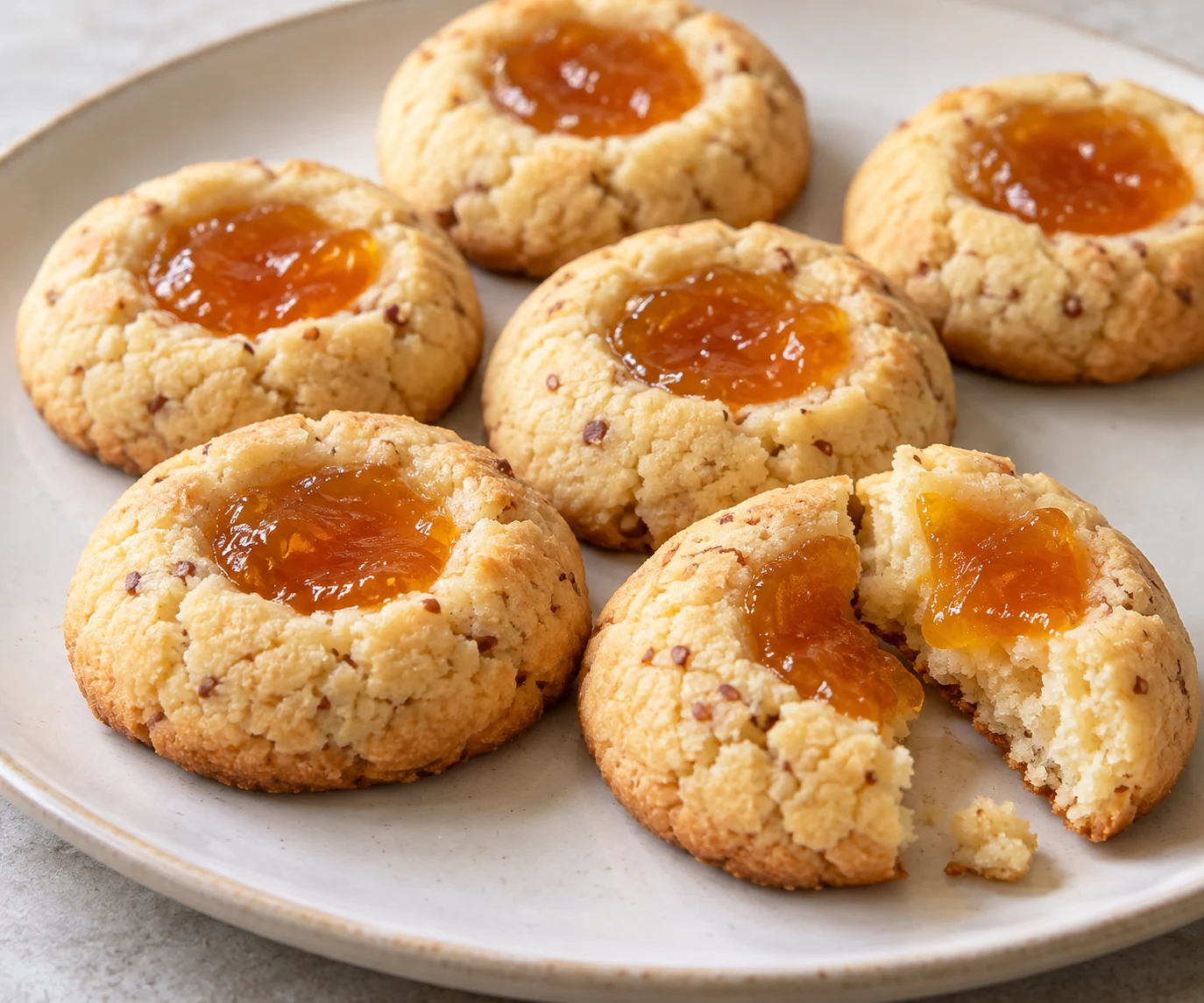
These cookies combine a buttery dough with finely ground skin-on almonds and a small apricot-jam center. Their preparation includes softening the butter, chilling the mixed dough and cooling the hot filling before serving. The 160-minute allowance covers those pauses; a very cold room or sequential tray baking can take longer. Divide the entire dough into twenty-four pieces so the two-cookie serving remains consistent. There is no powdered-sugar finish, glaze or almond coating to add after baking. The tiny brown flecks come from the almonds already inside the dough.
Apricot & almond thumbprint cookies makes 12 servings, with 2 hr 40 min estimated total time. View the standalone recipe page.
Soften butter without turning it into liquid
Cut cold butter into small cubes and allow it to become pliable. It should give under gentle pressure while holding its shape, not sit in a puddle. Melted butter changes how the dough mixes and spreads. Meanwhile grind the raw almonds with the reserved portion of sugar. The sugar helps the nuts move through the grinder without immediately forming a paste. Keep the entire measured almond batch, including skins and fine particles. Blanched almond flour would look different and is not the same ingredient state used for this estimate.
Mix only until the dough comes together
Beat the softened butter with the remaining sugar, then incorporate egg and vanilla. Scrape the bowl so the mixture is uniform before adding flour, ground almonds and salt. Once the dry ingredients disappear, stop mixing. Prolonged working after flour is added can make the cookies less tender. The dough will be soft at this stage, which is why the recipe includes refrigeration. Do not add extra flour simply to make warm dough easier to handle. That would change the ratio of butter, almonds and flour across the whole batch.
Chill, portion and form a supported hollow
Refrigerate the covered dough for thirty minutes before dividing it. Weigh equal pieces where possible, using all the bowl scrapings. Roll gently and press a hollow into each ball without pushing through the bottom. A rounded spoon handle can make a more regular indentation than a large thumb. If the edges crack, press them together with your fingers before filling. Deep splits provide channels for jam to escape. Work without a dusting of extra flour so the measured dough remains the complete cookie mixture.
Use the stated jam quantity and watch the bases
Stir the apricot jam so it is easy to portion, then add four grams to each hollow. Overfilling can cause boiling jam to spill onto the tray, where it burns before the cookie is done. The profile is for apricot jam, not fresh apricot puree or a reduced-sugar spread. Those products differ in water and sugar. Bake until the edges and bases are lightly golden and the dough looks set. Rotate and swap the trays as directed, or bake sequentially if your oven cannot heat two levels evenly.
Let the filling cool before tasting or storing
Leave the cookies on their trays for the first ten minutes so the delicate bases firm enough to move. Transfer them carefully to a rack and continue cooling until the jam is no longer hot. A cookie edge can feel comfortable while the sugar-rich center still burns the mouth. Store only after cooling fully; closing warm cookies in a container traps moisture and softens their surfaces. Keep them airtight for the short storage period in the card, following any stricter jam-label guidance. Freeze rather than extending room-temperature storage indefinitely.
Common questions
Why did the cookies spread flat?
The butter may have been melted, the dough insufficiently chilled or the portions placed on a hot tray. Use pliable butter, keep the refrigerator rest and start with cool baking sheets. Extra flour is not the first correction.
Can I use another fruit spread?
A different jam may bake successfully but changes the flavor, moisture and nutrition estimate. This card accounts for the complete measured apricot jam filling. Do not assume a low-sugar spread has the same behavior or nutrient values.
Technique & food-safety references
These primary references support the technique, safety and storage guidance. The recipe and cooking explanations are original Recipe Pinboard content.


