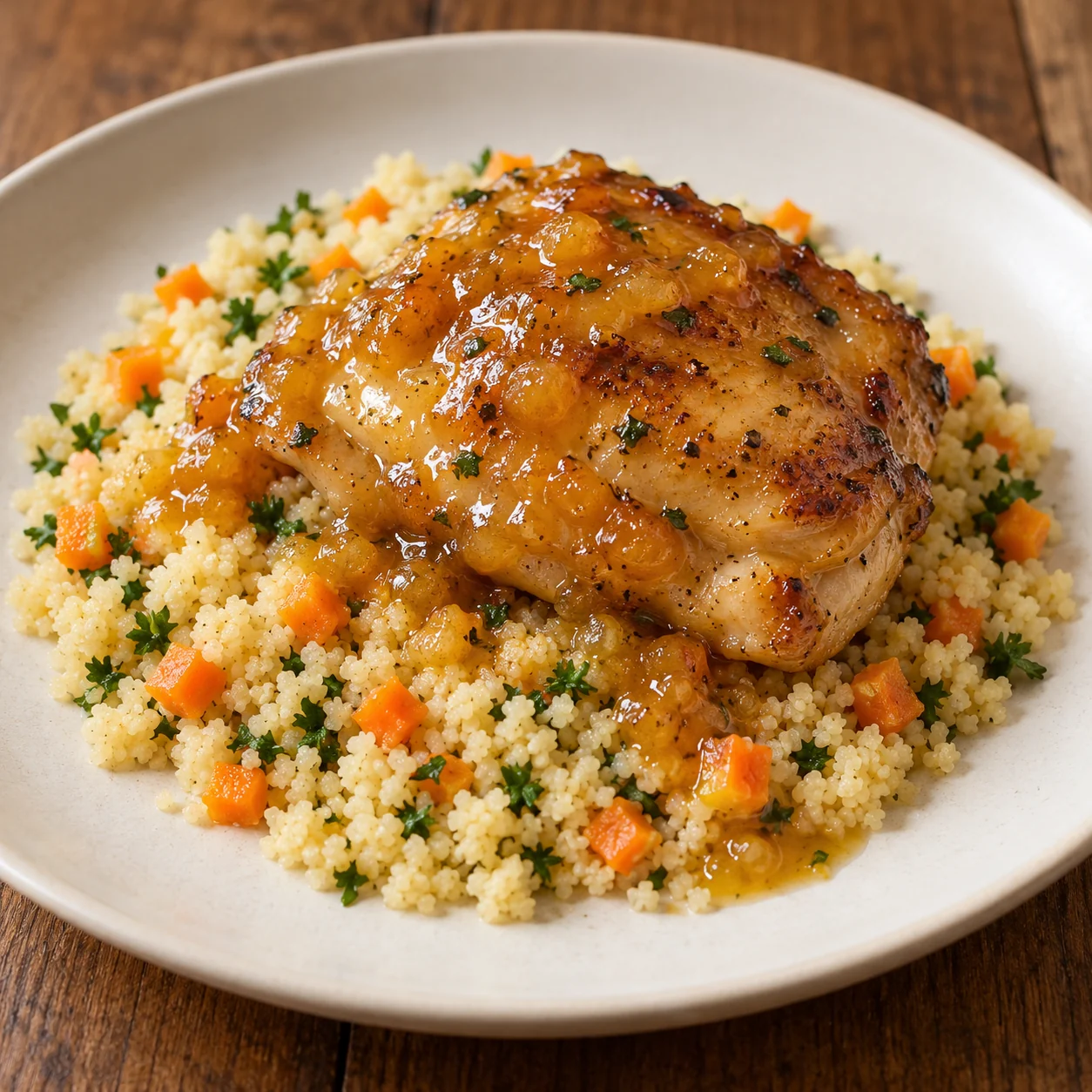
Apricot preserves and lemon turn into a light glaze around boneless chicken thighs, while carrot cooks separately before the couscous is hydrated. The full recipe card above includes both components and four servings. Keeping the two pans distinct makes it easier to control the sweet sauce, check the chicken safely and avoid softening the couscous into a paste.
Apricot chicken with carrot couscous makes 4 servings, with 1 hr 5 min estimated total time. View the standalone recipe page.
Use regular preserves and plain quick-cooking couscous
The jam contributes both fruit flavor and sugar to the sauce. The estimate uses a regular apricot-preserve profile; a reduced-sugar spread or a different fruit changes the calculation and may thicken differently. Stir any large jam lumps into the lemon and water before pouring. The couscous should be the fine quick-cooking wheat product, not pearl couscous, which needs a different method. Neither rice nor a cooked-grain weight is interchangeable with the specified dry amount. Gather the measured water into its two portions before beginning.
Brown the thighs before introducing the glaze
Choose similarly sized boneless thighs so they cook at a comparable rate. Season and place them in the warm oiled skillet without stacking. Allow each side its browning time, turning with clean handling practices. This stage adds color but does not finish the chicken. Lower the heat before adding the garlic and cumin, and keep their cooking stage brief. If garlic lands against a very hot dry patch, it can darken before the sauce is ready. Add the prepared liquid promptly and move directly into the simmer.
Keep the sweet sauce at a gentle simmer
Cover the skillet once the sauce bubbles, then reduce the heat. A fierce boil can concentrate the jam at the edges and scorch it while the thickest meat remains undercooked. Turn the thighs once to distribute the sauce and check the pan if it begins sounding like frying rather than simmering. The stopping point is a thermometer reading of 165°F (74°C) in every thigh's thickest area. Do not rely on the golden sauce color or the first completed timer as proof of doneness.
Cook carrot before adding couscous
Small, even carrot dice soften quickly in the measured water. Check a piece with a fork before adding the couscous; the off-heat soaking stage is not intended to finish large raw carrot chunks. Once tender, stir in the dry couscous, cover and remove the saucepan from the burner. Let it absorb undisturbed. Repeated stirring during the rest can compress the grains. Fluff gently with a fork afterward, working through the bottom of the pot, then distribute the chopped parsley without mashing the carrot.
Adjust sauce consistency only after the chicken is cooked
If the sauce remains thin, move the fully cooked thighs to a clean plate while reducing it briefly. Stir across the skillet bottom and stop when it lightly coats a spoon. Return the chicken and any collected juices so the finished portions include them. A very sticky glaze can be loosened with a little water before it burns. Give each plate an equal share of chicken, sauce and carrot couscous. The nutrition panel includes that complete combination, not only the chicken.
Common questions
Why is the couscous wet after resting?
The carrots may have carried extra rinse water, or the couscous may need a little longer covered absorption. Check the package identifies the quick-cooking type. Fluff gently after resting rather than cooking it hard in an open pan, which can make the bottom stick while the top remains damp.
Can I prepare this for later meals?
Yes, cool portions promptly in shallow containers and refrigerate within two hours. Use within three to four days. Reheat both chicken and couscous to 165°F (74°C), checking more than one spot. Add a little water when needed for moisture, and check packaged ingredients for milk additions if following the dairy-free tag.
Technique & food-safety references
These primary references support the technique, safety and storage guidance. The recipe and cooking explanations are original Recipe Pinboard content.


