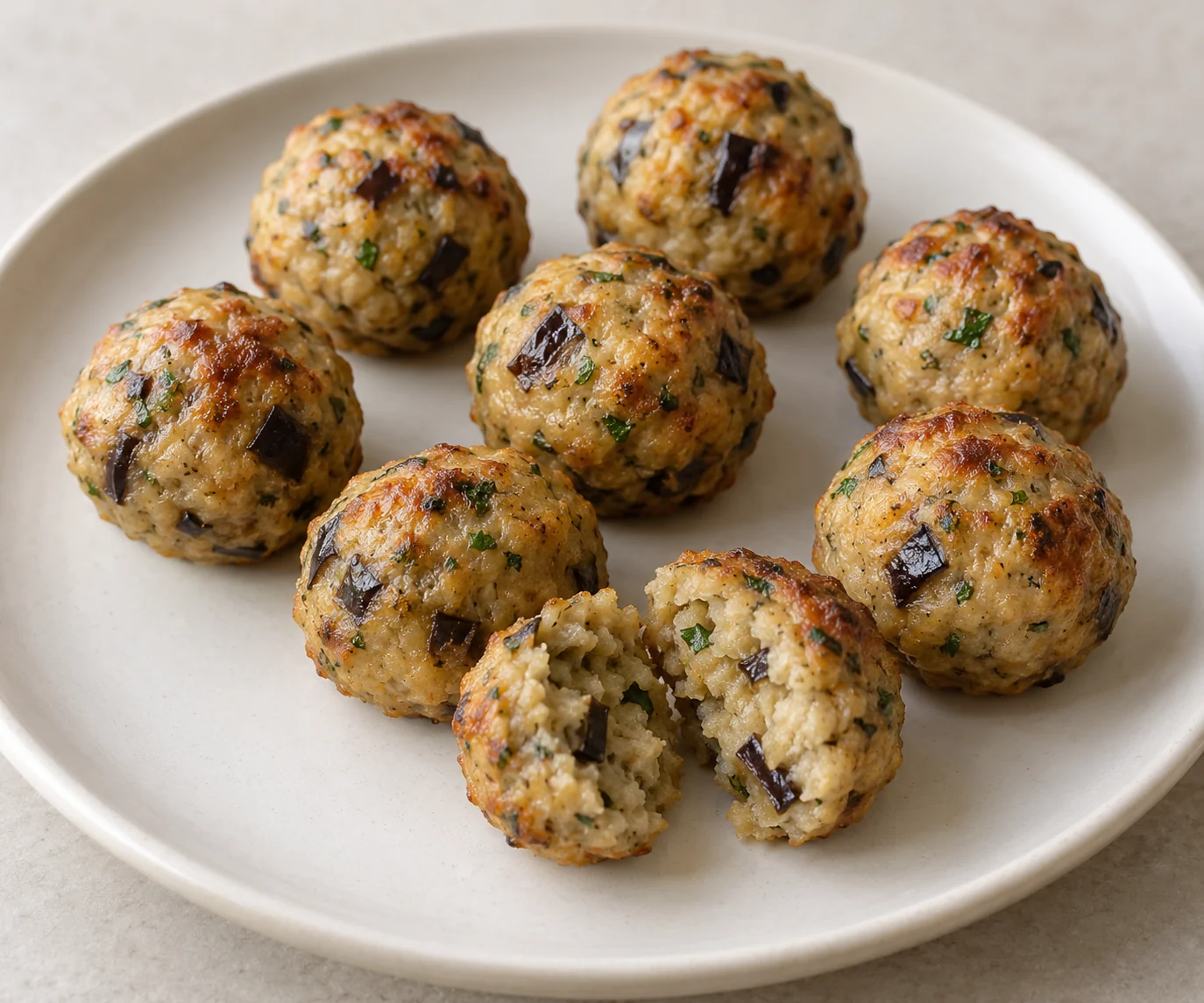
Roasted eggplant makes a tender base for these small savory balls, while egg, dry breadcrumbs and hard cheese help the mixture hold its shape. They are baked appetizers with a soft vegetable interior, not a replica of springy meatballs. The skin remains in the recipe and all tray juices are retained. That keeps the measured raw ingredient and the ingredient-sum estimate aligned without guessing how much nutrition was discarded during squeezing or peeling.
Baked eggplant & Parmesan balls makes 6 servings, with 2 hr 25 min estimated total time. View the standalone recipe page.
Cut for roasting and later shaping
Small, reasonably even cubes soften more consistently than a mixture of large wedges and tiny scraps. Keep the skin, but remove the stem before weighing the eggplant. Spread the oiled cubes over the tray so they roast rather than pile into a deep, steaming mound. Turn them halfway through and look for tender centers as well as browned edges. A firm cube will remain noticeable in a mashed filling, even if its outside already looks attractive and deeply colored.
Keep the liquid and manage texture
Scrape the roasted eggplant and any juices into the bowl together. Mash while still warm, then let it cool before the egg is introduced. If strips of skin are long enough to resist mixing, snip them into shorter pieces. The cooling pause is functional: a hot mixture is difficult to shape and can start cooking the egg unevenly. Do not solve excess softness by squeezing the eggplant through a towel, because this formulation deliberately retains the full roasted ingredient.
Let the measured crumbs hydrate
Mix the binders throughout the cooled mash, reaching the bottom of the bowl so there are no pockets of dry crumbs or plain eggplant. The refrigerator rest gives the breadcrumbs time to absorb moisture. Assess the mixture after that rest, not immediately after mixing. It should gather into a soft mound that can be transferred with damp hands. If necessary, use the additional short chill described in the card. Adding handfuls of extra crumbs makes a different, potentially drier recipe.
Divide before rolling
Portion the whole bowl into eighteen roughly equal amounts before perfecting their shape. That is easier than making a few large balls first and discovering only enough mixture remains for small ones. Lightly water-dampened hands limit sticking without adding flour or extra oil. Keep the balls separated on the lined tray, then distribute the reserved oil over their surfaces. They do not need a separate crumb coating. A slightly irregular handmade surface is normal and gives the browned exterior some texture.
Use the rest to protect the centers
Bake until the outside is set and the egg-containing center reaches its specified safe endpoint. The balls remain delicate straight from the oven, so give them the five-minute stand before lifting with a thin spatula. The full schedule allows 145 minutes for preparation, roasting, cooling, chilling and the second bake; an extra chill extends that time. Serve three balls per portion. Any sauce or bread belongs outside this recipe's estimate, and leftovers need prompt refrigeration and thorough reheating.
Common questions
Why did the balls flatten or break when moved?
A warm, freshly mixed filling or an underbaked exterior may not yet support its own weight. Follow the cooling and chilling steps, check the centers, and wait before lifting. Avoid pressing hard with a spatula or expecting the texture of a meat-based ball.
Is every Parmesan suitable for the vegetarian label?
No. Traditional cheeses may use animal rennet. The ingredient specification calls for a hard Parmesan-style cheese made with vegetarian enzymes, and the breadcrumb label also needs checking. This recipe still contains wheat, egg and milk; vegetarian does not mean allergen-free.
Technique & food-safety references
These primary references support the technique, safety and storage guidance. The recipe and cooking explanations are original Recipe Pinboard content.


