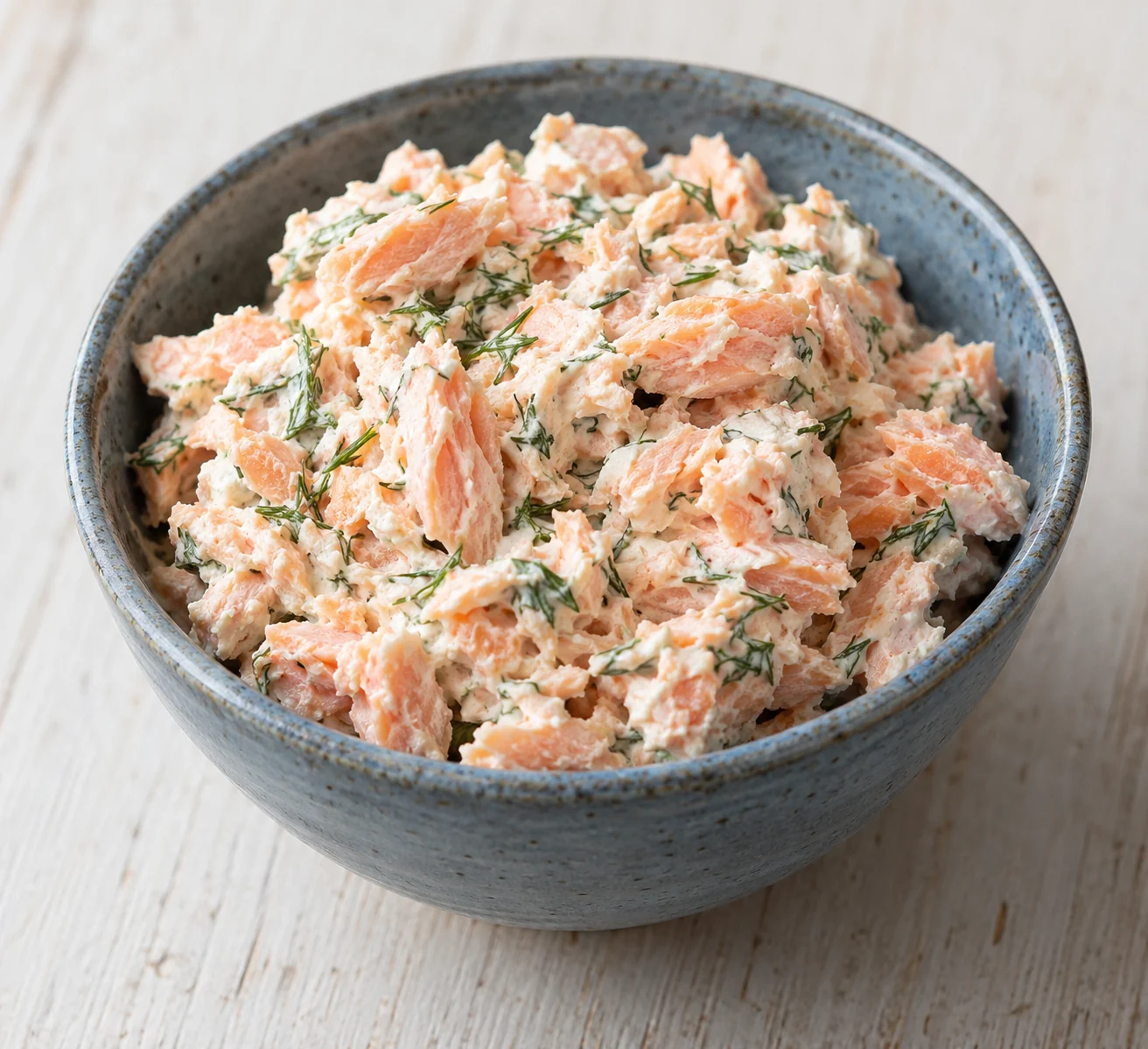
This spread begins with raw salmon that you bake specifically for the recipe, rather than an unspecified amount of leftover or smoked fish. The salmon remains visibly flaked after it is folded with cream cheese. Its baking juices stay in the bowl, which keeps the measured starting ingredients aligned with the estimate. Cooling is a real part of the preparation: the fish needs to be cold before it is mixed into the dairy base.
Baked salmon & dill spread makes 8 servings, with 2 hr 10 min estimated total time. View the standalone recipe page.
Choose the fish state carefully
Weigh skinless, boneless farmed Atlantic salmon as the card specifies. A skin-on fillet's package weight includes material that would not belong in this spread, and a canned or smoked product has a different nutrient and seasoning profile. Check for any remaining pin bones before baking. Use a small covered dish or a securely folded parchment parcel inside a dish so the juices are collected. This preparation does not require extra oil to grease a large roasting surface.
Bake to the center, not to a dry exterior
The covered environment keeps the fish from developing a deeply browned crust. Check the thickest part with a thermometer and remove it when it reaches the stated safe endpoint. Thin pieces may finish before the upper time range, while a thick central portion can need longer. White protein appearing on the surface is not a reason to discard that part of the fish. Transfer the whole cooked portion and all its juices into the cooling bowl.
Cool in a shallow layer
Break the fish into loose flakes to help heat escape, then use the ice-water bath without letting outside water enter the bowl. Stir gently, preserving some texture. Move the shallow container to the refrigerator promptly and confirm that it is fully cold before combining it with cream cheese. A deep pile cools less evenly, especially in the center. The recipe includes a cooling allowance, but the thermometer matters more than assuming every refrigerator and bowl reaches the same temperature on schedule.
Mix the creamy base before folding
Working lemon juice into the cream cheese first makes it easier to distribute without crushing the salmon through repeated stirring. Use a fork for the base and a broad spoon or spatula to fold in the fish. The chopped dill should be fine enough to appear throughout the spread rather than as long stems. Stop when the ingredients are evenly combined. A food processor would produce a smoother paste, but that is a different texture from the flaked spread shown here.
Chill again and serve small portions
The final rest gives the complete mixture time to settle and become evenly cold. Divide it into eight shares and keep the main container in the refrigerator while serving smaller amounts. Crackers and toast are separate additions rather than part of the nutrient estimate. Use a clean utensil each time and follow the two-day storage window. The fish and cream cheese both need refrigeration, and the lemon does not turn the mixture into a preserved food or extend its safe storage indefinitely.
Common questions
Can I use hot-smoked salmon instead of baking fresh fish?
That would change the food state, salt content and flavor. This recipe's estimate is based on raw farmed Atlantic salmon cooked with all juices retained. Use the specified fish for this version rather than treating an equal weight of smoked salmon as equivalent.
Why is the spread softer than expected?
Warm fish can soften the cheese, so check that the fish was fully chilled before mixing. The recipe also deliberately keeps its juices. Let the finished spread complete its refrigerator rest before judging consistency; do not automatically add unmeasured extra cheese to make it stiff.
Technique & food-safety references
These primary references support the technique, safety and storage guidance. The recipe and cooking explanations are original Recipe Pinboard content.


