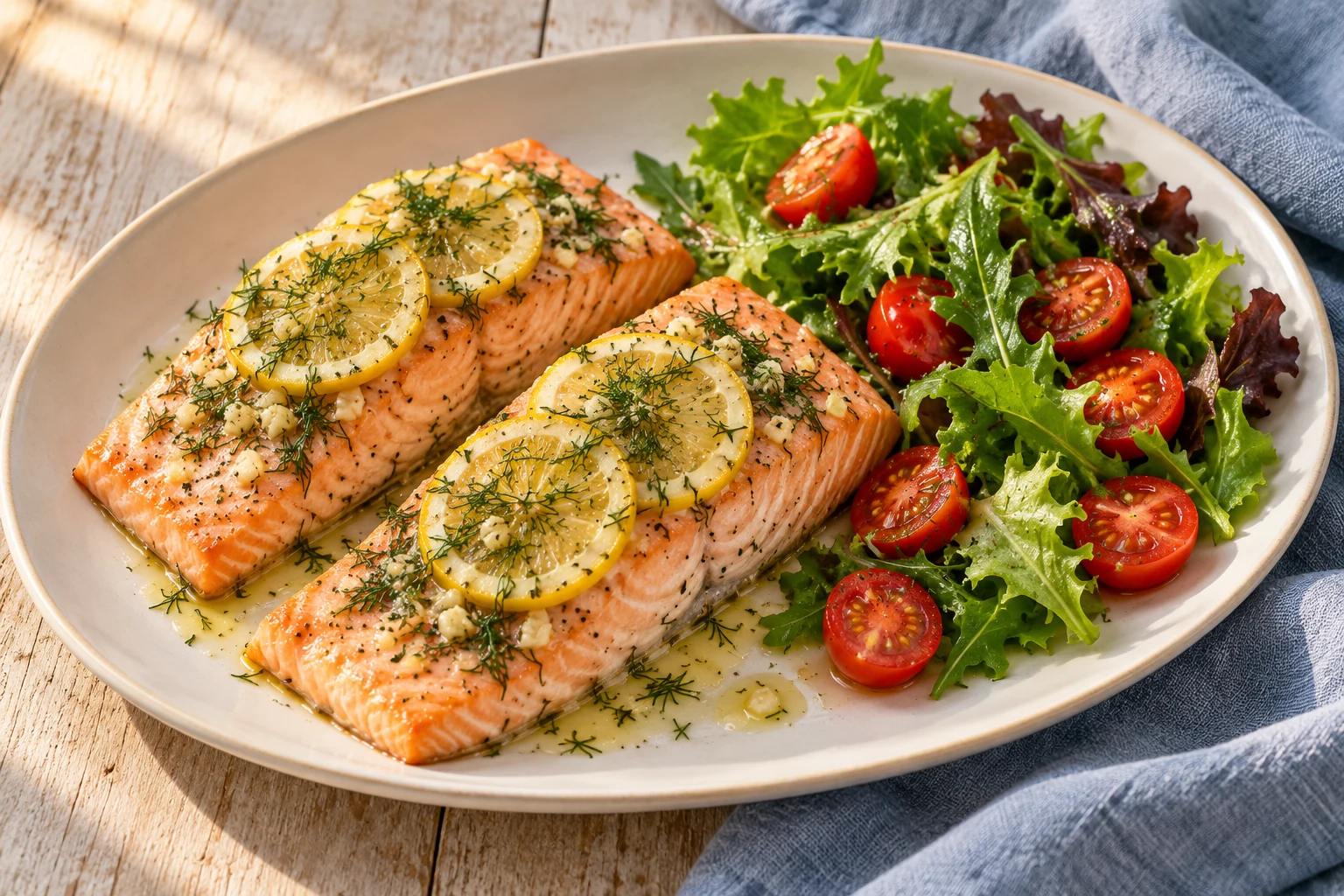
Four 170 g salmon fillets make this a four-serving, 25-minute dinner. The oven does most of the cooking, while lemon, garlic and dill provide a short, clear flavor combination. The most important variable is the thickness of each fillet, so the recipe’s 12–18-minute baking window is a guide rather than a substitute for checking the center.
Lemon dill baked salmon makes 4 servings, with 25 min estimated total time. Open the complete ingredient list and method.
Choose fillets that can finish together
The source recipe specifies raw farmed Atlantic salmon. Look for four pieces of roughly similar thickness as well as the stated weight. A long thin tail piece and a compact thick center cut may both weigh 170 g, yet the thin one is likely to cook sooner.
Place salmon skin-side down if skin is present. Skinless fillets can rest directly in the parchment-lined dish and may need especially gentle handling when serving. Either way, avoid overlapping pieces. Do not treat a change in cut or species as a guarantee of identical timing; check the thickest part of every fillet.
Prepare the fish and keep the salad separate
Heat the oven to 400°F (200°C) and line a baking dish with parchment suitable for the temperature. Pat the fish dry and arrange it with some space between pieces. Surface water dilutes the seasoning mixture and can leave the fish sitting in more liquid than intended.
Wash or prepare the produce using clean utensils away from raw fish. The 200 g halved cherry tomatoes and 80 g washed greens are served alongside, not roasted under the salmon. FDA guidance allows produce labeled ready-to-eat or prewashed to be used without further washing; otherwise follow safe produce-washing practices.
Divide one lemon between juice and slices
Juice half the lemon and thinly slice the other half. Mix the juice with 1 tbsp olive oil, two minced garlic cloves, ½ tsp kosher salt and ¼ tsp black pepper, then brush the mixture over the fillets. The oil helps spread the garlic and seasoning; the lemon supplies acidity without requiring a separate sauce.
Lay the lemon slices on top as directed. They should not form a thick mound that makes the fish beneath difficult to inspect. This method brushes and immediately bakes the fish; it does not call for a long acidic marinade. Keep the 2 tbsp chopped dill aside until the fish is cooked.
Use the center temperature to decide
Bake for 12–18 minutes, beginning your checks near the earlier end if the pieces are thin. Insert a food thermometer into the thickest center, preferably from the side so its sensing area sits within the fish rather than against the hot dish. The recipe’s target is 145°F (63°C).
Check different fillets instead of assuming the one closest to the oven door represents them all. Remove a piece that has reached the target to a clean plate while a thicker piece finishes. Do not use the color of the surface, the darkness of a lemon slice or elapsed time alone as your safety test.
Read texture clues without overreacting
Some pale protein may appear on the surface during baking. Its appearance by itself does not determine whether the fish is done or unsafe. A thermometer answers the safety question; checking early and avoiding unnecessary additional baking helps prevent a dry result.
If garlic on the surface is browning quickly, inspect the fish rather than automatically turning up the oven for more color. This is baked salmon, not a broiled crust. Once it is cooked, sprinkle with the dill and serve immediately. Divide the tomatoes and greens among the four plates, keeping them beside the fish rather than soaking them in the hot baking juices.
Variations and leftovers
Chopped parsley can stand in for the same 2 tbsp dill as a simple variation. The dish will taste different but retains the lemon-garlic structure. A different fish species or substantially different fillet size needs its own timing assessment, so keep the 145°F fish target and verify each piece.
Refrigerate cooked salmon promptly and use within 3–4 days. Keep salad separate for better texture. If reheating, bring the salmon to 165°F and use a covered dish to limit drying. These are general leftover-safety guidelines, not a promise that repeatedly reheated fish will retain its original tenderness.
Common questions
Should the tomatoes go in the baking dish?
No. In this recipe they are halved and served with the washed greens alongside the cooked salmon. Roasting them would be a separate variation.
When does the dill go on?
After baking. Keep it ready while the fish cooks, then sprinkle it over the hot fillets immediately before serving.
Food-safety references
These official references support the safety and storage guidance. The recipe and cooking explanations are original Recipe Pinboard content.