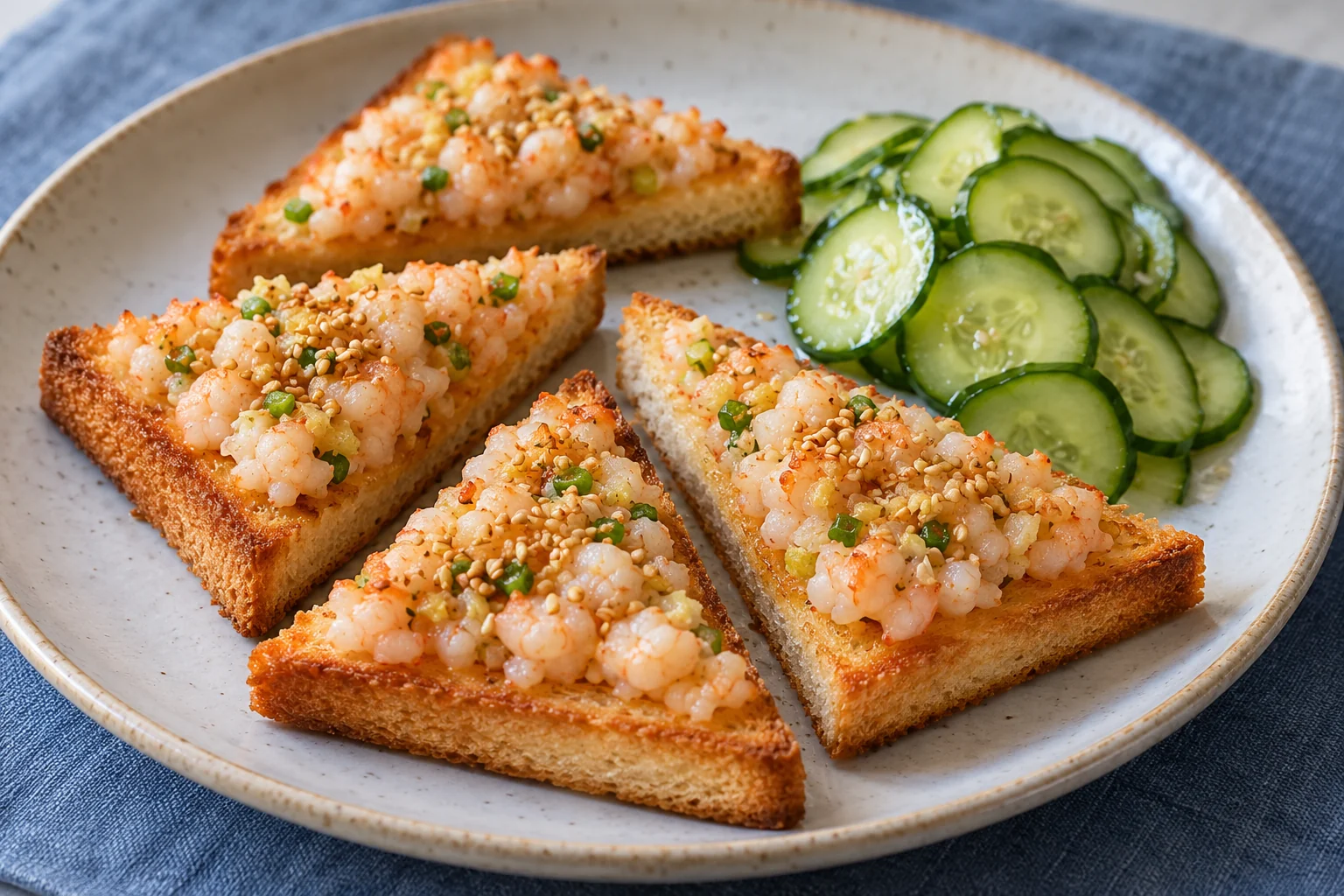
These toasts turn a finely chopped shrimp mixture into a thin baked topping, with sesame on top and measured oil underneath the bread. A cucumber salad supplies a cool, sharp contrast without an additional dipping sauce. The recipe makes sixteen triangles, four per serving. Allow fifty minutes for preparation, preheating, baking and the salad's short rest. Keep a fine-tip thermometer nearby: crisp bread edges do not tell you whether the shrimp and egg mixture in the middle has finished cooking.
Baked shrimp toast with cucumber salad makes 4 servings, with 50 min estimated total time. View the standalone recipe page.
Choose and weigh the bread
Use eight slices totaling 240 g, with their crusts attached. Slice counts alone are unreliable because sandwich loaves vary considerably in thickness and size. The published dairy-free tag requires bread whose ingredient label has been checked; ordinary white bread is not automatically dairy-free. Avoid very soft, wet bread that compresses beneath a spoon. Measure the oil into a small bowl and distribute the entire allowance across the undersides. This gives a defined quantity for the estimate rather than assuming an unknown amount of oil is absorbed during frying.
Make a cohesive shrimp spread
Pat peeled shrimp dry before chopping so excess surface water does not thin the topping. Finely chop all the shrimp, then mince half more thoroughly to create a sticky base that holds the remaining pieces. Stir in the measured egg, aromatics, soy sauce and cornstarch. Keep this mixture cold while you arrange the bread, and do not taste it raw. Large intact shrimp pieces are unsuitable here: they leave uneven mounds and separate from the bread more easily than a compact, evenly chopped spread.
Spread to the edges without piling up
Divide the complete mixture among the eight slices before smoothing it. This helps avoid thick early portions and almost bare final slices. Aim for an even layer around a quarter inch thick, including near the corners. Press the measured sesame gently into the surface so it stays attached during handling. Cut each topped slice diagonally into two triangles using a sharp knife and a steady downward motion. Leave space between pieces on the sheet. Crowding creates sheltered patches where moisture escapes slowly and the bread can stay soft.
Check the filling as well as the crust
Bake topping-side up on the prepared metal sheet. Look for opaque shrimp and lightly toasted sesame, then insert the thermometer sideways into a thicker area of topping. Keep its sensing point in the shrimp layer rather than pushing through into hot bread or touching the sheet. The card uses a conservative 165°F endpoint for this mixed shrimp-and-egg topping. If the bread is browning too quickly, shield its exposed edges loosely while the center finishes. Baking produces a different texture from deep frying; there is no need to promise identical crunch.
Keep the salad separate until eating
Dissolve the salad's sugar and salt in the vinegar before tossing with sliced cucumber. The short rest releases some cucumber juice, which stays with the measured dressing rather than being poured away. Divide both vegetables and liquid evenly. Plate the salad beside the toast instead of over it, because a wet topping quickly softens crisp bread. For leftovers, refrigerate the two components separately within two hours. Follow the card's two-day limit, reheat toast to 165°F and add the cold salad afterward. No extra sauce is included in the ingredient estimate.
Common questions
Why did the shrimp layer slide off?
An overly wet mixture or large uneven chunks can make attachment less reliable. Pat the shrimp dry, mince part of it to a paste and press the topping gently onto the bread. Avoid moving the pieces repeatedly before the surface has cooked.
Can I prepare the topping ahead?
You can prepare it shortly before cooking and keep it covered in the refrigerator. Spread it onto bread close to baking so moisture has less time to soak in. Keep raw shrimp utensils separate from the cucumber salad and cooked toast.
Technique & food-safety references
These primary references support the technique, safety and storage guidance. The recipe and cooking explanations are original Recipe Pinboard content.


