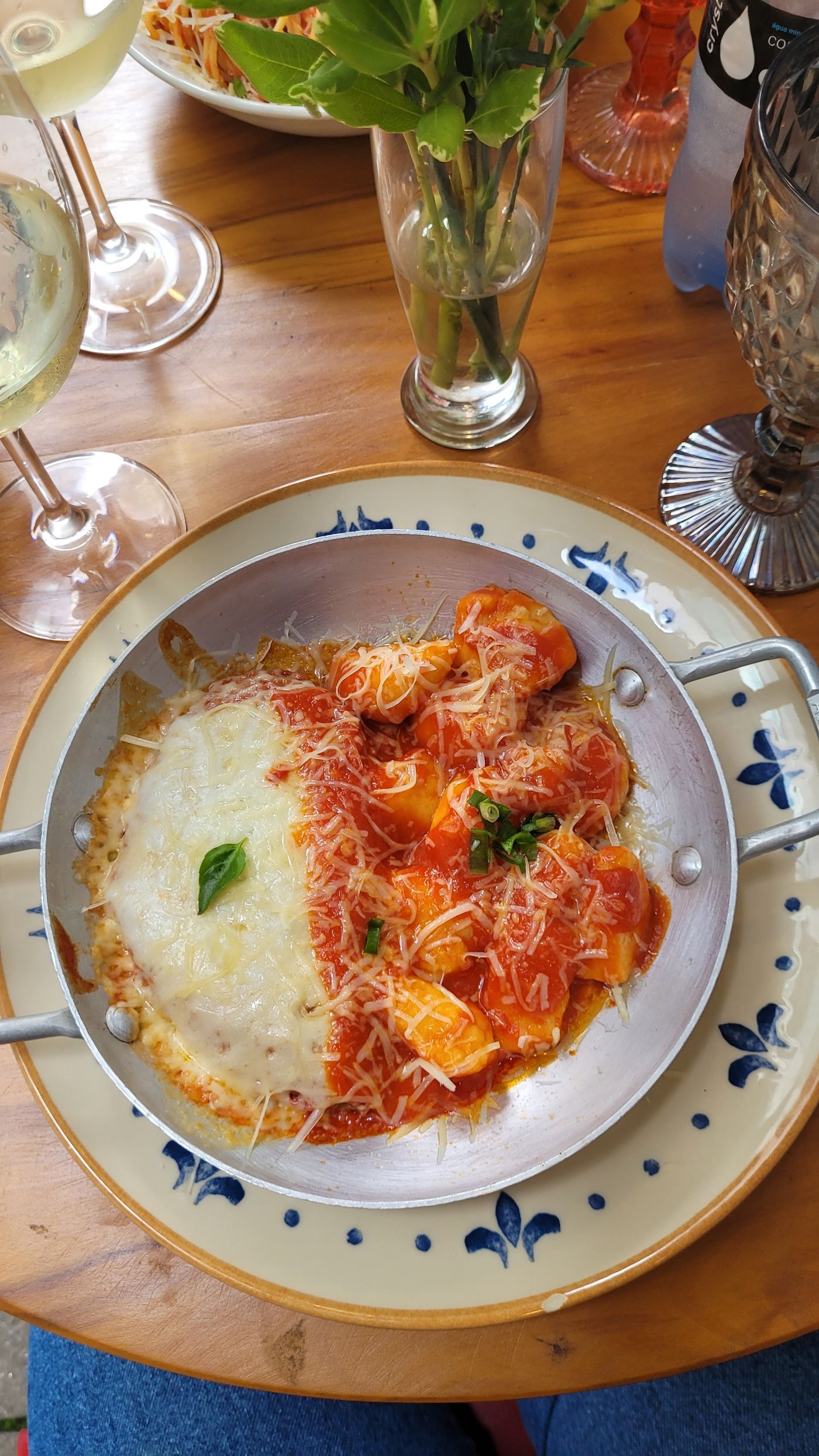
This gnocchi bake has two distinct cooking stages. The 500 g shelf-stable potato gnocchi are boiled according to their package before meeting the tomato sauce, then baked with mozzarella. The oven finishes and heats the assembled dish rather than replacing the initial boiling step. A brief sauce simmer and a thermometer check keep the center of the bake as important as its melted top.
Baked tomato & mozzarella gnocchi makes 4 servings, with 35 min estimated total time. View the standalone recipe page.
Match the gnocchi and skillet to the method
Use the shelf-stable potato gnocchi specified in the card and read their package directions. Refrigerated, frozen and other styles may carry different instructions, so their timing should not simply be assumed identical. Leave the package nearby until the boiling stage is complete.
Choose an oven-safe skillet suitable for 425°F, including its handle, and large enough to hold the sauce and gnocchi without crowding the rim. Plan a heat-safe landing place before baking. A skillet handle is easy to grab by habit after the pan moves from the stovetop into the oven.
Give the sauce its own short simmer
Warm the tablespoon of olive oil and stir in the two minced garlic cloves for thirty seconds. Keep the garlic moving and avoid scorching it. Have the crushed tomatoes open before this step so you can add them promptly rather than searching for a can opener over cooking garlic.
Add the 400 g tomatoes, oregano, salt and pepper and simmer for eight minutes. Stir around the bottom and edges so the thicker tomato mixture does not catch. You want a sauce that can coat the gnocchi, not a dry tomato paste; it still has a hot oven stage ahead of it.
Boil first and transfer without excess water
Cook the gnocchi in boiling water according to the package, then drain them. Some potato gnocchi use floating as a useful cue, but the package directions for the actual product take precedence. Do not extend the boil simply because the oven is still preheating.
Fold the cooked gnocchi into the sauce with a broad spoon, supporting them rather than beating them against the skillet. Drain well enough that you are not unintentionally diluting the tomato mixture. There is no reserved-water addition in this recipe; the sauce and drained gnocchi are combined as written.
Spread the mozzarella and check below it
Tear the 150 g mozzarella into pieces and distribute them over the top. Separate clusters melt into several patches rather than one thick central blanket. If the mozzarella came in liquid, lift it out and drain it before tearing so packing liquid does not become an extra sauce ingredient.
Bake for twelve to fifteen minutes, looking for bubbling and a center temperature of 165°F. Insert the thermometer into the food at the center without resting its tip on the hot skillet. Melted cheese around the edges is not sufficient evidence that the middle has reached the specified temperature.
Rest briefly, then finish with basil
Let the bake rest for three minutes after leaving the oven. That short pause makes the bubbling sauce easier to serve, while the 10 g fresh basil added afterward keeps its fresh character. Divide the gnocchi and mozzarella patches among four servings rather than taking all the cheese from one side first.
Keep the hot handle clearly protected. Refrigerate leftovers in shallow covered containers within two hours, or one hour above 90°F, and use within three to four days. Reheat leftovers to 165°F. The gnocchi may soften further during storage and reheating, so avoid unnecessary stirring or an extended second bake once hot.
Common questions
Can I skip boiling and put the packaged gnocchi straight into the sauce?
Not for this card. Its liquid amount and short bake are paired with a separate package-directed boil. A no-boil gnocchi bake needs a method designed for that approach.
Why is there watery liquid around the cheese?
Excess draining water from the gnocchi or packing liquid from mozzarella can thin the sauce. Drain both appropriately and give the tomatoes their full initial simmer.
Technique & food-safety references
These primary references support the technique, safety and storage guidance. The recipe and cooking explanations are original Recipe Pinboard content.