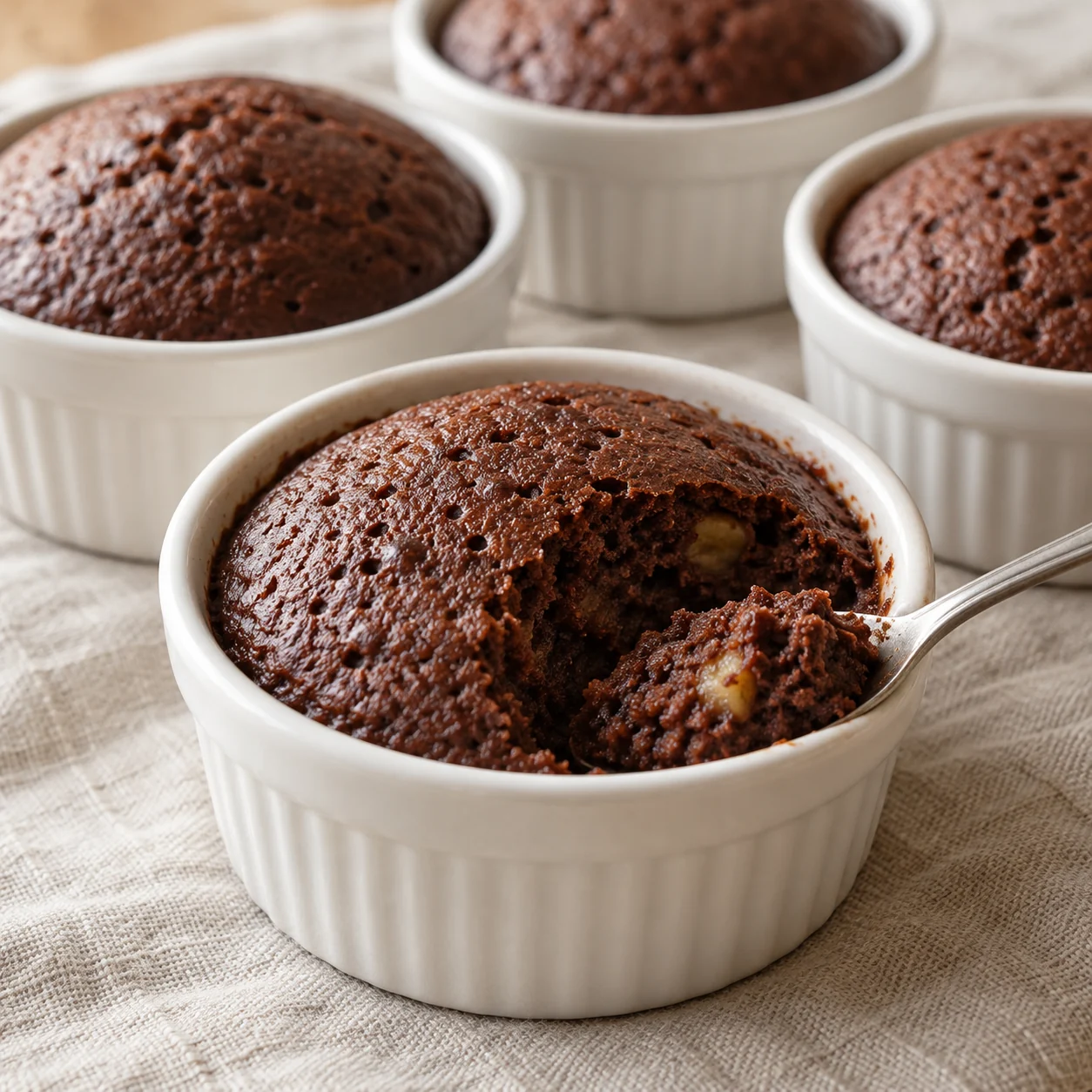
These individual puddings are small cocoa sponges, cooked in covered ramekins above gently simmering water. Mashed banana supplies moisture and flavor, while egg and flour give the batter structure. They are not molten chocolate cakes: the center should cook through before serving. Follow the complete recipe card above, then use this guide to arrange the steamer, cover the ramekins and recognize the difference between moist banana crumb and uncooked batter.
Banana & cocoa steamed puddings makes 4 servings, with 1 hr 5 min estimated total time. View the standalone recipe page.
Check the pot and ramekins before making batter
Use heatproof ramekins that fit upright on a stable rack inside a pot with a close-fitting lid. Check the layout while everything is cold. The water must stay below the rack rather than surrounding the ramekin rims, and the pot needs space above the covered dishes for steam to circulate. Four small dishes should not be wedged so tightly that you cannot lift them safely. Grease with the measured portion of oil; the remaining oil belongs in the batter and is already included in the recipe estimate.
Mash the banana and distribute the dry ingredients
Weigh the banana after peeling and mash it thoroughly with a fork. Small soft flecks are fine, but large chunks create wet pockets that make doneness harder to judge. Whisk the flour, cocoa, baking powder and salt together before combining with the wet ingredients. Cocoa sometimes forms firm lumps, so break those up with the whisk or pass the dry mixture through a sieve. The leavener should be evenly distributed rather than concentrated in a few bitter-tasting pockets.
Mix briefly and leave room for the rise
Whisk the banana with sugar, egg, milk and the remaining oil, then fold in the dry ingredients just until no dry flour remains. Do not taste the batter: both flour and egg are raw ingredients at this point. Divide the batter evenly between all four dishes instead of filling one to the brim before moving to the next. The specified ramekin size leaves room for expansion. A larger communal basin would require a different cooking time and should not be treated as an interchangeable container.
Cover each dish and maintain gentle steam
Place parchment and foil over each ramekin, with a loose fold through the center to give the rising sponge space. Crimp around the rim so condensed water from the pot lid does not drip into the batter. Set the dishes on the rack and cover the pot. Keep a gentle steady simmer throughout cooking, checking the water level cautiously and adding hot water below the rack when needed. Do not let the pot boil dry, and keep your face and hands away from the escaping steam when lifting the lid.
Check the center and serve the sponge warm
Near the end of the stated time, uncover one pudding carefully and insert a skewer into its center. A few moist crumbs are appropriate, but shiny wet batter means it needs longer. The center should also reach at least 160°F (71°C); temperature alone does not replace checking that the flour batter has set. Recover and steam briefly if necessary. Let the finished dishes rest before serving, because the ceramic and sponge remain very hot. Refrigerate within two hours and reheat leftovers to 165°F (74°C).
Common questions
Why is there water on top of my pudding?
The cover may have leaked or the boiling water may have splashed above the rack. Keep water below the dishes and secure each parchment-and-foil cover. A wet surface does not establish that the center is cooked; check the center separately.
Can I replace the banana with extra milk?
Banana contributes solids as well as water and sugar. More milk would make a different batter and could prevent the sponge from setting as intended. Use the peeled banana weight in the card; substitutions require a separate formula and nutrient estimate.
Technique & food-safety references
These primary references support the technique, safety and storage guidance. The recipe and cooking explanations are original Recipe Pinboard content.


