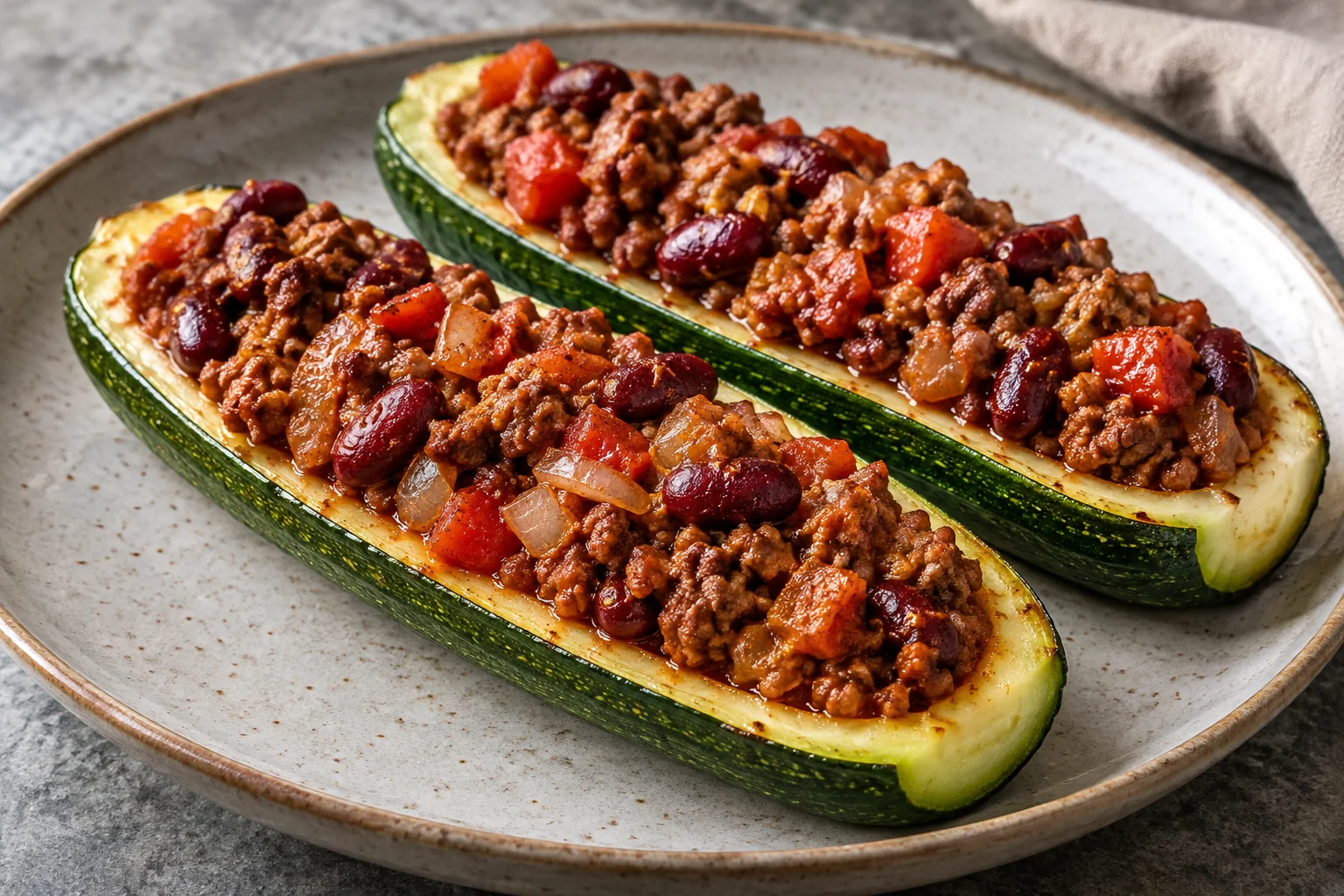
These boats use the whole trimmed zucchini: the firm outer shells hold the meal, while the scooped flesh cooks into the filling. Beans add texture without requiring a layer of cheese. Successful assembly depends on leaving sturdy walls and reducing the skillet mixture before it goes back into the oven. Food temperature remains a separate check from vegetable tenderness.
Beef & kidney bean zucchini boats makes 4 servings, with 1 hr 15 min estimated total time. View the standalone recipe page.
Leave enough wall around each shell
Cut the zucchini lengthwise and scoop a shallow channel rather than hollowing it to a translucent skin. Roughly a quarter inch of flesh around the shell gives support while still allowing the vegetable to soften. Set aside every piece of edible scooped flesh and chop it finely. It belongs in the ingredient total and the filling. If a zucchini rocks on the tray, position it against another boat or the dish edge rather than shaving away large amounts of the underside.
Start the shells while cooking the filling
The initial roast begins softening the zucchini before the filling is added. Use only the specified first portion of oil on the shells and reserve the rest for the skillet. Meanwhile, onion and chopped zucchini can cook together in a wide pan. The chopped flesh releases considerable water, so let much of that moisture evaporate before adding beef. A crowded narrow pan makes this slower. This preparation runs alongside the shell roast and helps the total timing remain practical.
Cook the beef safely before assembly
Break the raw beef into small pieces so it distributes through the vegetables. Check that it reaches the specified ground-beef temperature with a food thermometer; color alone is not enough. Retain the pan juices because the estimate counts the complete raw ingredient amount. The recipe specifies ninety-three-percent lean beef. A fattier product changes the amount of rendered fat and the nutrition estimate, even if its browned appearance seems similar. Keep utensils used for raw meat away from finished portions.
Reduce the tomatoes with the beans
Garlic and paprika need only a short stir before the tomatoes go in. The canned tomatoes include their juice, while the kidney beans are drained and rinsed before weighing. Simmer until a spoon drawn through the filling leaves a brief path rather than immediately filling with watery liquid. The beans should remain mostly intact. Divide all of the filling over the eight shells, mounding it evenly. A little filling beside a shell is preferable to discarding part of the calculated batch.
Check both texture and center temperature
During the second bake, the zucchini should become fork-tender without losing all structure. Measure the hot filling at its center, aiming for the stated casserole temperature. If the shells are ready before the filling, a loose cover can reduce surface drying while the center finishes heating. Serve two boats per portion, sharing any filling from the dish. The meal has conditional gluten-free and dairy-free ingredient screens, but packaged tomatoes, beans and spices still require label checks and substitutions need a new review.
Common questions
Why did my zucchini shells collapse?
They may have been hollowed too deeply, cut from very small zucchini or baked much longer than needed. Leave a substantial wall and check tenderness during the final stage instead of waiting for the filling to look browned.
Can I use dry kidney beans directly?
No. The card specifies canned, already cooked beans weighed after draining and rinsing. Dry kidney beans require a separate safe preparation process and cannot finish cooking inside these boats.
Technique & food-safety references
These primary references support the technique, safety and storage guidance. The recipe and cooking explanations are original Recipe Pinboard content.


