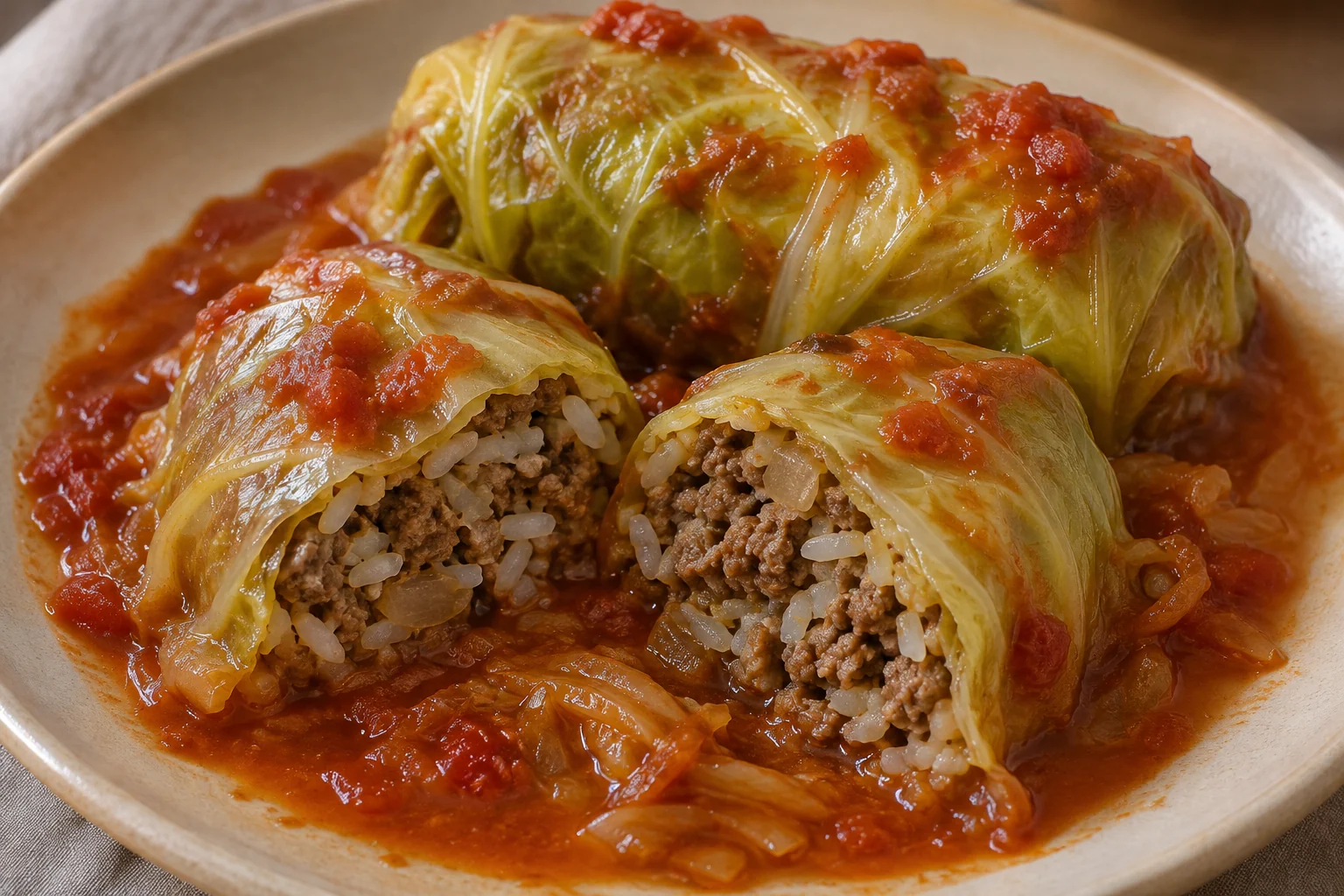
These rolls enclose lean ground beef and already cooked rice in softened cabbage leaves. They bake under a tight cover with tomato sauce and the remaining edible cabbage underneath. Preparing the rice, cooling the filling components and making flexible leaves takes time, so this is a planned cooking project rather than a quick assembly dinner. The sauce, shredded cabbage and juices all belong with the finished portions.
Beef & rice stuffed cabbage rolls makes 4 servings, with 3 hr 40 min estimated total time. View the standalone recipe page.
Cook and cool the rice before mixing raw beef
Measure the rice dry and cook it with its allocated water and salt. After the covered stand, spread it in a shallow container and refrigerate promptly instead of leaving it in a deep warm saucepan. The rice must cool before it is combined with raw beef. Cook the onion and garlic separately, then cool them as directed too. These preparation stages can overlap with the cabbage work, but keep raw-meat utensils away from the cooked rice and vegetables. Use the complete cooked rice batch; no particular cooked weight is assumed or required.
Make the cabbage flexible without tearing the leaves
Select eight large intact leaves and keep the rest of the edible trimmed cabbage for the base of the dish. Blanch the leaves in batches until they bend without snapping, then drain and let them cool enough to handle. The thick central rib can hold a leaf rigid even when its edges are soft. Shave that ridge flatter with a knife held nearly parallel to the leaf, taking care not to cut through it. Chop the shaved pieces with the remaining cabbage. Keeping those pieces beneath the rolls gives them time to soften in the covered bake.
Divide the filling before rolling the parcels
Combine the cooled rice and onion with the beef and seasonings, mixing gently until the ingredients are distributed. Divide the filling into eight portions before putting any onto the leaves. This prevents the first few rolls from becoming oversized while the final leaves receive too little. Place each portion near the stem end, fold the sides inward and roll securely without squeezing the filling into a hard cylinder. The rice is already cooked, but the parcel still benefits from a little space rather than an extremely tight wrap. Put the seam underneath when arranging it in the dish.
Cover tightly and check the filling, not the sauce
Spread the shredded cabbage and some sauce in the dish before adding the rolls. Pour the remaining sauce over and around them, then cover tightly so the exposed leaf surfaces do not dry out during the long bake. When checking, lift the cover away from your face because steam collects underneath. Insert a thermometer into the thick filling in each roll and look for 165°F, the endpoint used here for the assembled casserole. Bubbling tomato sauce does not prove that every center has reached that temperature. Continue covered baking if either temperature or leaf tenderness is still short.
Rest, portion and cool the leftovers promptly
Allow the ten-minute rest before lifting the rolls with a broad spoon or spatula. Each serving receives two rolls and one quarter of the sauce and cabbage underneath; do not leave that flavorful base behind in the pan. For leftovers, move portions into shallow covered containers promptly, aiming to refrigerate within an hour and never leaving them beyond the stated room-temperature limits. This rice-containing dish uses a conservative twenty-four-hour refrigerated storage window. Reheat once until every part reaches 165°F. Heat only the portions needed so the entire batch does not repeatedly cycle through warming and cooling.
Common questions
What should I do if a cabbage leaf splits?
Use a small intact piece from the retained edible cabbage as a patch on the inside before adding filling, then keep that join underneath. A badly shredded leaf is better chopped for the base; choose a sound large leaf for the outer wrapper.
Can I put uncooked rice directly into the beef?
Not with these quantities and timings. The recipe allocates water to cook the rice first, and the filling is designed around that hydrated rice. Raw rice would need a separately developed liquid balance and cooking method, so it is not a direct shortcut.
Technique & food-safety references
These primary references support the technique, safety and storage guidance. The recipe and cooking explanations are original Recipe Pinboard content.


