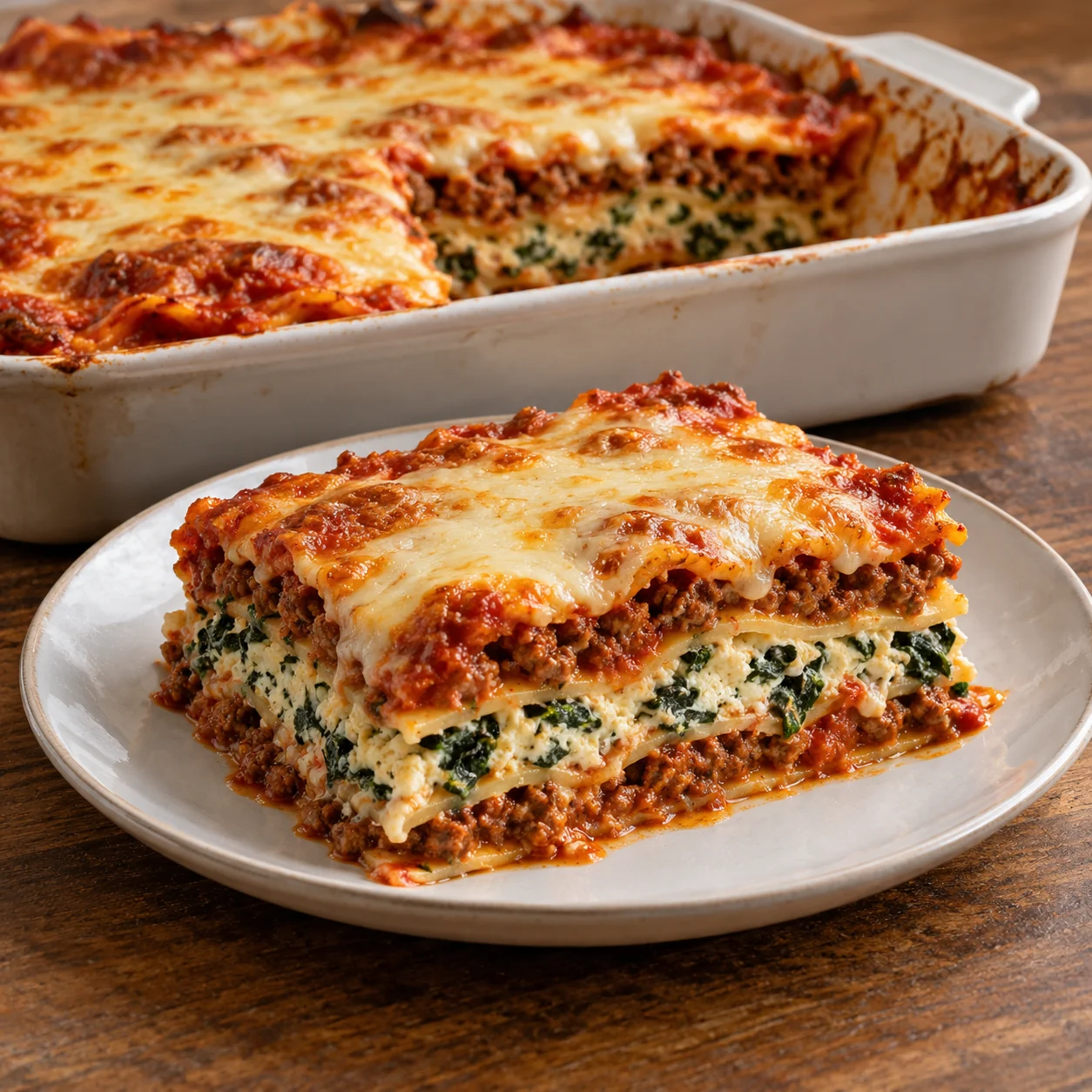
A lasagna that cuts into recognizable layers starts before the baking dish is filled. The meat sauce needs body, the spinach must shed excess surface water, and the pasta should bend without becoming fragile. The complete recipe card uses three pasta layers with a distinct spinach-ricotta center. Read the assembly sequence before starting so the sauce and sheets can be divided deliberately, leaving enough moisture to cover the final pasta layer.
Beef & spinach layered lasagna makes 8 servings, with 2 hr 5 min estimated total time. View the standalone recipe page.
Make a sauce that spreads without flooding
Break the ground beef into small crumbles as it cooks with the softened onion. This helps distribute meat evenly across the thin layers and avoids large lumps that push pasta sheets upward. The recipe uses ninety-percent-lean beef and retains its rendered fat in the sauce. Add tomatoes and the measured water, then simmer until the mixture is thick but spreadable. A spoon drawn across the pan should leave a brief trail. Do not reduce it to a dry paste, because the noodles still need moisture during baking.
Match the pasta to the stated method
Choose ordinary dry lasagna sheets that require boiling. Oven-ready sheets are formulated for another hydration method and should not be substituted without changing the sauce and cooking plan. Boil the listed dry weight until the sheets are pliable but still firm, following the package as a starting guide. Lift or drain carefully and lay them separately on a clean tray so they do not weld into a stack. Trim or overlap minimally to fit the pan, using all the measured pasta rather than discarding large pieces.
Let spinach moisture evaporate
Wilt the washed spinach with the water clinging to its leaves, then uncover the pan and allow visible liquid to evaporate. This recipe does not squeeze and discard a substantial amount of spinach liquid; that distinction is retained in the nutrient assumptions. Cool the spinach briefly before mixing it into whole-milk ricotta. The result should be spoonable rather than runny. Large wet leaves can slide between the layers, so chopping before wilting helps distribute small pieces evenly through the cheese.
Build the three layers in the written order
Spread the first portion of meat sauce across the bottom of the specified dish to prevent dry pasta contact with the pan. Arrange the sheets, sauce and ricotta mixture exactly as listed, reserving the final sauce portion to cover the upper pasta completely. Spread fillings toward the corners instead of piling them in the middle. Finish with mozzarella and cover loosely with foil. The cover should trap heat without being pressed onto the cheese, which would pull away with the foil when uncovered.
Bake through and give the slice time to settle
The uncovered stage browns the mozzarella, but a browned top alone does not establish a hot center. Check that the middle reaches 165°F (74°C) before removing the dish. Then allow the full twenty-minute rest. During that time the sauce and cheese settle enough to make cutting less messy. Divide into eight equal squares with a sharp knife and lift with a broad spatula. Refrigerate remaining portions in shallow containers within two hours; do not leave the whole pan on the counter waiting for it to become completely cold.
Common questions
Why does the lasagna spread out when I serve it?
Very thin sauce, watery spinach or skipping the resting time can each make the layers slide. Check those stages before adding more cheese as a repair. The slice will still be soft and moist; the goal is a coherent portion rather than a rigid block.
Does the estimate subtract nutrients lost in pasta water?
No. It starts with the dry pasta amount and does not invent a retention factor for boiling and draining. That limitation is retained with the ingredient calculation. Brand, cheese moisture and the amount left on utensils can also affect the actual serving.
Technique & food-safety references
These primary references support the technique, safety and storage guidance. The recipe and cooking explanations are original Recipe Pinboard content.


