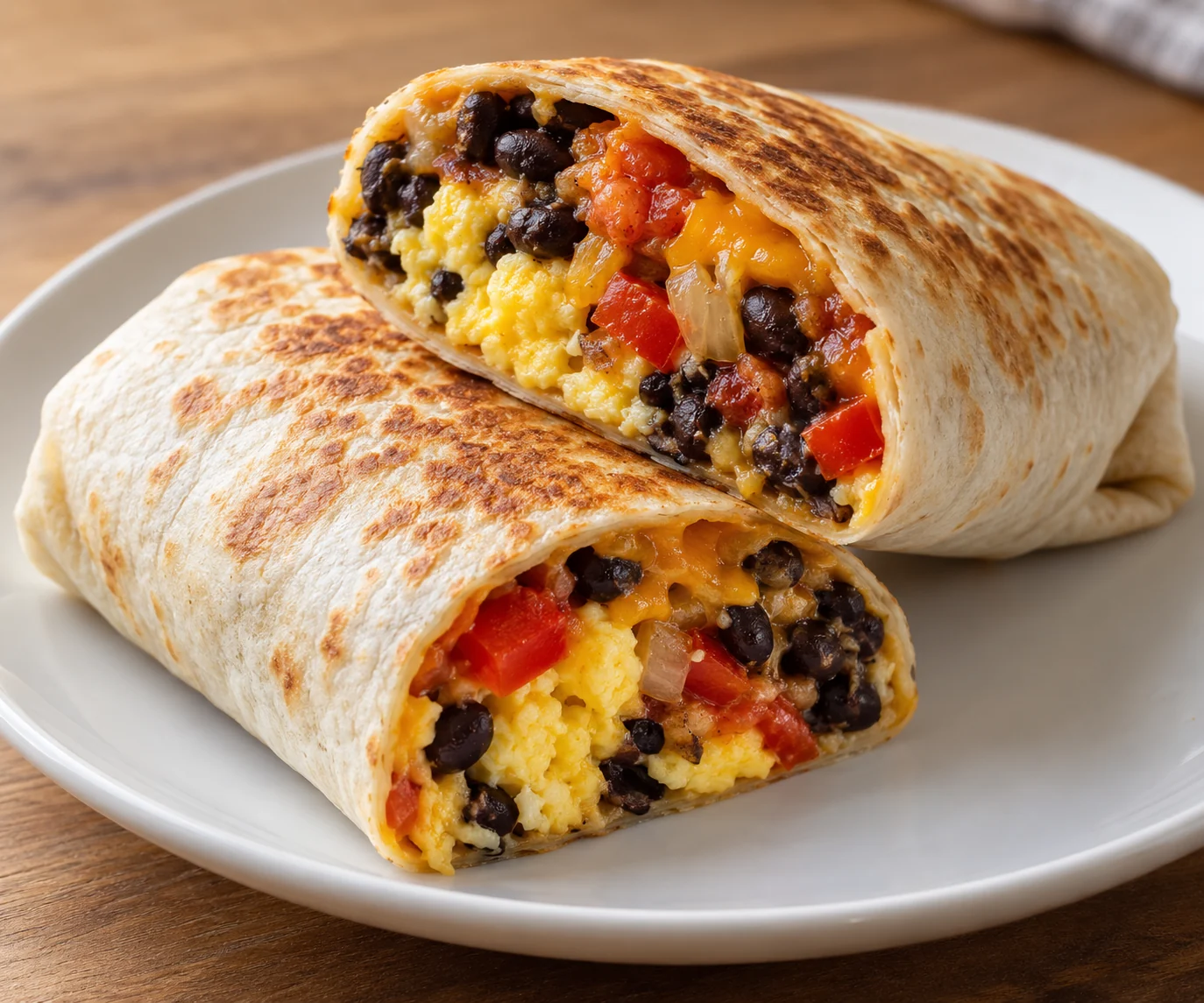
A burrito that holds together begins with the filling, not with a tighter roll. These four burritos combine cooked black beans, softened vegetables, salsa, fully cooked scrambled eggs and cheddar inside measured flour tortillas. The beans are partly mashed to hold the filling together, while a final dry-skillet toast helps set the seam. The recipe includes every gram of filling and cheese across four servings. It does not assume sour cream, avocado, a breakfast potato side or extra oil for the final toast.
Black bean & egg breakfast burritos makes 4 servings, with 50 min estimated total time. View the standalone recipe page.
Choose the beans and tortillas deliberately
The bean weight refers to cooked, drained black beans, with a cooked unsalted profile used for the estimate. It is not a dry-bean weight. If using canned beans, drain them and recognize that salt and brand composition can differ. Use commercially prepared ready-to-heat flour tortillas with the stated weight and approximate diameter. The available complete generic tortilla profile is labeled ready-to-bake or fry, so it is a documented approximation for this packaged product. Follow the actual package instructions; a brief warming step does not safely cook raw tortilla dough.
Cook the vegetable filling until it stays put
Soften the onion and red pepper in the first portion of oil before adding beans and salsa. Stir while the mixture heats, then mash about half the beans against the pan. Those mashed beans bind the vegetables and salsa without another ingredient. Keep cooking until no loose liquid runs across the bottom when the pan is tilted. A wet filling makes the tortilla slippery and can leak through the seam. The salsa is part of the measured recipe, so reduce it with the beans instead of draining away an unmeasured portion.
Scramble eggs gently but completely
Use the separate measured oil for the eggs. Moderate heat gives you time to fold the curds without scorching the bottom. For this burrito, stop when the eggs are set and reach 160°F, rather than relying on a later brief tortilla toast to finish undercooked eggs. Break especially large curds into pieces that distribute easily. Keep the cooked eggs separate until assembly so you can divide them evenly among the four tortillas. The cheese is also divided equally; it should not all end up in the first two rolls.
Warm and fold without overpacking
Warm the prepared tortillas according to their package directions so they bend readily. A cold tortilla is more likely to split at a fold. Place the fillings in a compact strip across the lower middle, leaving generous bare edges. Fold both sides inward, bring the near edge over the filling, then roll forward snugly. Avoid squeezing so hard that the bean mixture is pushed out. If you have divided everything first, you can adjust the shape of each filling mound without quietly making one burrito much larger than the others.
Toast the seam and store safely
Place the burrito seam-side down in a dry skillet before turning it. This sets the fold and gives the tortilla browned patches without adding uncounted oil. Work in batches with space to turn each roll, then rest briefly before cutting. Refrigerate within two hours in shallow containers rather than leaving a stack of warm wrapped burritos on the counter. Use within three to four days and reheat the center to 165°F. The vegetarian tag requires lard-free tortillas, vegetarian-rennet cheddar and salsa without meat or fish ingredients.
Common questions
Why does my burrito split while rolling?
It may be cold, too small for the filling or rolled with excessive pressure. Use the specified flexible tortilla size, warm it first and leave clean borders. Divide the filling before assembly so the last tortilla is not overloaded.
Why is the inside soggy after toasting?
Toasting browns the outside but cannot remove much liquid trapped inside. Reduce the bean and salsa mixture before filling and cook the eggs until set. A wet filling needs attention in the pan, not a longer dry toast.
Technique & food-safety references
These primary references support the technique, safety and storage guidance. The recipe and cooking explanations are original Recipe Pinboard content.


