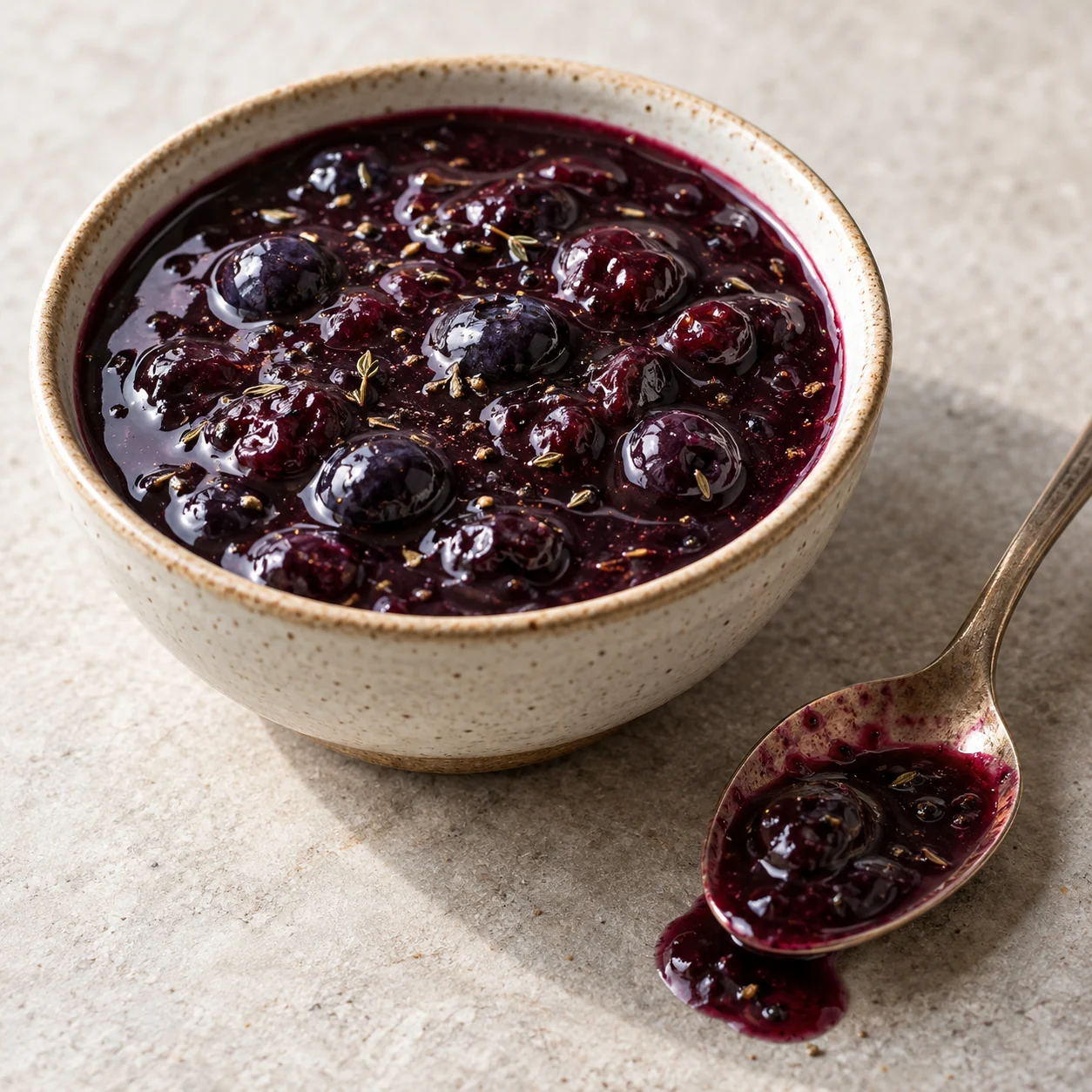
This small saucepan sauce sits between a berry compote and a savory glaze. Some berries stay recognizable while others supply the purple liquid that coats a spoon. Balsamic vinegar gives the fruit a tart edge, and a measured amount of maple syrup rounds it out. The full recipe above makes six equal portions in about twenty-five minutes, including a short cooling period.
Blueberry & balsamic sauce makes 6 servings, with 25 min estimated total time. View the standalone recipe page.
Choose vinegar rather than bottled glaze
Read the bottle before measuring. Plain balsamic vinegar brings acidity and its own grape-derived sugars; a prepared balsamic glaze may already contain concentrated sweetener or starch. Substituting that product changes both the texture and the nutrition estimate. Rinse the blueberries, remove any stems and discard damaged fruit. Fresh berries vary in size and sweetness, so their appearance during cooking is a more useful checkpoint than expecting every batch to become the same shade at precisely the same minute. Measure the small thyme quantity carefully: this is a fruit sauce with a background herb note.
Open the fruit before adding starch
Use a small saucepan so the berries sit in a shallow but continuous layer of liquid. Begin with forty grams of the water, leaving twenty grams cold for the slurry. Bring the fruit mixture to a simmer, then lower the heat. Stir around the edges as well as through the center, where thick berry pulp can collect. Over eight to ten minutes, the skins should wrinkle and split. Press about half the berries against the pan with the spoon. That releases enough pulp to make a cohesive sauce while leaving some rounded pieces for contrast.
Make the slurry immediately before it goes in
Stir the cornstarch into the reserved cold water until there are no dry pockets. Stir once more just before pouring because the starch can settle. Add it to the hot berries while stirring gently, then let the sauce bubble for about one minute within the recipe's one-to-two-minute finishing window. Argo's cooking guidance explains that cold dispersion prevents lumps and heating develops the thickening. The sauce should turn glossy and coat the spoon. Do not keep boiling it for a long reduction after this stage; extended cooking can weaken a cornstarch-thickened mixture.
Judge the texture after a short rest
Remove the pan from the heat and allow five minutes of cooling. A hot sauce flows more freely than a cooled portion, so judging it straight from a vigorous bubble can lead to unnecessary extra starch. The intended texture is spoonable and flowing, with berry pieces suspended in it. If it is thicker than wanted, stir in a small measured splash of water and note that adjustment for the portion weight. If it seems thin, first check that the slurry actually reached a bubbling stage. Avoid adding dry starch directly to the finished sauce, which creates pale clumps.
Portion and refrigerate the whole batch
Stir before dividing so each of the six portions gets both berries and sauce. A scale is useful: weigh the finished batch in a tared bowl and divide that number by six. Evaporation changes the finished weight, while the estimated nutrients still come from the measured ingredients. Refrigerate leftovers promptly in a shallow container at 40°F / 4°C or below and use within three to four days. The vinegar does not make this a shelf-stable preserve. Use a clean spoon for serving, and check starch, vinegar and syrup labels when following the listed diet tags.
Common questions
Can I make it smooth?
Yes. Press the cooked berries thoroughly or blend the cooled sauce briefly, retaining all pulp rather than straining it away. The texture changes, but the ingredient-based estimate remains applicable when the whole batch is kept.
Should I freeze the sauce?
Refrigeration is the better short-term choice for this cornstarch formulation. Argo notes that freezing can cause starch-thickened mixtures to release liquid. Make the small batch close to when you need it.
Technique & food-safety references
These primary references support the technique, safety and storage guidance. The recipe and cooking explanations are original Recipe Pinboard content.


