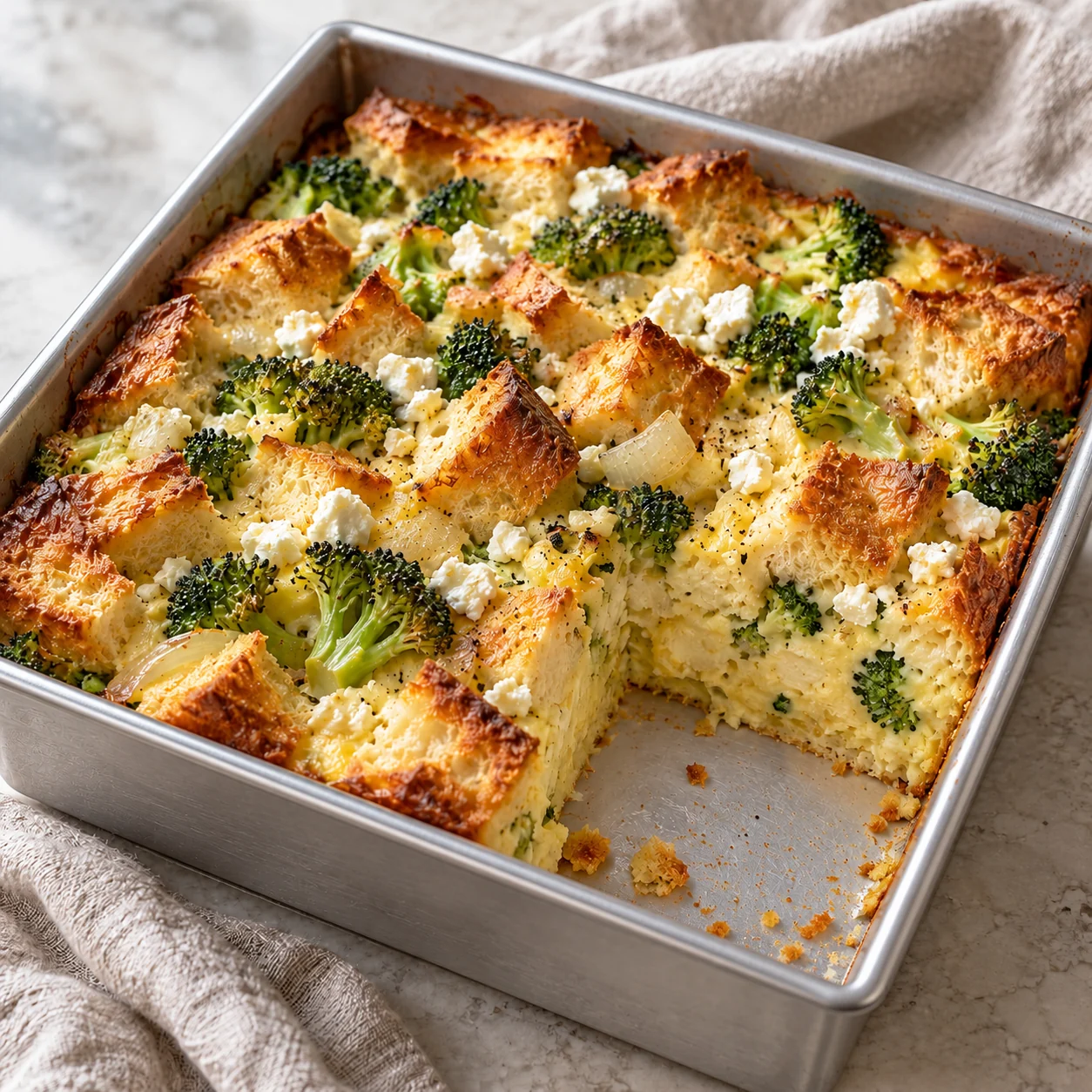
A strata is a savory bread-and-egg bake with a soft interior and toasted corners on top. The bread is an essential part of its structure, not an optional accompaniment. In this broccoli and feta version, the vegetables cook separately before joining the custard so they do not release a puddle into the pan. Follow the full card above, including its refrigerated soaking period and final rest, then use the checks below to balance the center and crust.
Broccoli & feta breakfast strata makes 6 servings, with 2 hr 10 min estimated total time. View the standalone recipe page.
Weigh bread before the drying stage
The recipe measures plain white bread before it enters the oven. Cut it into roughly one-inch cubes so each piece can absorb custard from several sides. Dry gently until the outside feels less soft, without turning the tray into dark croutons. Different breads begin with different moisture levels, so watch texture as well as time. The measured bread amount stays the same in the estimate after drying; water loss does not mean part of the bread has disappeared from the recipe.
Cook broccoli stems as well as florets
Cut the broccoli small and slice firm stem sections thinly. Begin with onion in the oil, then add broccoli and the small measured amount of water. Cover briefly to soften the vegetable, then uncover so excess liquid can evaporate. A fork should enter the stems without a hard raw crunch. Allow the mixture to cool for the short period in the card before assembling. Pouring very hot vegetables into raw egg can start setting it in patches before the custard reaches the bread.
Distribute bread and cheese before pouring
Combine bread cubes, vegetables and most of the feta in the prepared metal pan, spreading the pieces into the corners. Whisk eggs and milk until the mixture is uniform, then pour it across the entire surface rather than into one spot. Press gently with the back of a spoon to wet the upper bread cubes. Do not compact everything into a dense slab. Scatter the remaining feta across the top so some stays visible after baking. Check the cheese label for vegetarian rennet when using that dietary tag.
Refrigerate during the soak
Cover the pan and give it the full thirty-minute refrigerated soak. This is time for the bread to absorb liquid while the perishable egg and milk mixture stays cold. A quick bake immediately after pouring can leave dry cubes above a wet layer below. The specified metal pan also avoids moving a chilled glass dish directly into a hot oven. If changing cookware, follow its manufacturer temperature guidance and remember that a deeper pan changes how quickly the center heats compared with the exposed top.
Check the center beneath the golden bread
Bake uncovered until the center is set and reaches 165°F (74°C). The protruding bread corners may brown before the middle is done; loosely tent with foil if that happens rather than removing the entire dish too early. Let the strata rest for ten minutes so it slices more cleanly and the initial heat subsides. Divide the whole pan into six equal portions. Refrigerate leftovers within two hours and reheat to 165°F (74°C). The top may soften in storage, which is a texture change rather than a reason to add unmeasured fat.
Common questions
Why is the bottom watery when the top looks done?
The vegetables may have carried excess cooking liquid, the bread may not have soaked, or the center may need more time. Check all three rather than relying on browned corners as the sole doneness signal.
Can I use any leftover bread?
Different breads absorb different amounts of custard and can contain milk, egg, seeds or meat additions. The calculation uses the stated plain white bread by weight. A dense rye loaf, sweet brioche or gluten-free bread would need a separately checked variation rather than the same assumptions.
Technique & food-safety references
These primary references support the technique, safety and storage guidance. The recipe and cooking explanations are original Recipe Pinboard content.


