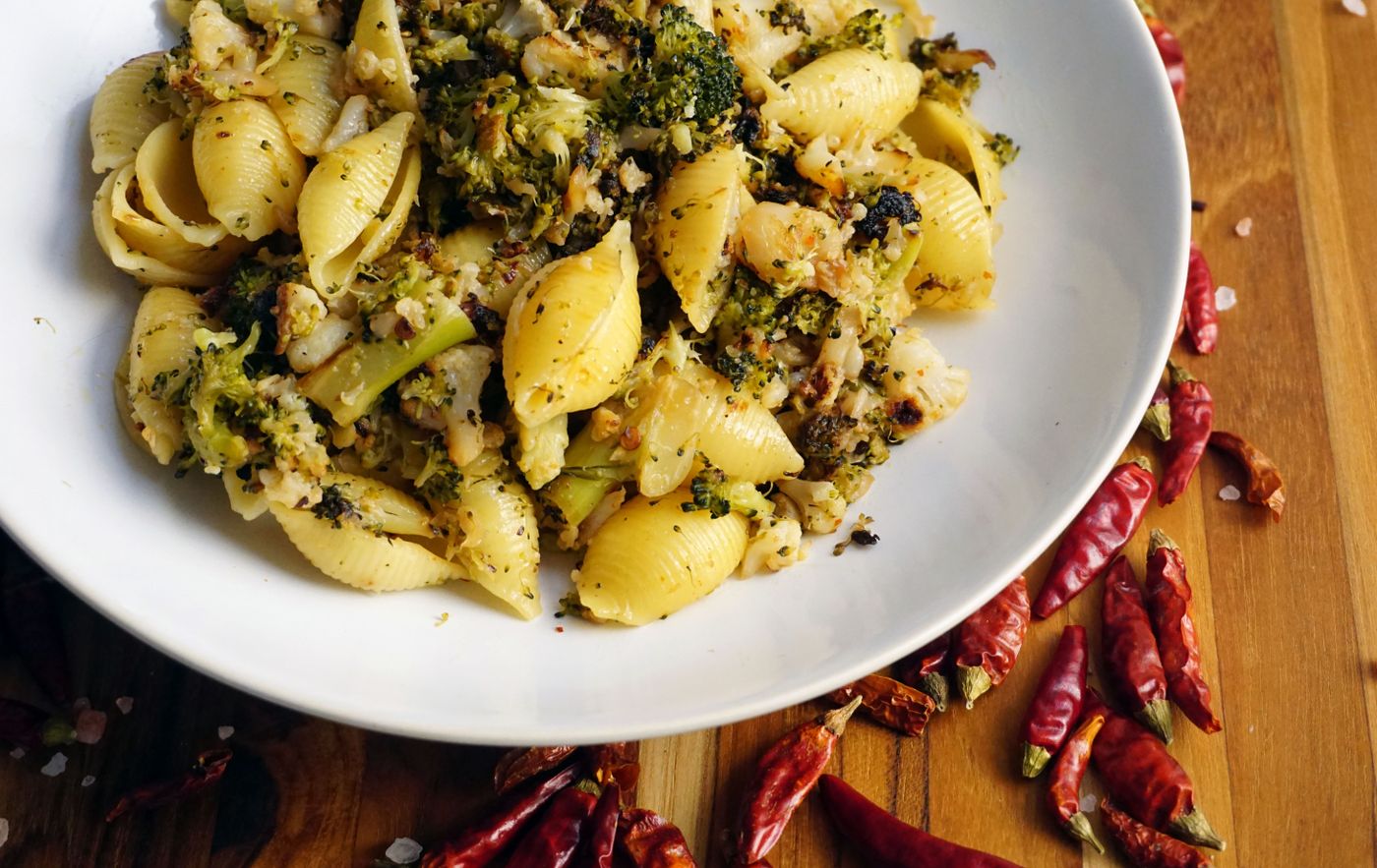
Small broccoli pieces are meant to cling to and collect inside the pasta shells in this dish. The coating comes from olive oil, lemon, Parmesan and reserved cooking water. There is no cream sauce to make separately; the critical moment is the off-heat toss after garlic and chili have flavored the oil.
Broccoli, lemon & chili pasta shells makes 4 servings, with 25 min estimated total time. View the standalone recipe page.
Cut broccoli for the shell-shaped pasta
Finely chop the four cups of broccoli so florets and tender stem pieces can mingle with the conchiglie. Large stalk chunks are poorly matched to the final three-minute cooking stage. Uniform small pieces cook more consistently and spread through the shells instead of remaining a few separate florets on top.
Zest the lemon before juicing it, and have both ready along with the grated Parmesan, minced garlic and chili flakes. Preparing these while the pasta water heats is useful because the drained pasta should not wait long while you finish grating or searching for a measuring cup.
Time the broccoli against the pasta package
Cook the twelve ounces of shells in boiling salted water according to their package. Set a reminder for three minutes before that time ends, then add the broccoli. Stir so it moves through the pot rather than sitting on the surface or collecting in a clump among nested shells.
Check both components near the end. The pasta should have the texture its package indicates, and the finely chopped broccoli should be tender. Reserve one cup of the cooking water before draining. Set it somewhere stable and within reach: half a cup is used immediately, with the rest available for adjustment.
Give garlic a short, controlled turn in oil
Return the empty pot to medium heat with the three tablespoons olive oil. Stir the garlic for thirty seconds, then take the pot off the heat before adding the chili flakes. The residual warmth is enough to carry their flavor into the oil without subjecting them to an extended frying stage.
Watch the garlic closely. Its small pieces can go from fragrant to dark while the pot retains heat, particularly in a heavy vessel. The goal is evenly flavored oil, not deeply browned garlic. Have the drained pasta and broccoli ready to return promptly instead of leaving the oil to sit on a hot burner.
Toss before deciding how much extra water is needed
Return the shells and broccoli, then add the lemon zest and juice, Parmesan, measured salt and pepper, and the first half cup of reserved water. Toss off the heat so the cheese spreads through warm pasta and liquid rather than sitting in a mound against the hot pot base.
Lift and turn repeatedly until the coating looks glossy. If the shells still look dry or clump together, add more reserved water a little at a time and toss again. Pause between additions; water can collect inside shell cavities, so a large pour may make the bottom soupy before the top looks coated.
Serve while the coating is loose
Spoon from the bottom of the pot as you portion so finely chopped broccoli and sauce do not remain behind after the large shells are served. Each bowl should contain both. The lemon and chili are already included in the finish; there is no separate sauce reduction to wait for.
Refrigerate leftovers promptly in shallow containers and use within three to four days. Expect the pasta to absorb some moisture as it stands. Reheat to 165°F with careful stirring and a little water as needed. The broccoli will soften further during reheating, so avoid crushing it into a paste while trying to separate the shells.
Common questions
Why did my Parmesan form clumps?
Very hot direct contact and too little liquid can make even distribution harder. The method removes the pot from the heat and includes reserved water before thorough tossing.
Why is the broccoli still hard?
Its pieces may be too large for the three-minute stage, especially the stems. Finely chopping all parts makes the intended short shared-pot cooking more consistent.
Technique & food-safety references
These primary references support the technique, safety and storage guidance. The recipe and cooking explanations are original Recipe Pinboard content.