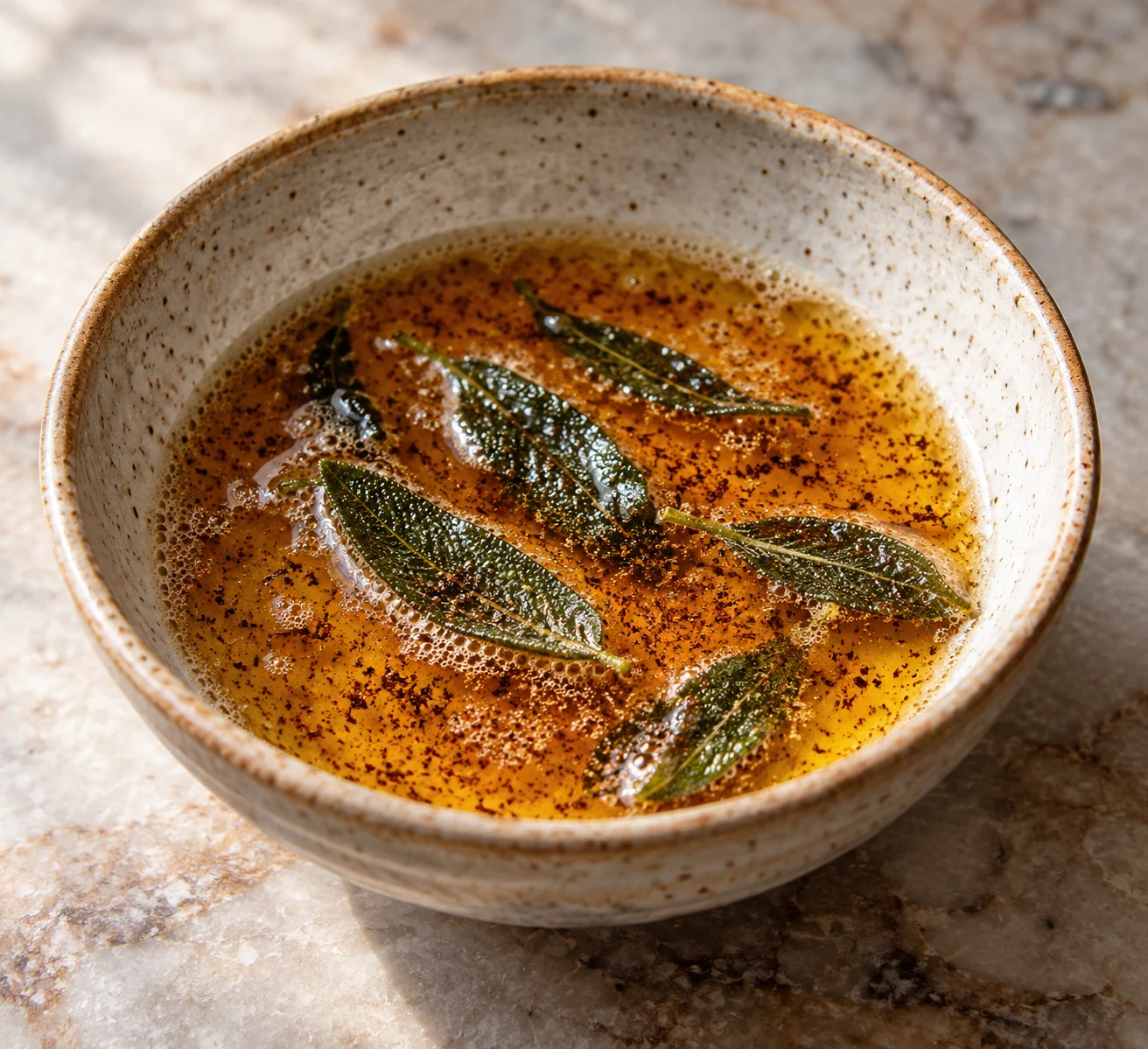
Brown butter changes a familiar ingredient through careful heating: its milk solids toast while some water evaporates, leaving a fragrant amber sauce. Fresh sage becomes crisp in the hot fat, and lemon adds a sharp finish. This is a standalone spooning sauce with six small portions, not a complete pasta dish. The important work happens over a few minutes, so measure everything and set out a heatproof bowl before turning on the burner.
Brown butter & sage sauce makes 6 servings, with 20 min estimated total time. View the standalone recipe page.
Choose a pan that reveals the color
A small light-colored saucepan makes the particles on the bottom easier to see. A dark nonstick surface can hide the transition from golden to burnt. Cut the butter into similar cubes so it melts evenly, and choose unsalted butter to keep the measured seasoning predictable. Keep a spoon or heatproof spatula ready to sweep the base. The butter can foam enough to obscure the solids temporarily; move the foam aside carefully instead of judging only the yellow liquid above it. Stay beside the stove throughout this stage.
Follow the solids rather than the clock
As the butter melts, bubbling and foam indicate water escaping. Stir and swirl gently so the solids do not sit untouched against one hot patch of metal. Watch for small golden particles, then a richer hazelnut brown. The listed time is a guide because pan size, burner strength and starting temperature all change the pace. A toasted aroma is useful alongside the visual cue, but smoke or black specks signal excessive heat. Do not keep cooking merely to reach the longest number of minutes in the recipe.
Dry the sage before it meets hot fat
Wash the leaves in advance and dry them thoroughly. Water clinging to a leaf can make the butter spit sharply. Add the measured leaves when the solids are golden, allowing the brief finishing stage to crisp the sage while the butter reaches its final color. Large leaves may curl and darken slightly; they should not become black fragments. If one part of the pan is browning faster, lift the pan off the burner and swirl. The residual heat still cooks the contents even when the flame is no longer underneath.
Stop the browning deliberately
Remove the pan as soon as the butter reaches the intended shade. Add lemon juice carefully, keeping your face and hands away from the immediate steam and splutter. Then transfer the complete sauce into the waiting heatproof bowl. This extra transfer matters because a heavy hot pan can continue browning the solids after the burner is off. Scrape in every toasted particle and all the sage. Those solids provide much of the characteristic flavor; straining them away would change both the recipe and the retained-ingredient calculation.
Divide a rich sauce evenly
Stir before portioning so the leaves and settled solids are shared rather than left entirely in the last spoonful. Divide the batch into six equal shares by weight if needed, including all the butter. Water loss during browning is not fat loss, and the estimate counts the full starting butter quantity. Serve warm over separately prepared food. Refrigerate remaining sauce within two hours, use within three to four days and reheat gently to 165°F / 74°C. Stir as it warms and avoid another prolonged frying stage that would darken the solids further.
Common questions
Can burnt butter be rescued with lemon?
Lemon stops further cooking more effectively than it removes a burnt flavor. If the solids are black or the sauce tastes acrid, start again. Prepare the cooling bowl in advance and lower the heat earlier next time.
Why is there a clear oily layer?
This sauce is mostly butterfat with toasted solids and a little lemon juice. It is not a permanently thick emulsion. Stir just before serving to distribute the particles; a clear amber layer is not by itself a sign of failure.
Technique & food-safety references
These primary references support the technique, safety and storage guidance. The recipe and cooking explanations are original Recipe Pinboard content.


