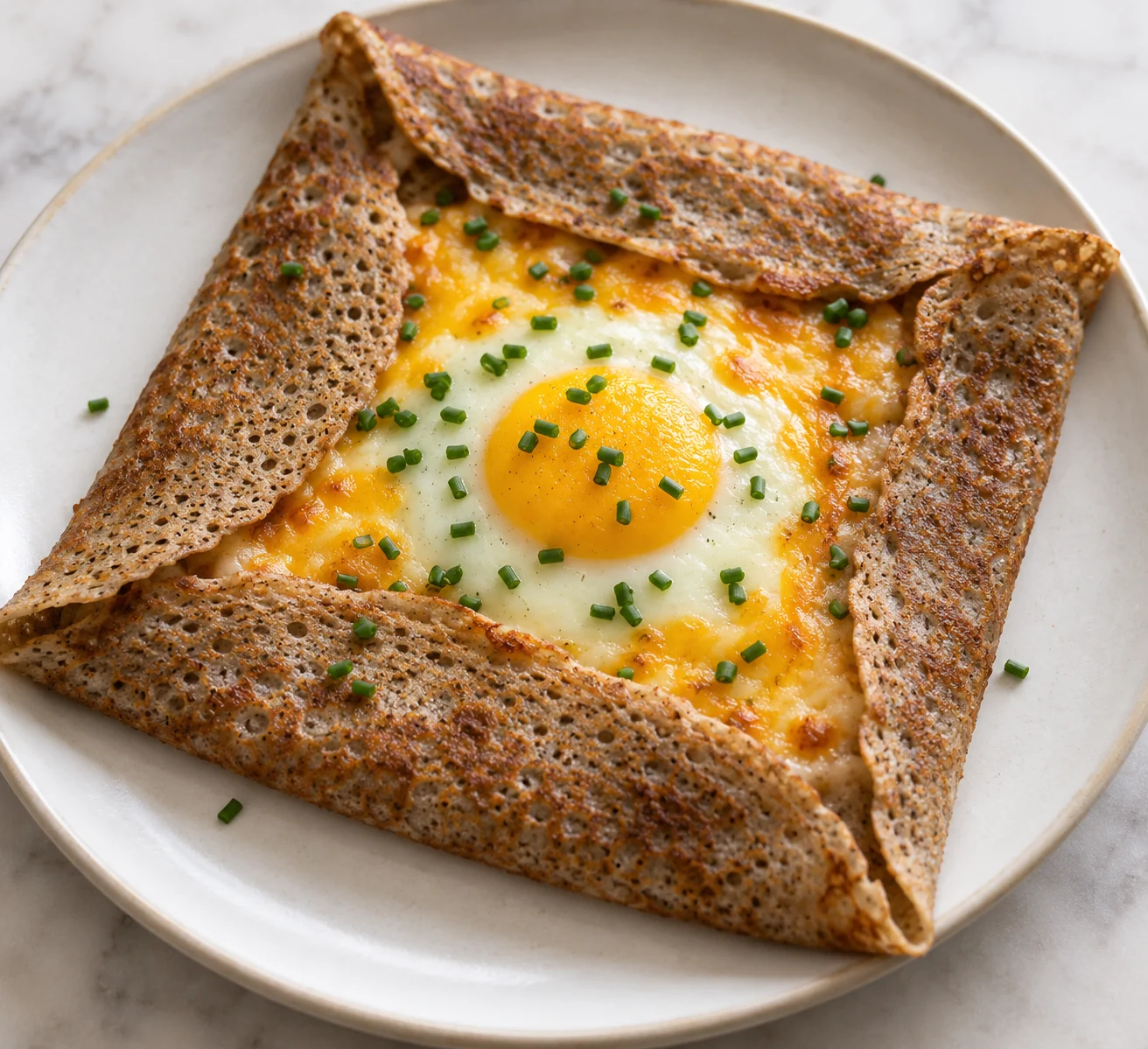
These savory galettes begin with raw hulled buckwheat groats ground at home, then become thin crepes folded around cooked eggs and cheddar. Retaining the whole ground batch makes the ingredient state explicit and keeps the nutrition calculation tied to the available groat profile. A thirty-minute batter rest helps the particles hydrate before cooking. The eggs are cooked separately until fully set, so the brief final warming step only melts the cheese and brings the components together. The full recipe makes four filled galettes, one per serving.
Buckwheat, egg & cheddar galettes makes 4 servings, with 1 hr 40 min estimated total time. View the standalone recipe page.
Grind finely and keep the complete batch
Use a clean mill or blender designed to grind dry grains. Work in manageable batches if necessary and pause before the equipment overheats. Examine the flour for coarse pieces; regrind them rather than sifting them into the bin. The recipe counts the complete original weight of hulled groats. Commercial buckwheat flour may differ in milling and composition, so it is not automatically the same nutrient input. Certified gluten-free groats and clean equipment are necessary if preparing the dish under the conditional gluten-free tag. Buckwheat's name alone does not address cross-contact.
Rest the batter before judging its flow
Whisk the ground buckwheat with the milk, water, measured batter egg, melted butter and salt. Scrape the bowl so dry pockets do not remain along the sides. Refrigerate for thirty minutes, then stir well because particles can settle. The batter should pour and spread when the pan is tilted; it is not a thick pancake mixture. Use the stated liquid amounts first and ensure the grind is genuinely fine. Trying to fix coarse particles with large unmeasured additions of milk changes the formula without solving the underlying milling problem.
Spread quickly and wait for the edge to release
Heat the nonstick skillet evenly and allocate the small measured amount of pan butter across all four crepes. Divide the complete batter into four portions before starting so the last crepe is not much thicker than the first. Pour, lift and tilt the skillet immediately to spread the batter across its base. Once it begins setting, stop trying to drag it into shape. Wait until the edge releases before sliding a thin spatula underneath. A crepe that resists lifting often needs more time rather than more force.
Cook the filling eggs completely before assembly
The remaining eggs are separate from the egg already in the batter. Cook them gently in the reserved butter, covering briefly if needed to set the upper surface without scorching the bottom. Both whites and yolks should be firm, with the centers reaching 160°F. Do not rely on the later cheese-melting step to finish a raw center. Place cooked eggs on a clean plate and divide the grated cheddar into four equal portions. The cheese must use vegetarian rennet for the vegetarian label to apply.
Fold while warm and serve without a long wait
Return one crepe to the dry skillet and arrange cheese around its center before adding the cooked egg. Fold the four edges inward, leaving the middle visible. Warm crepes bend more easily; cold, dry edges are more likely to crack. Cover over low heat just until the cheese melts, then add the measured chives. Repeat with the remaining components, keeping the process moving. Serve promptly, or refrigerate leftovers within two hours and reheat to 165°F. The nutrition estimate includes every crepe, egg and gram of cheese, without salad or sauce.
Common questions
Why are the crepes tearing?
Coarse grinding, insufficient hydration or flipping before the base sets can weaken them. Regrind the full flour batch, keep the rest period and wait for the edges to release. Use a broad thin spatula rather than lifting one small corner.
Can the yolk stay runny?
This card specifies fully set eggs and a 160°F endpoint. A runny-yolk version is a different preparation and is not the safety endpoint given here. The final covered warming is intended to melt cheese around already cooked eggs.
Technique & food-safety references
These primary references support the technique, safety and storage guidance. The recipe and cooking explanations are original Recipe Pinboard content.


