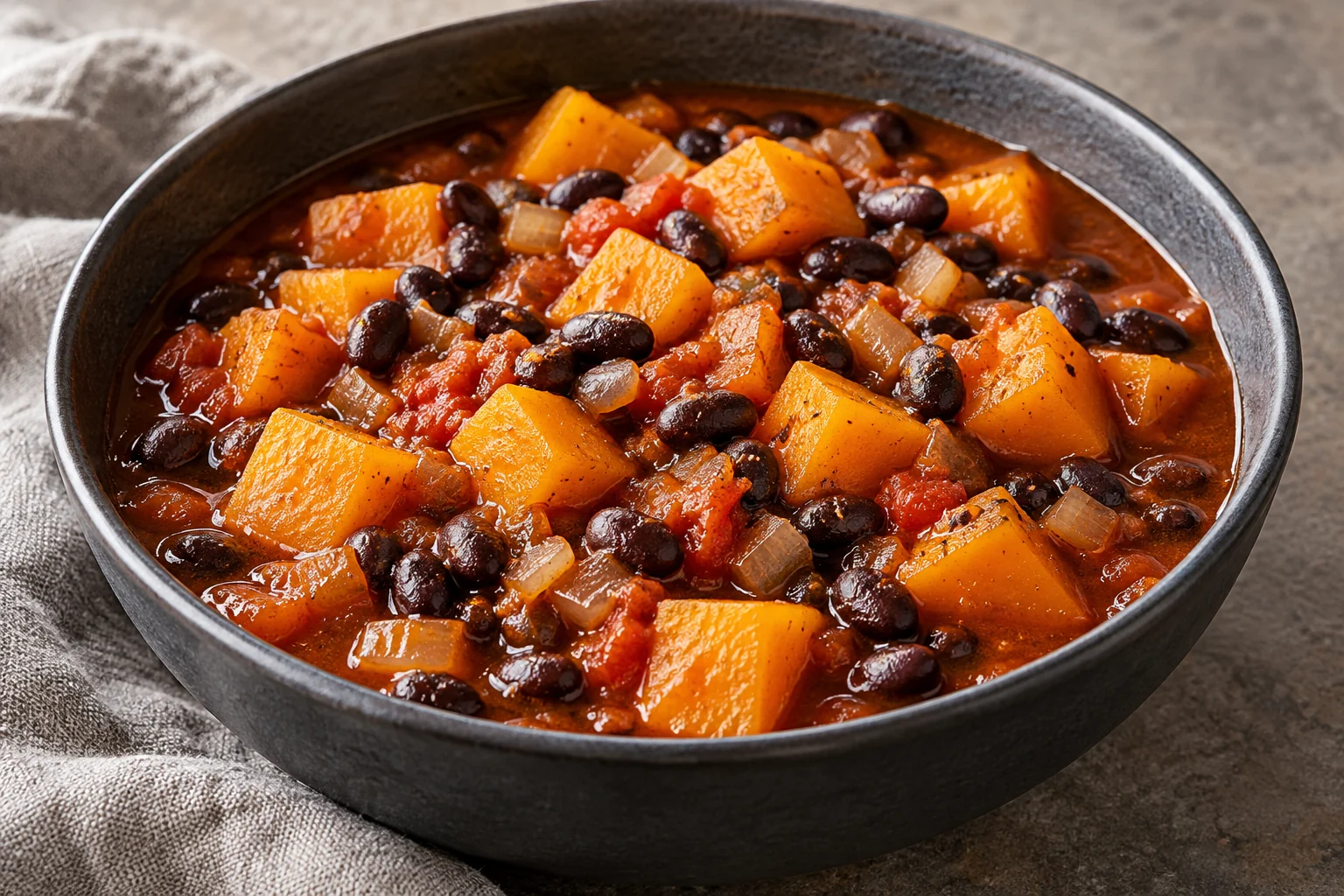
This stew gets its body from tender squash and a few deliberately crushed cubes rather than flour or cream. The black beans are already cooked before the pot begins. Keeping that distinction clear matters for timing: the stated preparation does not include soaking and cooking dry beans. The tomato broth should remain spoonable, with recognizable pieces of squash and beans.
Butternut & black bean stew makes 4 servings, with 1 hr estimated total time. View the standalone recipe page.
Prepare even edible squash cubes
The listed squash weight is after peeling and removing seeds. A whole squash purchased at that weight would supply less usable flesh. Cut cubes around three quarters of an inch across and keep them reasonably consistent. Very small pieces may dissolve before larger pieces soften, making the pot difficult to judge. Use a stable board and work with manageable sections. Precut squash can be convenient, but check the pieces for size and condition and weigh the amount actually going into the stew.
Soften aromatics before adding liquid
Onion begins in the measured olive oil so it can soften and develop sweetness before the wet ingredients arrive. Add minced garlic and cumin only briefly before the squash and tomatoes. This short stage distributes their flavor without letting the fine garlic scorch. The canned tomatoes are used with their juice; draining them would remove part of the liquid the recipe expects. Stir along the pot base when adding water so any softened onion pieces are incorporated into the broth.
Use the squash as the timing guide
Simmer gently with the lid partly covering the pot. A forceful boil can knock the corners off the squash while the centers are still firm. Test a representative larger cube with a fork. It should yield without requiring pressure, but it need not fall apart. Squash variety, storage and exact cube size affect this point, so allow the stated range rather than promising one exact minute. Stir occasionally and check the base for sticking as the broth reduces.
Add beans after the squash softens
The recipe calls for cooked unsalted black beans, drained and ready before starting. They need heating through and time to absorb some flavor, not another full dry-bean cooking cycle. Fold them in gently once the squash is almost ready. If thicker broth is wanted, press a few squash pieces against the pot side and stir those back through. This uses ingredients already counted in the batch. Adding flour, cream or a large extra handful of beans would change the formula and estimate.
Finish with lime and portion evenly
Lime juice is stirred in at the end so its bright flavor remains noticeable against the sweet squash. Divide both solids and broth across four portions instead of taking all the beans in the first bowls. Bread, rice and toppings are separate additions. The dish passes the listed plant-based ingredient screens, with package-label caveats for processed products. Refrigerate promptly in shallow containers; a large covered pot can stay warm in the center long after its outer surface feels cooler.
Common questions
Can I use canned black beans?
The calculation uses cooked unsalted beans. A canned product may differ in salt and nutrient density. Choose a suitable product, drain it and review its label; the recipe does not claim that every canned variety has identical nutrition.
Why did the squash stay firm?
Large cubes, a weak simmer or a firm squash can need more time. Continue gently before adding the cooked beans. Do not assume the squash is tender simply because the tomato broth is bubbling.
Technique & food-safety references
These primary references support the technique, safety and storage guidance. The recipe and cooking explanations are original Recipe Pinboard content.


