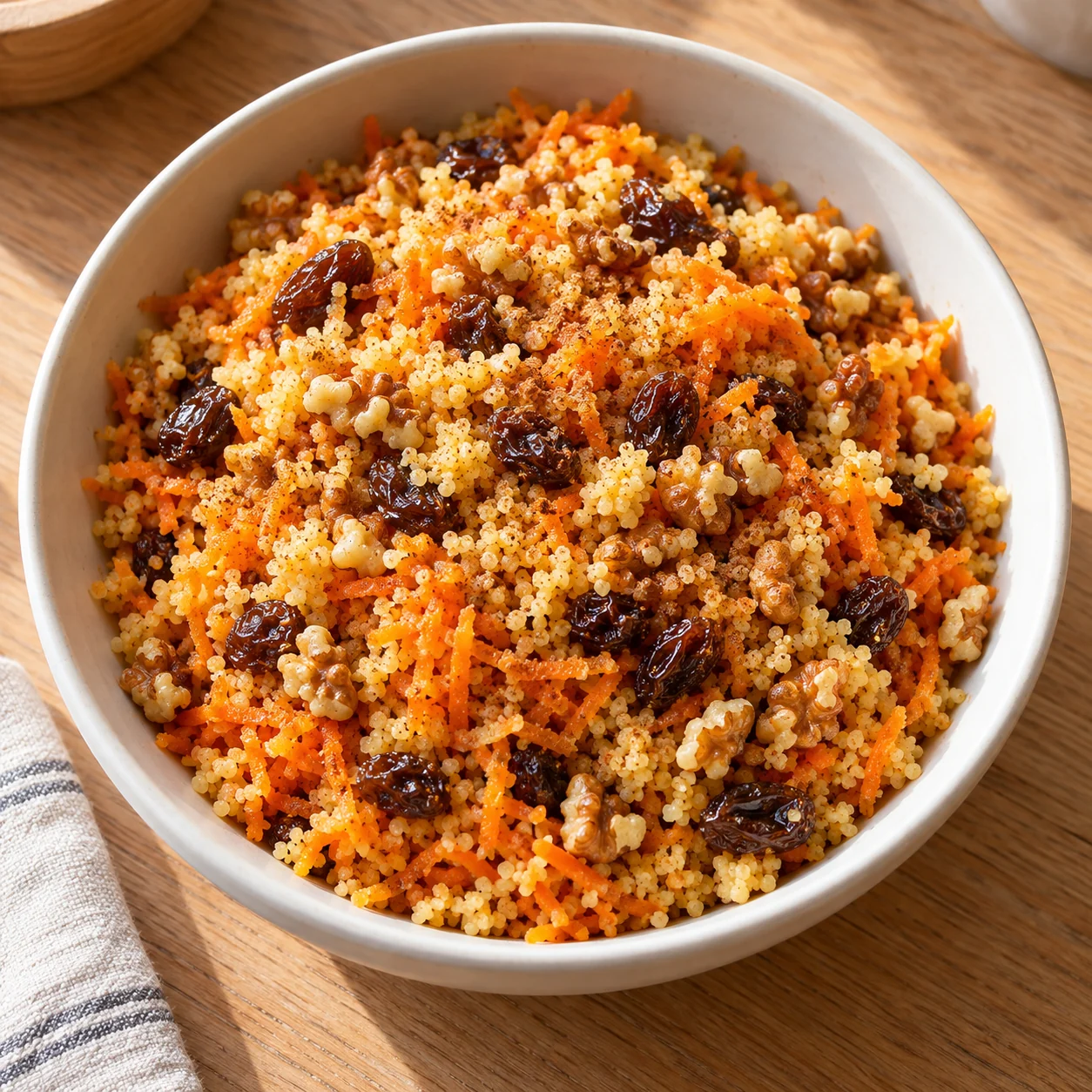
Fine instant couscous can make a warm breakfast with a different texture from porridge. Here, grated carrot and raisins first simmer in cinnamon-scented water, then the dry couscous hydrates off the heat. Walnuts add a final crunch. The complete card gives the amounts and four-portion yield. The central technique is to finish cooking the carrot before the couscous goes in, so the grain does not have to endure a long simmer to soften the vegetable.
Carrot & raisin breakfast couscous makes 4 servings, with 25 min estimated total time. View the standalone recipe page.
Choose fine instant couscous rather than large pearls
Read the package before starting. This recipe uses small Moroccan-style instant couscous, which is designed to swell in hot liquid off the heat. Pearl or Israeli couscous has larger pieces and normally requires a different cooking method. Both are wheat products, but they cannot share this short standing time. Weigh the dry couscous instead of packing it into an approximate cup measure. The nutrient estimate also starts with that dry weight, not the much heavier hydrated amount.
Grate the carrot small enough to soften quickly
Use the fine holes of a grater and weigh the carrot after trimming. Long thick shreds may remain crunchy through the brief simmer, while fine shreds distribute through the finished grains. Stir the carrot in the measured oil for the short first stage without trying to brown it. Add the water, raisins, cinnamon and salt, cover, and simmer gently until the carrot loses its raw crunch. The raisins plump in that same liquid, so there is no separate soaking water to drain away.
Keep the liquid in the pot during the carrot simmer
The lid reduces evaporation while the carrot softens. A vigorous uncovered boil can remove too much of the water needed for the couscous later. Keep the simmer modest and return the liquid to a boil only just before adding the dry couscous. Stir once so the grains are evenly wetted, cover immediately and take the pan off the burner. Leaving it over active heat risks a dry bottom and overcooked clumps rather than the loose grain texture intended here.
Allow the standing time before reaching for a fork
Leave the covered pan alone for the specified standing period, or the package guidance for the same fine instant product. Then use a fork to lift and separate the grains gently from the edges toward the center. Do not beat the mixture with a spoon or press it firmly against the pan. If some grains remain firm, distribute a small amount of boiling water over them, cover and wait again. Adding a large unmeasured pour can make the whole batch wet before the remaining firm grains hydrate.
Fold in walnuts and divide the mixture evenly
Chop the walnuts into small pieces and fold them through after fluffing, so they remain distinct from the softened raisins. Divide all components among four bowls. The sweetness comes from the listed carrot and raisins; the card contains no milk, honey or additional sugar. Those additions would change the estimate. Check packaged couscous and nuts for relevant ingredient and cross-contact information when following dietary preferences. Refrigerate leftovers in shallow containers within two hours, use within three to four days and reheat to 165°F (74°C).
Common questions
Why did my couscous turn into a sticky clump?
Too much liquid, continued simmering after adding the grains, or forceful stirring can make the texture dense. Use the specified fine instant product, take the covered pan off heat, and separate the hydrated grains gently with a fork.
Can this be made gluten-free by leaving out the nuts?
No. Couscous itself is made from wheat and contains gluten. Removing walnuts does not change that. A different grain would require its own cooking liquid, timing and nutritional calculation, so this recipe is not tagged gluten-free.
Technique & food-safety references
These primary references support the technique, safety and storage guidance. The recipe and cooking explanations are original Recipe Pinboard content.


