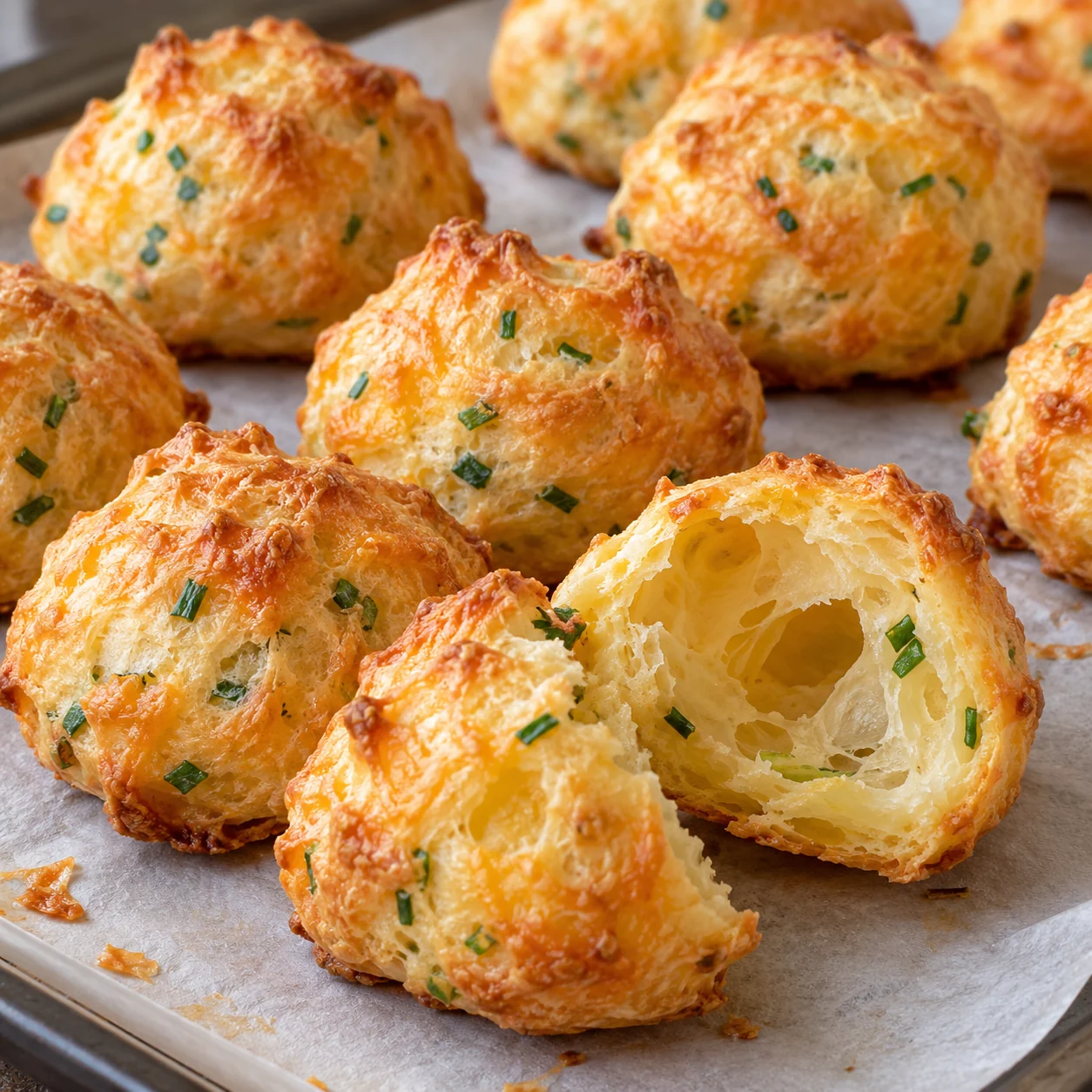
Choux puffs rise through steam trapped inside a cooked flour-and-egg paste. There is no yeast proof and no baking powder in this recipe. Cheddar and chives make the pastry savory, while the inside should form an airy cavity rather than a breadlike crumb. The complete card yields twenty-four puffs, with three per serving, and allows eighty minutes including cooling.
Cheddar & chive choux puffs makes 8 servings, with 1 hr 20 min estimated total time. View the standalone recipe page.
Melt the butter before adding all the flour
Measure every ingredient before turning on the burner. Beat and weigh the eggs separately, grate the cheese finely and chop the chives small. Bring water, diced butter and salt to a full boil, checking that no solid butter remains. Remove the pan from the heat and add all the flour together. A sturdy spoon works better here than a delicate whisk. Beat until the flour disappears into a cohesive mass, then return the pan to medium-low heat. Stir for two minutes, moving the paste around until it gathers into a smooth ball and leaves a thin film.
Cool the panade before incorporating eggs
The cooked flour mixture is called a panade. Transfer it to a bowl and stir for about five minutes so steam escapes and the temperature falls. It should be warm rather than hot before eggs enter; a thermometer below 125°F / 52°C is a useful checkpoint from King Arthur's choux guidance. Add the weighed egg in three rounds, mixing each fully before the next. The paste may look slippery and separated at first. Keep beating until it comes together rather than adding more flour to absorb the visible egg. Fold in all cheddar and chives after the paste is smooth.
Portion for an even bake
The finished paste should be thick and glossy, slowly dropping from a spoon. Divide all of it into twenty-four mounds, using two spoons or a piping bag. Smaller and larger puffs on the same tray finish at different times, so compare their size before baking. Leave two inches between them to allow expansion. Smooth tall pointed peaks with a barely damp fingertip; those thin tips can burn while the main puff remains pale. Scrape the bowl and bag well so the measured cheese and dough become part of the twenty-four-puff yield rather than a substantial discarded remainder.
Use the oven stages without interrupting the lift
Begin at 425°F / 220°C for fifteen minutes, then lower the setting to 350°F / 175°C for another twenty to twenty-five. Keep the door closed through the first thirty minutes. Opening too early removes heat while the shells are still developing their structure. If baking on two racks, exchange the trays only near the end once the surfaces are firm. Look for deeply golden puffs rather than stopping as soon as they expand. Pale inflated shells can still have wet inner walls and may collapse when removed from the oven.
Check one center and let trapped steam out
Split one puff as a sample. Its center should be hollow or airy with set walls, not a pocket of glossy raw paste. Return the tray to the oven if the interior needs more drying. Pierce each finished puff with a small knife, then cool on a rack for ten minutes so steam can escape. Serve three per portion. Never taste raw paste, since it contains both raw flour and egg. Refrigerate leftovers within two hours, use within three to four days and reheat to 165°F / 74°C. Expect the freshest exterior texture on the day of baking.
Common questions
Can I use pre-shredded cheese?
Finely grating a block makes the cheese easier to distribute through this small batch. Packaged shreds may contain starch or other coatings, so their behavior and nutrient values can differ from plain cheddar.
What makes the vegetarian tag conditional?
Cheddar can be made with different rennets. Choose a producer that confirms microbial or vegetable rennet for this recipe's vegetarian classification. The puffs still contain wheat, milk and egg.
Technique & food-safety references
These primary references support the technique, safety and storage guidance. The recipe and cooking explanations are original Recipe Pinboard content.


