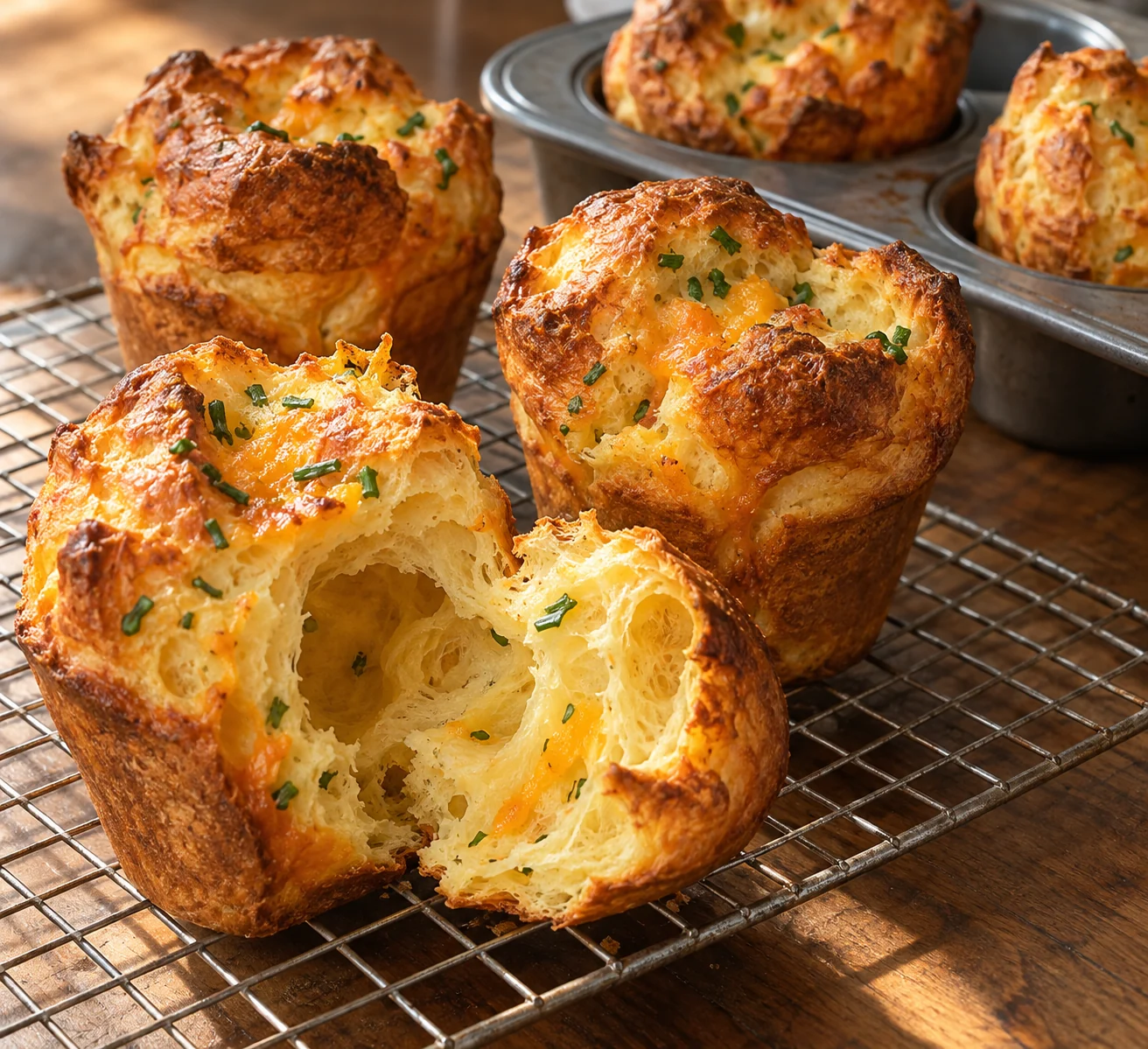
Popovers rise from steam inside an egg-and-milk batter, so their texture is quite different from a baking-powder muffin. These contain finely grated cheddar and snipped chives, with no added filling or topping. The card uses twelve standard metal muffin wells and gives two popovers per serving. Their final height will vary with the pan and oven, and a little settling is normal. Begin with a fully heated oven and prepared pan so the mixed batter can go straight into the planned bake.
Cheddar & chive breakfast popovers makes 6 servings, with 1 hr 15 min estimated total time. View the standalone recipe page.
Use the specified well size and a metal pan
A standard muffin pan gives the batter shallow individual spaces rather than one large cavity. Check the approximate dimensions in the card instead of assuming a mini muffin tin or a deep specialty pan takes the same time. Grease the wells and nearby rims thoroughly with the measured first portion of butter. Batter can rise past a rim and cling there if it is left dry. The recipe counts all that butter even though a small amount may remain on the pan after the popovers are removed.
Warm the milk without cooking the eggs
The milk should be gently warm, not steaming hot. Measure its temperature if uncertain and let overheated milk cool before combining it with the eggs. Whisk until the egg and milk look uniform, with no separate streaks of yolk. Add flour and break up large dry lumps, then stir in the remaining melted butter. This is intentionally a thin batter. Adding flour to make it resemble muffin mixture changes the balance that allows steam to expand it, so resist correcting its fluid appearance with extra handfuls.
Keep the cheese and chives small
Finely grated cheddar spreads through the batter more evenly than large cubes, which can collect at the bottom of a well. Snip the chives into short pieces so they do not form long tangles when the batter is poured. Distribute all the mixture equally among the twelve prepared wells, making a second pass if necessary. The vegetarian label depends on choosing suitable rennet in the cheddar. No extra cheese garnish is included, and pouring unmeasured butter over the finished popovers would change the serving estimate.
Let the first oven stage proceed undisturbed
The initial hotter stage supports the rise; the lower setting then allows the structure to finish cooking. Use a timer and change the temperature setting without opening the door. Keep enough headroom above the pan so the tops are not close to an exposed upper element. During the later stage, judge the popovers by their deeply golden surfaces and set interiors rather than removing them as soon as they look tall. A pale shell can seem impressive in the oven but lack the structure needed after removal.
Release steam and serve after the brief rest
Use a small knife carefully to make the indicated opening near each top, keeping fingers away from escaping steam. Move the popovers onto a rack so their bottoms are not trapped in warm wells. The short rest makes handling easier while keeping the crisp-edged texture. Some settling is expected as they cool; identical tower-like shapes are not a requirement. Serve two per portion, and refrigerate leftovers within the card's limit. Reheating can warm and dry them somewhat, but it should not be described as reproducing a fresh bake exactly.
Common questions
Do these need baking powder or yeast?
No. The card uses the liquid in the batter to produce steam during baking, while egg and flour form the structure. Adding a leavener would create a different formulation and is not a fix for an underheated oven or an unsuitable pan.
Why are my popovers dense or collapsed?
Check the pan size, batter proportions and oven temperature first. Opening the oven early or taking them out while pale can also contribute. A hollow center and irregular shape are expected, but the shell needs enough baking time to set before it cools.
Technique & food-safety references
These primary references support the technique, safety and storage guidance. The recipe and cooking explanations are original Recipe Pinboard content.


