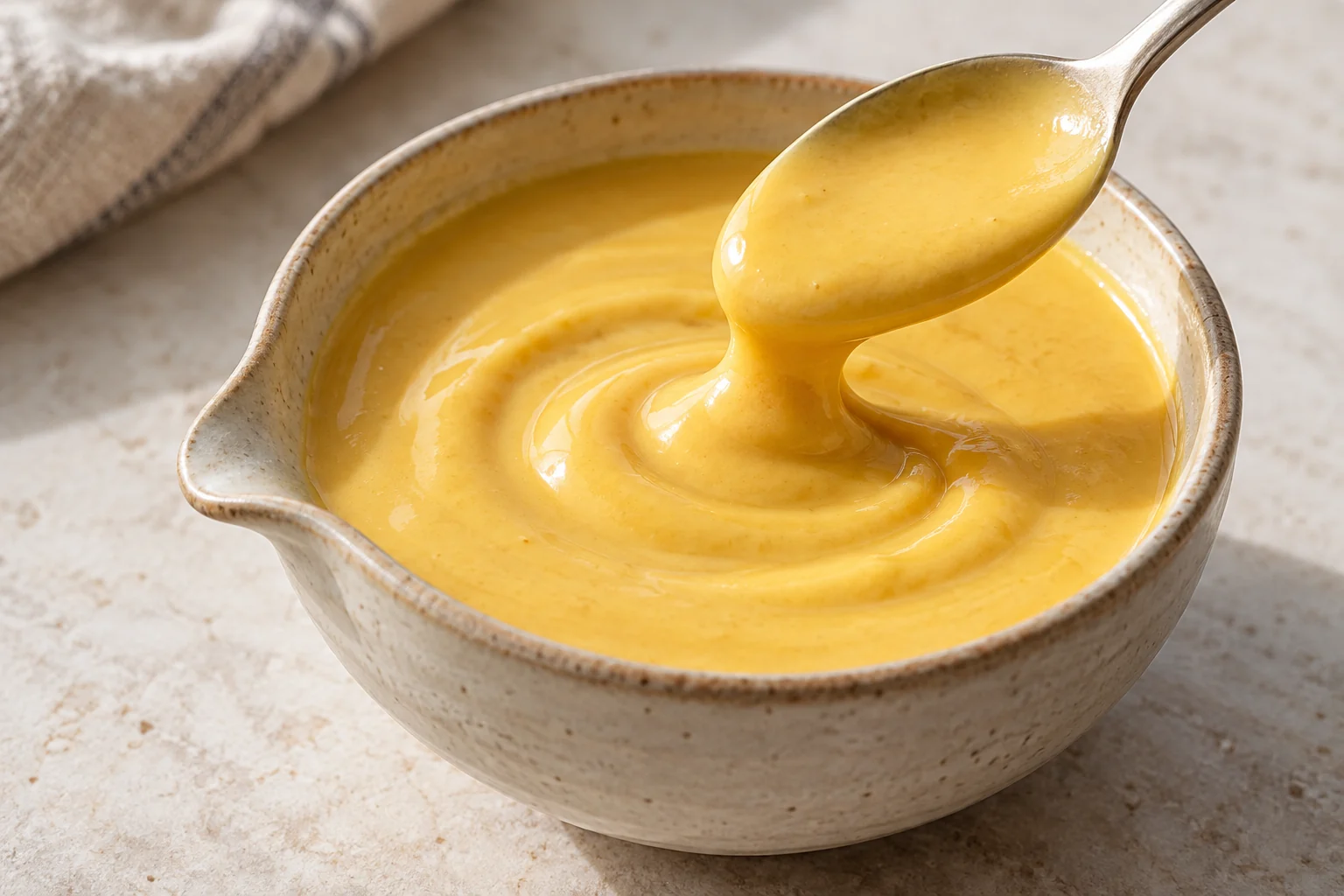
This cheddar sauce begins with a small butter-and-flour roux, then takes its cheese off the heat. The mustard adds a mild tang without whole seeds or extra garnish. The useful distinction is between cooking the flour base thoroughly and melting the cheese gently: those stages need different heat. Six equal portions include the entire pan of sauce, while any pasta, vegetables or other food served underneath is separate.
Cheddar & mustard sauce makes 6 servings, with 25 min estimated total time. View the standalone recipe page.
Grate before heating the pan
Finely grate the measured cheddar so it can melt quickly and evenly. Large cold chunks take longer to disperse and can tempt you to return the pan to excessive heat. Use the specified whole milk and plain prepared yellow mustard. A different mustard may contain other seasonings or sweeteners, and cheese varies in saltiness, so this formula has no extra salt. Check the cheese's enzymes if vegetarian suitability matters. Wheat flour and milk are both present; the recipe is not gluten-free or dairy-free.
Cook a pale roux
Melt the butter gently and stir the flour through it until no dry patches remain. Keep the paste moving across the base for the short cooking interval. It should remain pale rather than develop the toasted color used in a brown gravy. A small saucepan makes the mixture easier to reach with a whisk, but its corners still need attention. If the paste sticks in one spot, lower the heat and scrape it loose before it darkens. Burnt flour cannot be corrected simply by adding milk.
Add milk in controlled stages
Start with a small addition and whisk until the paste loosens evenly. Continue gradually, smoothing each addition before pouring in more. Once all the milk is incorporated, bring the sauce to a gentle simmer and cook it for the stated time. This stage thickens the flour base before the cheese enters. Sweep the whisk along the bottom rather than only stirring the top. The base should lightly coat a spoon; it does not need to be reduced into a dense paste.
Melt cheese with residual heat
Take the pan off the burner and give it the brief pause in the recipe. Add cheddar in several batches, stirring until each disappears before adding the next. Then stir in mustard. Residual heat should do most of the work without a vigorous boil. The sauce will continue to thicken somewhat as it cools. If it develops an oily appearance, overheating is a more likely explanation than insufficient flour. Avoid trying to fix that problem by boiling harder, which can make the separation worse.
Serve and reheat thoughtfully
Stir before dividing the complete sauce into six portions. Scrape the pan so the last serving does not lose most of its share to equipment residue. Serve warm, or refrigerate within two hours in a covered shallow container and use within three to four days. Reheat gently while stirring to 165°F / 74°C, checking the sauce itself. A chilled cheese sauce is firmer than a freshly made one; that change does not mean the original liquid measurements were wrong. Any extra milk added later changes the formula.
Common questions
Why are there flour lumps?
Milk may have been added too quickly before the paste was smooth. Work in small additions at first and whisk across the entire base. Prevention is easier than trying to break large cooked lumps after the cheese has melted.
Can I add the cheese while the sauce boils?
For this method, remove the pan from the heat first. The flour base needs simmering, but the cheddar only needs enough warmth to melt. Keeping those stages separate helps preserve a smooth result.
Technique & food-safety references
These primary references support the technique, safety and storage guidance. The recipe and cooking explanations are original Recipe Pinboard content.


