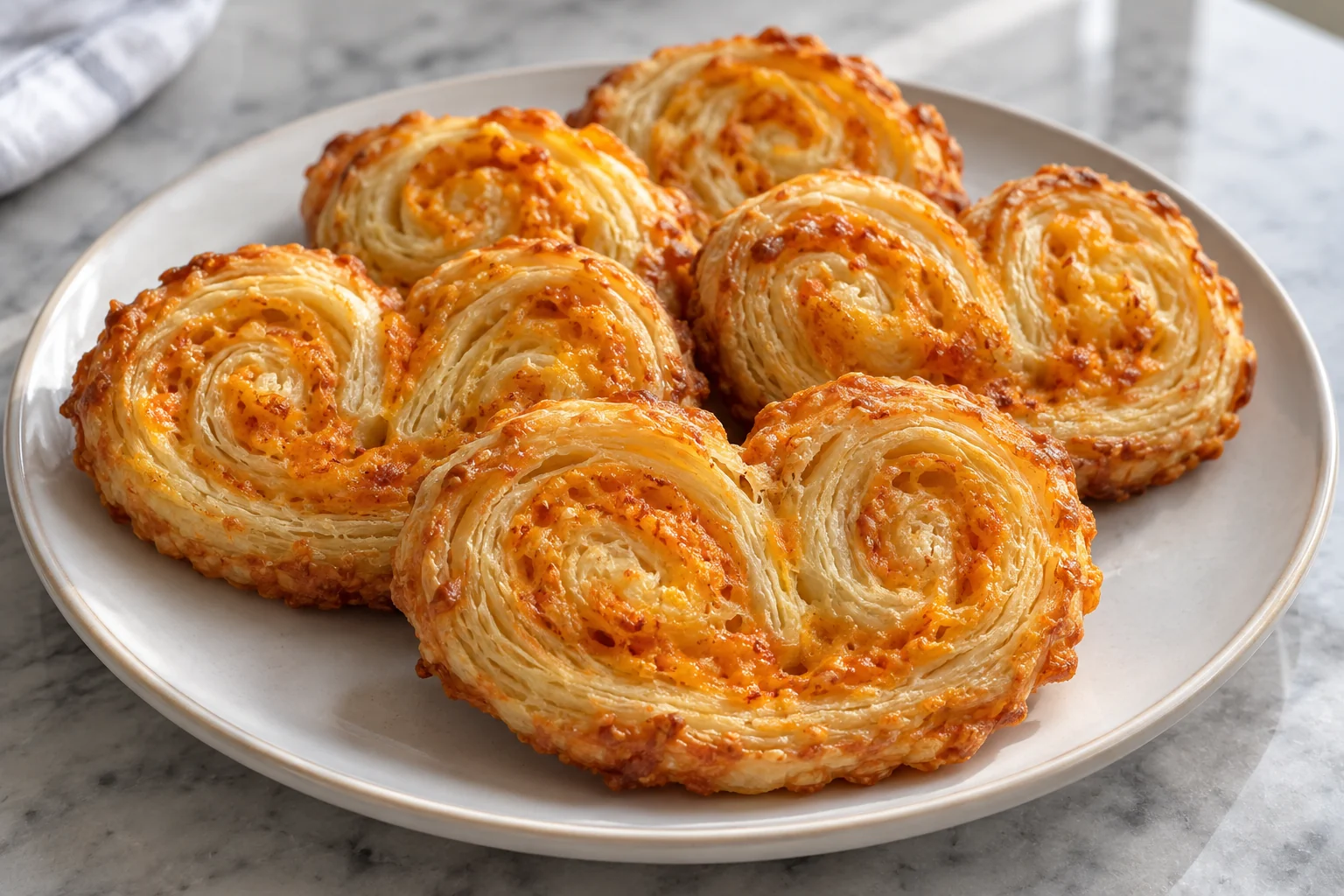
These savory palmiers use homemade rough puff pastry with visible butter flakes, folded several times to build layers. Cheddar replaces the sugary coating associated with sweet palmiers. The final double-scroll log is chilled before slicing so the two curled halves stay distinct. Twenty-four pieces make eight portions. The chilling intervals are essential parts of the two-hundred-minute schedule, especially in a warm kitchen.
Cheddar rough-puff palmiers makes 8 servings, with 3 hr 20 min estimated total time. View the standalone recipe page.
Keep butter visible in the dough
Start with cold butter cubes and flatten them into broad flakes in the flour rather than rubbing them into a completely uniform crumb. Those pieces become layers during rolling and folding. Add the measured cold water and gather the rough mixture without kneading it smooth. It may look uneven at first. Cover and chill before continuing. If the butter is already greasy and disappearing into the dough, pause for more cooling rather than adding flour to absorb the grease and changing the pastry ratio.
Fold with the reserved flour allowance
Use the separate rolling flour sparingly on the board and pin. Roll the rectangle, fold it in thirds and turn it before repeating. The sequence reorganizes the butter and dough into overlapping layers. Keep all measured flour with the pastry rather than brushing large quantities into the bin. Do not stretch one corner aggressively to force a perfect rectangle. A slightly uneven edge can be tucked into the fold. There are no decorative trimmings to discard, so the complete dough remains part of the final yield.
Chill between the working stages
The first two folds are followed by a rest, then another fold and another rest. These pauses let the butter firm again and make the dough easier to roll without springing back. The refrigerator is more useful than force when the dough resists. A warm room may require additional chilling beyond the listed schedule. Keep the pastry covered so the surface does not dry out while it rests. The final cheese-filled log also needs its own chill; that is separate from the earlier dough rests.
Form the paired scrolls
Roll the pastry to the stated final rectangle and distribute finely grated cheddar evenly over it. Press gently so the cheese stays in place. Roll both long edges inward until the two scrolls meet, preserving the long dimension for slicing. Chill the joined log, then cut twenty-four similar pieces. Place them cut-side up with generous gaps on the lined trays. Each piece should show two connected curls. Crushing the log with a blunt knife can seal layers together and make the finished pastries less distinct.
Bake through and cool before serving
Use the hot oven and swap tray positions halfway so both trays receive comparable heat. Look for puffed layers and golden pastry, not merely browned cheese on top. Allow longer if the centers still appear doughy. Cool on racks so steam escapes from beneath the pastries rather than softening them against a plate. Serve three per portion, including all cheese and pastry. Refrigerate cooled leftovers and use within three days, reheating until hot and crisp. Butter that remains on parchment is still counted in the conservative ingredient estimate.
Common questions
Why did butter leak onto the tray?
Some leakage can occur, but very warm pastry or a poorly preheated oven can make it worse. Respect the chilling stages and bake from cold. Do not remove butter from the ingredient estimate by guessing how much leaked.
Can I use packaged puff pastry instead?
That is a separate variation with different ingredients, weight and nutrition. This recipe accounts for the complete homemade dough. A packaged sheet also needs its own dimensions and yield check before replacing it.
Technique & food-safety references
These primary references support the technique, safety and storage guidance. The recipe and cooking explanations are original Recipe Pinboard content.


