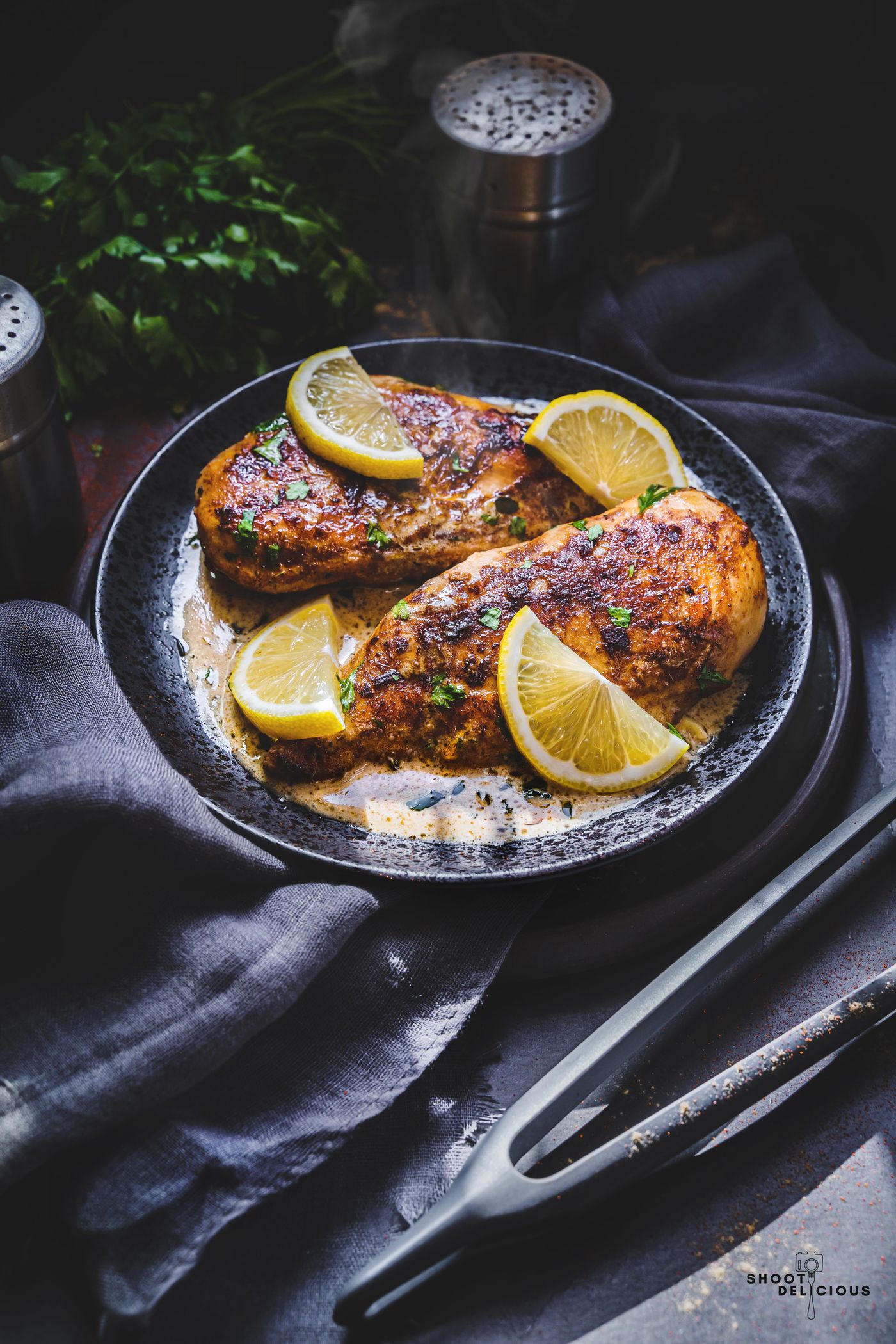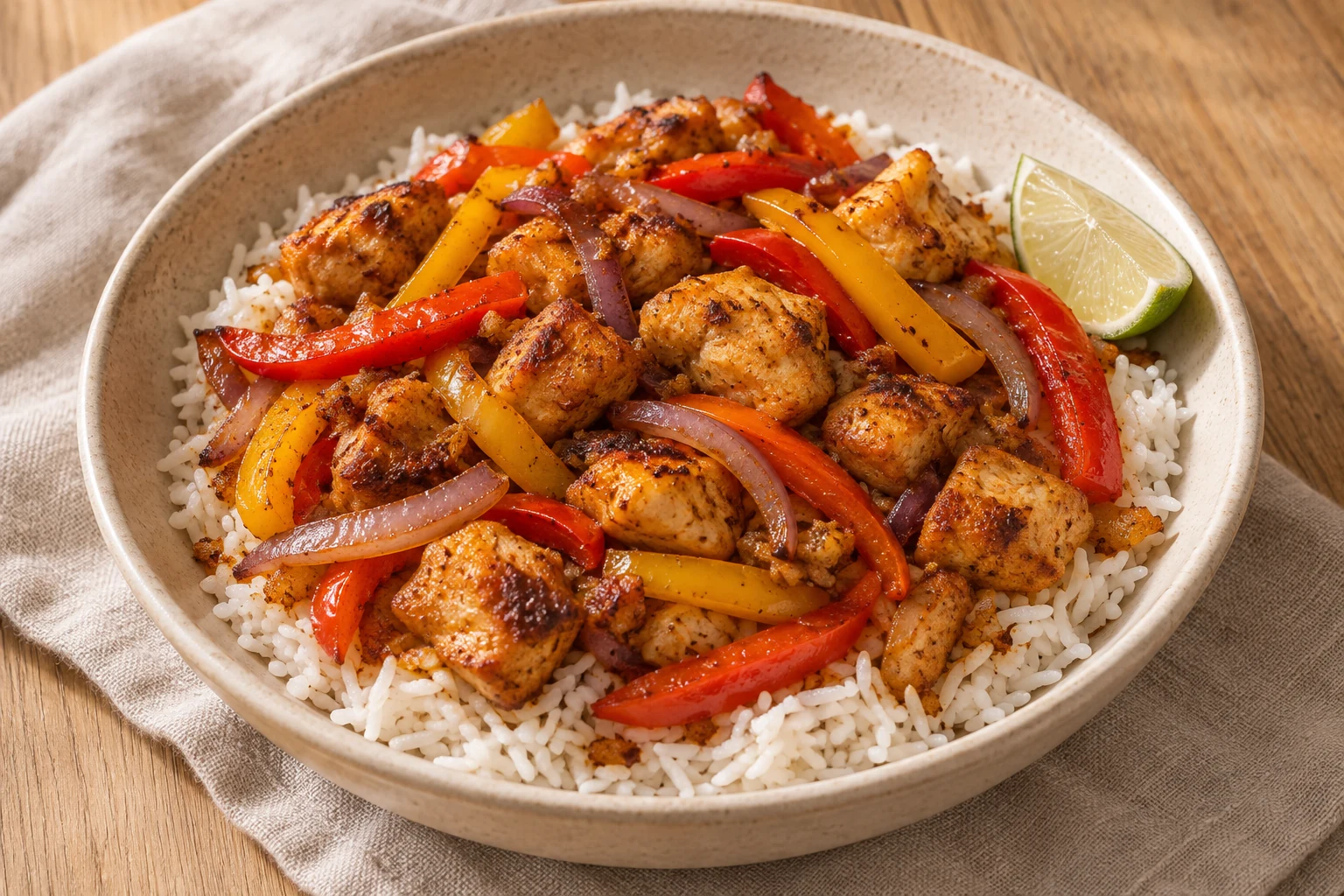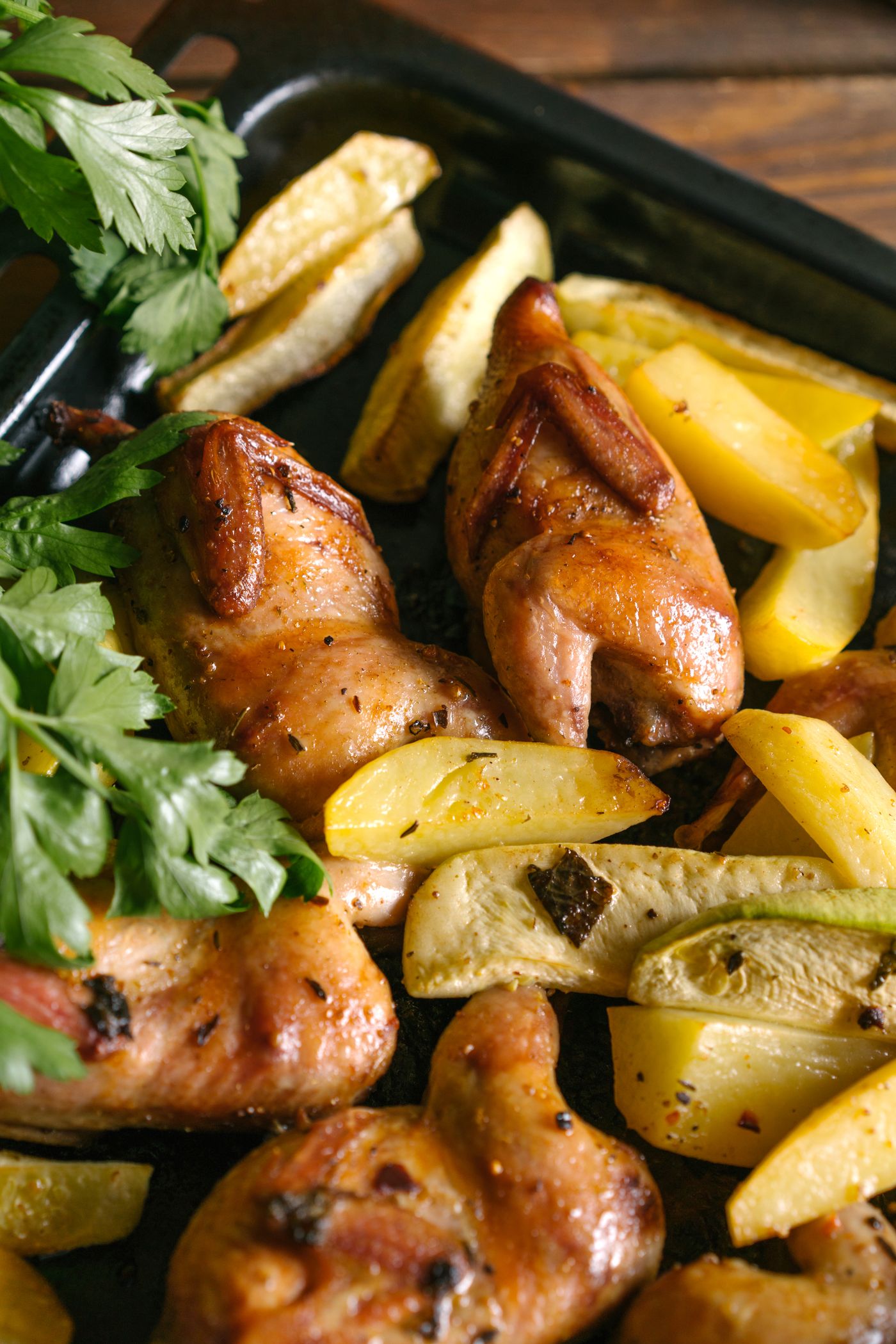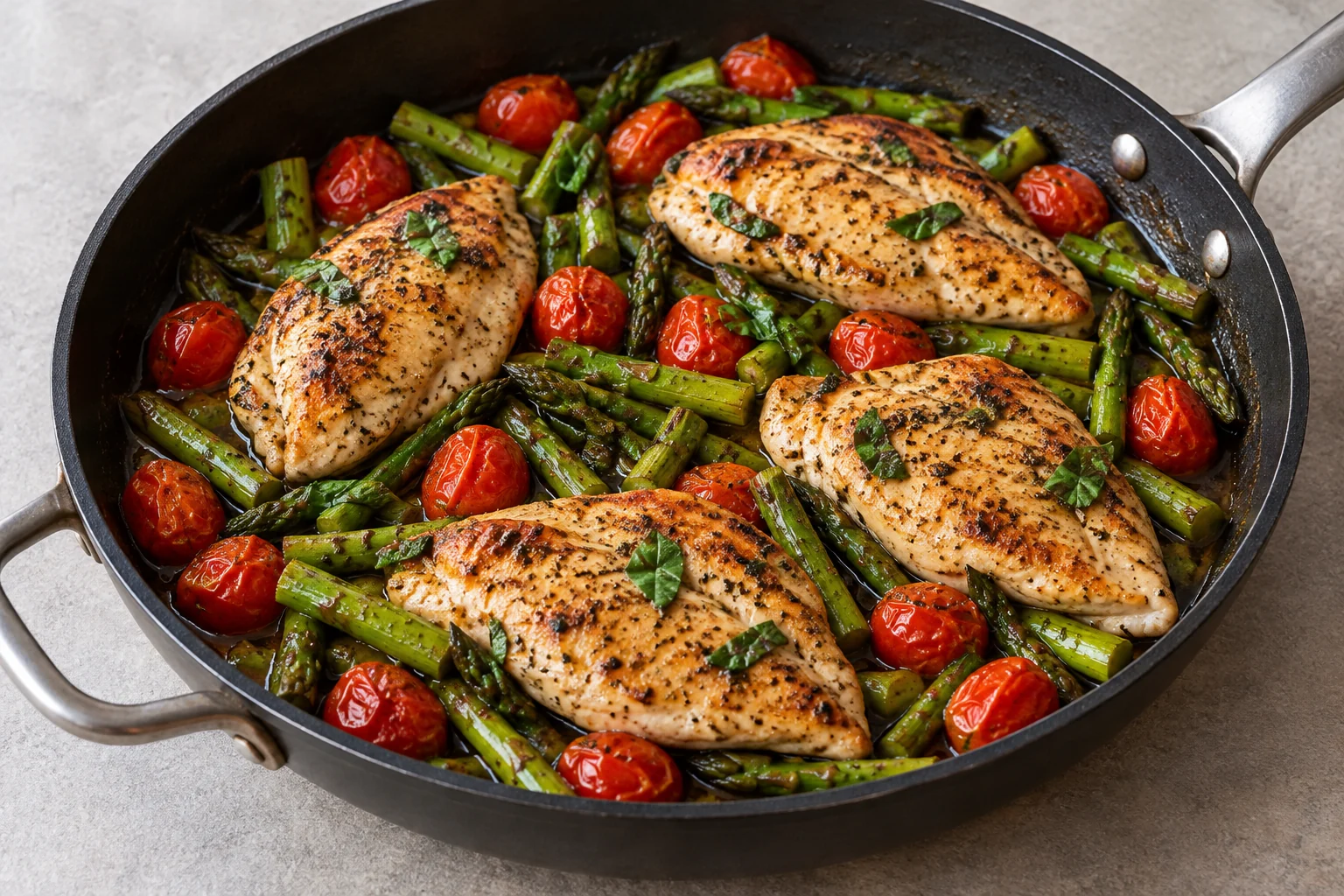
Chicken, asparagus and cherry tomatoes can share one skillet, but they benefit from different cooking windows. The chicken gets a clear space for browning, then rests while the vegetables cook in its pan. A little water loosens the flavorful browned residue and combines with the tomatoes' juices.
Chicken, asparagus & tomato skillet makes 4 servings, with 35 min estimated total time. View the standalone recipe page.
Make the cutlets even and the asparagus manageable
Divide the chicken into four portions and gently pound thick areas until each cutlet is about 1 cm thick. Pat the surfaces dry before seasoning. Prepare the vegetables on a clean board, and wash hands and equipment after raw-chicken contact; rinsing raw poultry can spread contamination around the sink.
Trim the woody asparagus ends before weighing the edible portion. Cut the stalks into short lengths, keeping the tips intact. Very thick lower stems can be split lengthwise to help them cook alongside thinner pieces. Dry the washed tomatoes and asparagus so surface water does not immediately cool the skillet and turn its first stage into steaming.
Brown the chicken without crowding the pan
Use the first portion of olive oil for the cutlets and lay them into the hot pan with space between them. Leave the first side undisturbed long enough to develop color. If four portions overlap, cook in batches and allow extra elapsed time.
Treat the suggested minutes per side as a planning range. Check the thickest part of every cutlet with a thermometer, inserting sideways if necessary to keep the tip inside the thin meat. Each must reach 165°F before it moves to a clean plate. Do not use the plate or tongs that held raw chicken without cleaning them.
Give the asparagus a head start over the tomatoes
The remaining oil starts the asparagus in the same skillet. A few minutes on its own allow the cut surfaces to cook before tomato juices enter. Stir occasionally, exposing different pieces to the pan without constantly tossing everything. Stalk thickness will affect the timing, so pay attention to resistance as well as green color.
Add the tomatoes next and let several skins blister. They need not all collapse: a mixture of softened whole tomatoes and split ones gives the dish both shape and a modest sauce. Move them gently with a spatula rather than pressing every tomato flat, which would quickly flood the pan.
Loosen the pan and finish the vegetables
Reduce the heat before adding the sliced garlic. It needs only a short contact with the pan before the water goes in. Scrape up golden-brown residue as the liquid simmers; black, acrid patches should not be stirred into the meal. If the earlier sear burned, wipe those patches out carefully before continuing.
Simmer until the asparagus is tender but retains some bite. If it still feels hard, extend this stage with a small splash of water rather than returning the chicken early. The chicken is already cooked, so it should not spend several extra minutes waiting in the pan while thick asparagus catches up.
Bring the components together and save the juices
Return the cutlets and their collected juices just long enough to warm through, then take the skillet off the heat and add torn basil. Divide the vegetables and pan juices along with the chicken.
Pack leftovers in shallow covered containers and refrigerate within two hours, or one hour above 90°F. Use within three to four days and reheat to 165°F. Keep some pan liquid with the meat to reduce drying during reheating. Asparagus will soften further, so the freshly cooked skillet offers the crispest vegetable texture.
Common questions
Can I put raw chicken and asparagus in together?
That is not the method here. The chicken needs room for browning and a verified 165°F endpoint, while asparagus cooks quickly. Cook them in stages to manage both safely and preserve the vegetable texture.
Why is there very little sauce?
This is a light pan-juice finish rather than a creamy sauce. Some tomatoes should split, and the measured water loosens the pan. If it reduces too far, add a small splash of water before returning the chicken.
Technique & food-safety references
These primary references support the technique, safety and storage guidance. The recipe and cooking explanations are original Recipe Pinboard content.