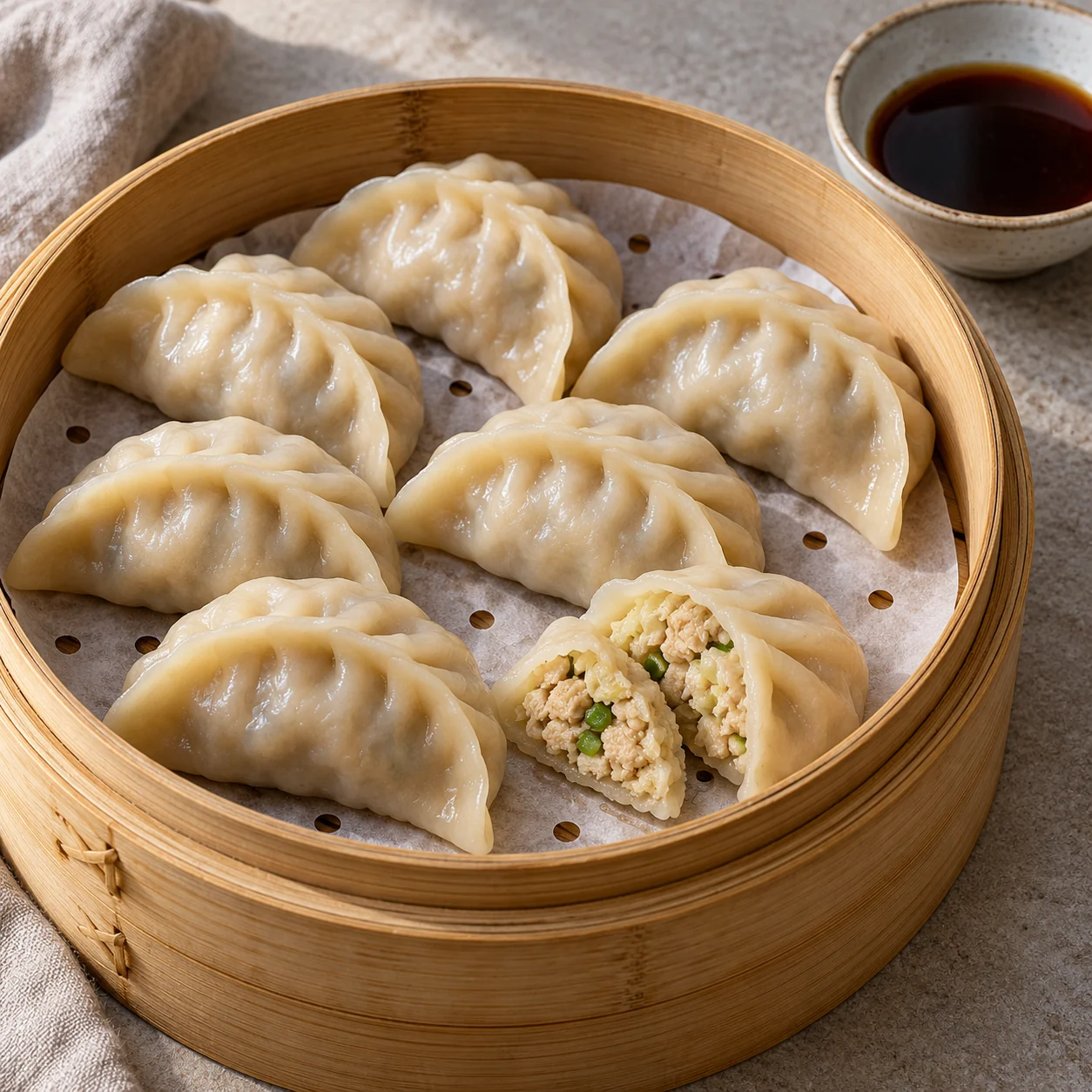
These dumplings use a simple wheat dough wrapped around raw ground chicken, cabbage and ginger. They are steamed rather than browned in a pan, and the measured soy-vinegar dip is part of the recipe. The complete card above makes forty dumplings, eight per serving. The guide focuses on wrapper consistency, filling distribution and safe steaming in batches.
Chicken & cabbage steamed dumplings makes 5 servings, with 2 hr 20 min estimated total time. View the standalone recipe page.
Rest the dough before rolling small pieces
Mix the dough with the stated flour and water, keeping the reserved dusting flour separate. Knead until it comes together, then cover it for the rest. A dry exposed surface can crack when you try to stretch it around filling. The rest also makes the dough less resistant to rolling. Divide into forty pieces rather than cutting random circles from a large sheet; this avoids scraps and helps preserve the serving calculation. Keep pieces covered while working so the last wrapper remains as supple as the first.
Chop the filling vegetables finely
Cabbage and scallion should be small enough to mix evenly through the chicken. Long cabbage strips can push against the wrapper and interfere with a clean seal. Grate the ginger finely so one dumpling does not contain a large fibrous chunk. Mix the filling ingredients thoroughly and refrigerate them while rolling. Clean hands and work surfaces after handling raw chicken, and never taste the raw mixture. Dividing the filling into forty similar shares keeps the wrappers from being overfilled and makes the finished portions more consistent.
Roll a center that can support the filling
Use the reserved flour sparingly as you roll each dough piece into a disk. Aim for a slightly thinner edge and a center substantial enough to hold the chicken mixture. A uniformly thick wrapper can be heavy at its doubled seam; an extremely thin center tears when lifted. Keep the diameter close to the card's guidance. If the dough springs back strongly, cover it briefly and roll another piece before returning. Do not keep adding flour simply to force a resistant piece flat.
Keep filling away from the sealing edge
Place the measured filling near the center and bring the wrapper into a half-moon. Press out obvious trapped air, then pinch the edges firmly. Decorative pleats are optional; a sound seal matters more than an elaborate shape. Filling smeared along the edge can prevent dough from adhering, so leave a clean margin. Set each dumpling on its lined tray and continue working. Keep uncooked dumplings refrigerated between steaming batches rather than leaving the entire batch beside a warm stove.
Make room for steam and check the chicken center
Use perforated parchment appropriate for the steamer so steam can move around the food. Leave gaps between dumplings and keep the water below the basket. A lid helps maintain the cooking environment, but open it carefully away from your face. The time range is a guide; check the centers of several dumplings for 165°F (74°C), especially in different tiers. Replenish water as needed without letting the pan boil dry. Smaller steamers require more batches than the equipment described in the card.
Common questions
Why did my wrappers stick and tear?
They may have touched one another, stuck to an unsuitable liner or developed thin damaged patches during rolling. Space them apart and use a perforated nonstick liner suited to the basket. Lift cooked dumplings gently rather than pulling hard on the pinched seam.
Does the dipping sauce count in the estimate?
Yes. One-fifth of the measured dip accompanies eight dumplings. Uneaten dip and leftover dusting flour can reduce actual intake, but no arbitrary loss factor is assumed. Ordinary soy sauce and the wrappers contain wheat, so this is not a gluten-free recipe; check labels for the dairy-free tag.
Technique & food-safety references
These primary references support the technique, safety and storage guidance. The recipe and cooking explanations are original Recipe Pinboard content.


