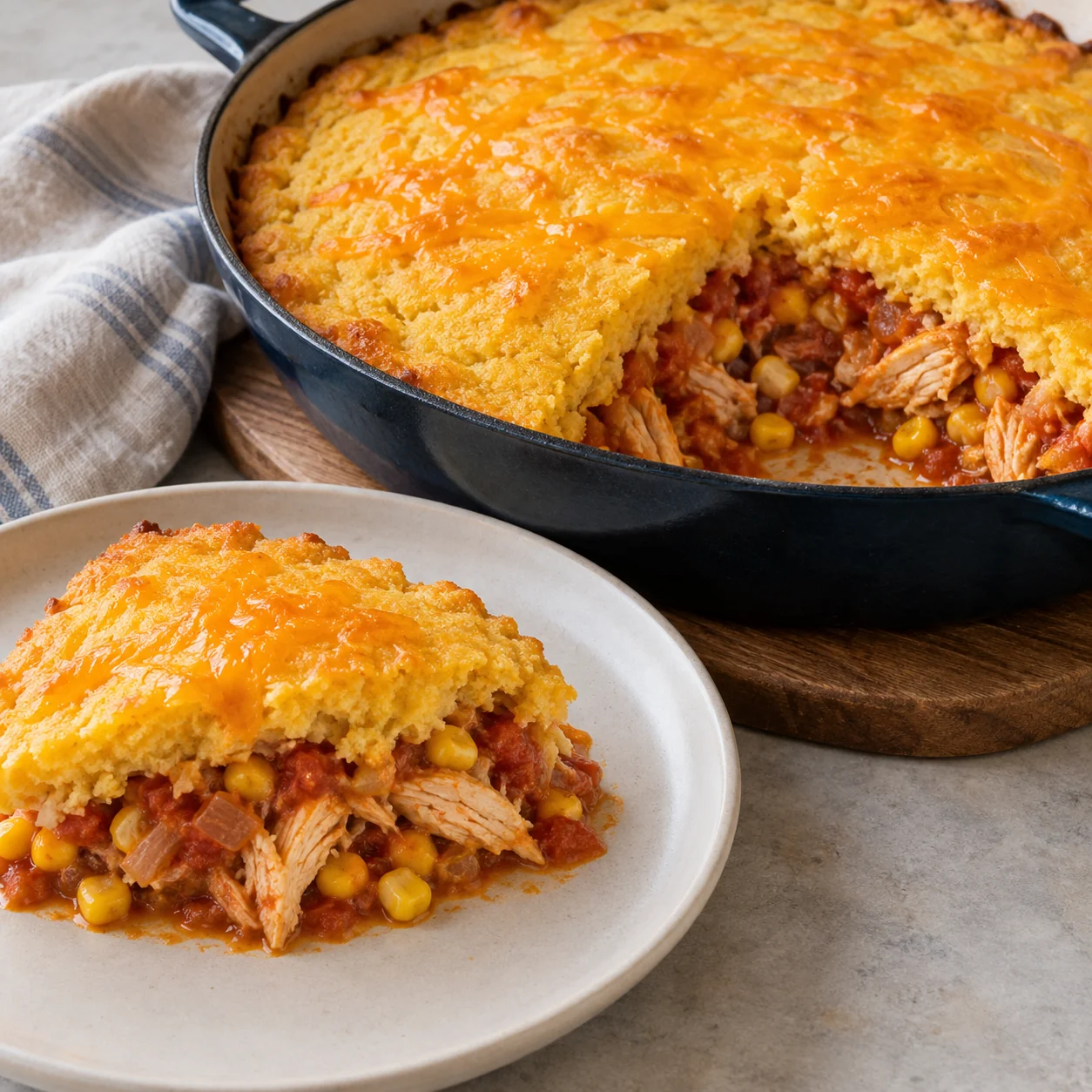
This casserole layers a chicken, tomato and corn filling beneath cooked cornmeal and a small amount of cheddar. It is a tamale-style pie, not individually wrapped tamales and not a cornbread batter casserole. The full card makes four portions in about ninety-five minutes, including a fifteen-minute rest. Keeping the two layers thick before assembly helps the finished pie hold together when served.
Chicken & corn tamale pie makes 4 servings, with 1 hr 35 min estimated total time. View the standalone recipe page.
Cut the chicken evenly and prepare the pan
Use raw boneless skinless breast and cut it into pieces about half an inch across. Similar pieces cook more evenly than a mixture of tiny shreds and large chunks. Keep the poultry board and utensils separate from ready-to-eat ingredients, and do not rinse the chicken. A deep ten-inch ovenproof skillet holds the batch; a similarly sized two-and-a-half-litre baking dish also works if the filling is transferred after cooking. Check that the skillet handle is oven-safe before starting. Measure the topping water separately so it does not accidentally thin the tomato filling.
Cook the filling until it is thick and safe
Soften the onion in the oil, then add chicken and stir through the first cooking stage. Briefly cook garlic and ground spices before adding tomatoes, frozen corn and the filling's share of salt. Simmer uncovered for twelve to eighteen minutes, stirring around the base. The mixture should be moist but not surrounded by a watery moat. Check several of the largest chicken pieces for 165°F / 74°C and continue cooking if any fall short. Their pale exterior alone is not enough. Retain all the sauce and pan juices rather than draining them away.
Whisk cornmeal into its own simmering water
Use the specified fine or medium degermed yellow cornmeal, not masa harina or a very coarse polenta grind. Bring its measured water and salt to a simmer, then add the meal gradually while whisking to prevent dry clumps. Stir over low heat until thick and tender. Eight to twelve minutes is a guide; follow a longer package cooking time when required by the grind. A small spoonful cooled before tasting should not feel hard or gritty. A published casserole from Memorial Sloan Kettering also cooks cornmeal before assembly; only that cooking principle is relevant here, not its nutritional or medical framing.
Spread while both components are still hot
The cornmeal thickens as it cools, so have the cooked filling ready when the topping finishes. Spoon it in several patches across the surface before gently connecting them into an even layer. That is easier than dropping the whole mass in the center and dragging the filling around. Reach the edges without compressing the chicken beneath. Scatter all the measured cheddar on top. If using a separate dish, scrape in the entire filling and edible pan residue first so the serving estimate matches the complete batch rather than leaving a portion behind.
Bake, check the center and allow a rest
Bake at 400°F / 200°C for twenty to twenty-five minutes. Look for bubbling at the edges and use a thermometer to verify 165°F / 74°C at the center of the assembled casserole. Cheese melting is a visual cue, not the safety endpoint. Rest for fifteen minutes before serving; the topping becomes easier to portion as the initial heat settles. Divide the whole pie into four equal shares, each containing topping and filling. Refrigerate leftovers within two hours in shallow containers, use within three to four days and reheat to 165°F / 74°C.
Common questions
Why does the cornmeal layer sink into the filling?
The filling may still be too watery, or the topping may not have thickened enough before assembly. Cook both to the stated consistency and distribute the topping in small patches before smoothing it.
Can I use a cornbread mix instead?
A mix contains different ingredients and usually relies on leavening and eggs. It is not interchangeable with this cooked cornmeal topping. The gluten-free tag also requires verified cornmeal, spice, tomato and cheese labels; milk is present.
Technique & food-safety references
These primary references support the technique, safety and storage guidance. The recipe and cooking explanations are original Recipe Pinboard content.


