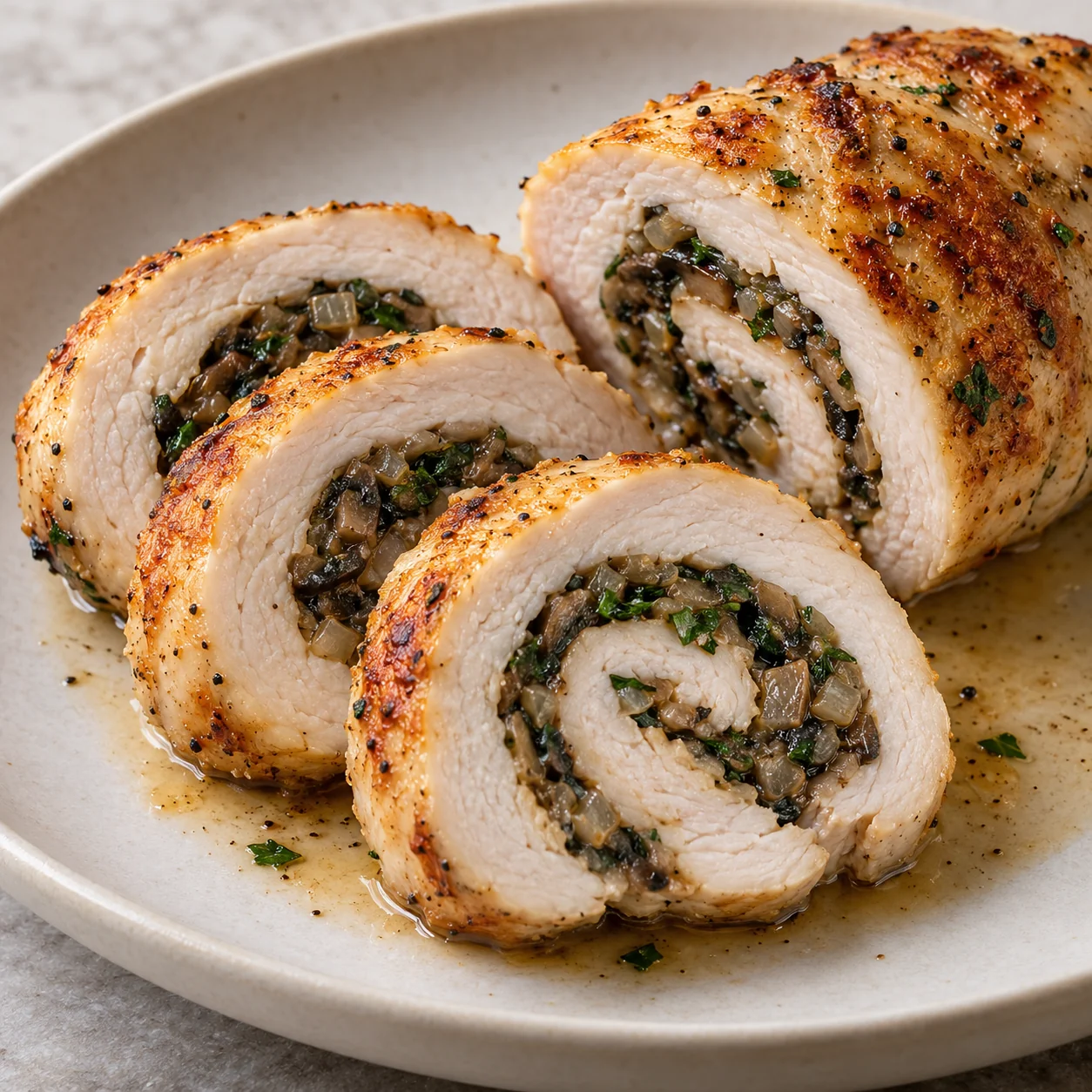
A roulade is a filled roll. Here, thin chicken breast wraps around finely chopped mushrooms and onion, then cooks by a short sear followed by oven heat. The full recipe makes four portions and allows ninety minutes. Keeping the filling dry and the chicken evenly thin makes rolling easier, while a thermometer must confirm that both the meat and the stuffed center reach a safe temperature.
Chicken & mushroom roulades makes 4 servings, with 1 hr 30 min estimated total time. View the standalone recipe page.
Cook the mushroom filling until the pan is dry
Finely chop mushrooms and onion before heating the first portion of oil. Large mushroom pieces can puncture the thin chicken or prevent the roll from closing. Cook the vegetables for ten to twelve minutes, stirring until released moisture has evaporated. The pan should not contain a loose mushroom puddle when the garlic goes in. Cook that briefly, then add parsley and the measured seasoning. Spread the mixture in a shallow dish for fifteen minutes of cooling. A hot filling warms raw poultry during assembly and makes the rolled pieces less comfortable to handle.
Butterfly and flatten without making holes
Use four raw chicken portions of similar weight. On a board reserved for poultry, cut each horizontally almost through, leaving a hinge so it opens like a book. Pound between sheets of food-safe wrapping to an even quarter-inch thickness. Work gently from thicker areas toward the edge rather than striking one spot hard. The purpose is an even sheet, not a fragile translucent layer. Do not rinse chicken. Wash hands and clean surfaces after raw poultry contact, and keep the cooked filling and clean serving tools away from the raw-chicken workspace.
Leave a border and count every toothpick
Season the chicken, then divide all cooled filling into four equal amounts. Spread each portion over a flattened piece while leaving a one-inch border. Roll snugly around the filling without forcing it outward at the ends. The clean border gives the outer chicken a surface to meet. Secure the seam with plain wooden toothpicks and record how many go into each roll. Keep the pieces similar in diameter where possible. One much thicker roll may need longer than the others even when their raw weights match, so do not assume a single thermometer reading represents the whole pan.
Sear for surface color, then finish gently
Heat the remaining measured oil in the ovenproof skillet. Place the seam down first and leave it for about two minutes before turning. Brown the other sides over the next four to six minutes without trying to cook the centers completely on the stovetop. Add the measured water before transferring to the 375°F / 190°C oven. It loosens the cooking juices and helps prevent the pan residue from scorching. The short sear supplies color; the oven stage cooks the rolled interior. Keep the hot skillet handle protected and clearly away from anyone who might grasp it barehanded.
Measure the filling center before resting
Begin checking within the eighteen-to-twenty-five-minute oven window. Insert the thermometer into the thickest part of each roll and into its mushroom-filled center, checking several positions for 165°F / 74°C. Filling has contacted raw chicken, so cooked mushrooms before assembly do not remove this requirement. Continue baking any roll that falls short. Rest for five minutes, remove and count every toothpick, then slice across the rolls. Serve all pan juices with the four portions to match the estimate. Refrigerate leftovers within two hours in shallow containers, use within three to four days and reheat to 165°F / 74°C.
Common questions
Why does the filling spill out?
Wet mushrooms, an overfilled center or a narrow border can make rolling difficult. Reduce the filling until dry, divide it evenly and leave space around the edges. Secure the seam before moving the roll to the skillet.
Can browned chicken still be undercooked inside?
Yes. A hot skillet colors the outside much faster than heat reaches a rolled center. Surface color and clear-looking juices do not replace thermometer checks in both the chicken and the filling.
Technique & food-safety references
These primary references support the technique, safety and storage guidance. The recipe and cooking explanations are original Recipe Pinboard content.


