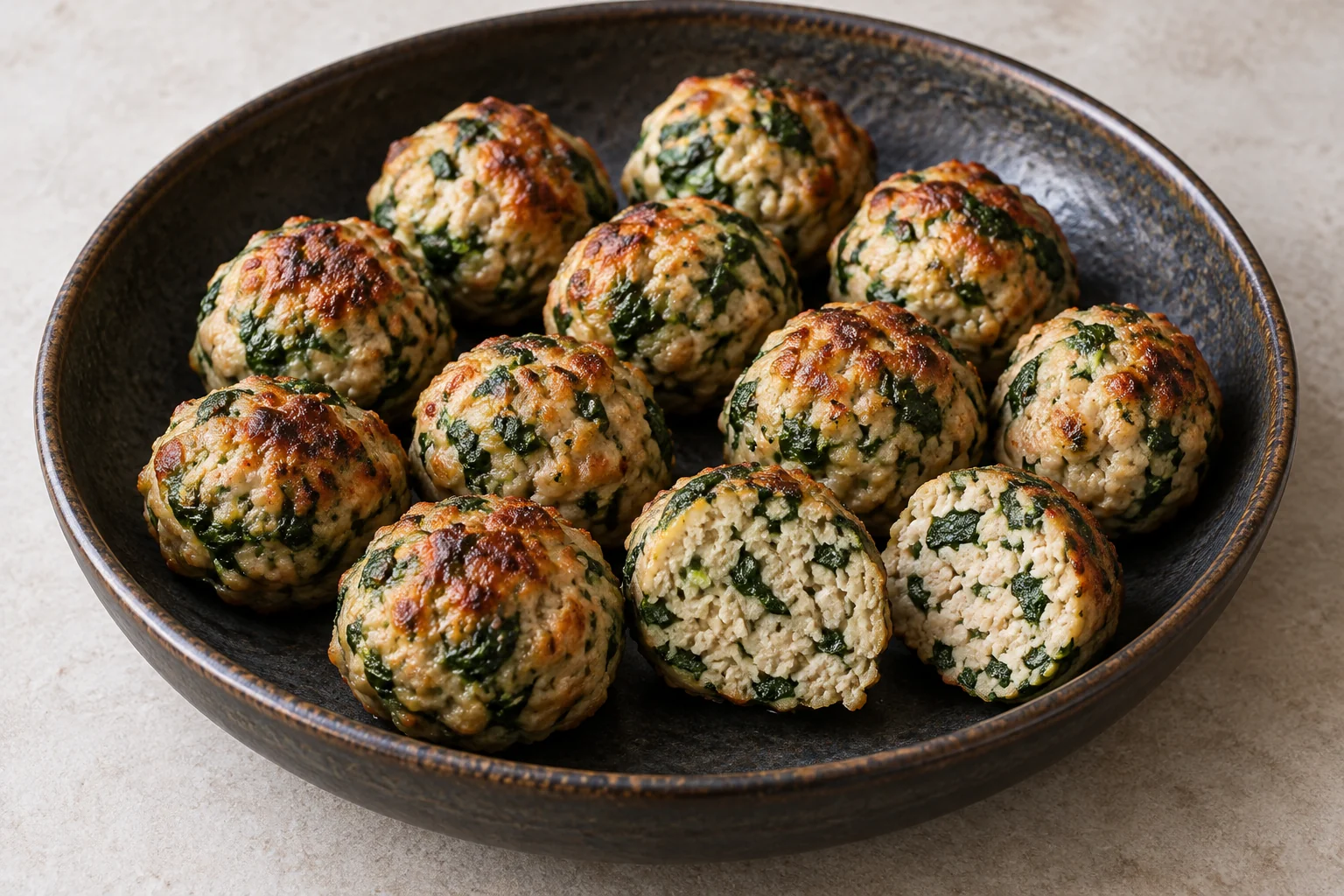
Ground chicken benefits from a light hand. These meatballs use egg and breadcrumbs to hold finely chopped spinach through the mixture, while a measured brushing of oil helps the exterior color in the oven. The most useful tools are a scale for even portions and a food thermometer for the centers. A browned surface is welcome, but it is not the endpoint for poultry.
Baked chicken & spinach meatballs makes 4 servings, with 45 min estimated total time. View the standalone recipe page.
Dry and chop the spinach before mixing
Water clinging to freshly washed leaves can loosen a small meatball mixture. Dry the spinach well, then chop it finely enough that you do not see long ribbons. Large leaves create weak seams and make shaping awkward. The published quantity is raw spinach, so replacing it with the same weight of squeezed cooked spinach would add far more leaf material. Prepare the vegetables and measure the seasonings before opening the chicken package. This keeps the meat cold while you organize the rest of the ingredients and reduces unnecessary handling time.
Distribute the binder before adding chicken
Stir the egg, breadcrumbs, chopped spinach and seasonings together first. This lets you distribute the garlic and lemon zest without repeatedly kneading the meat. Add the chicken last and fold just until the mixture looks uniform. Packing or beating it into a dense paste can produce a firmer, springier bite. The breadcrumb label matters: plain crumbs can still contain milk ingredients, and seasoned crumbs may add cheese or other flavorings. Use the stated milk-free crumbs if relying on the dairy-free ingredient screen, and reassess any substitutions.
Portion loose balls of similar size
Divide the mixture into twenty equal amounts rather than guessing twenty different sizes. A larger ball takes longer to reach a safe center temperature and can hold up the rest of the tray. Shape gently; small natural irregularities are fine. Leave space between the balls so heat can circulate and moisture can escape. Brush the measured oil across all of them rather than pouring most of it over the first row. The nutrition estimate assumes the listed oil and all the mixed ingredients are consumed across four equal portions.
Measure the center, not the hot tray
Begin checking near the lower end of the baking range. Insert a thin thermometer probe into the center from the side, without touching the tray. Check several meatballs, including larger ones and those near the middle of the sheet. Ground poultry needs 165°F (74°C). If a checked center is below that temperature, continue baking and recheck with a clean probe. Pale meat can be cooked and browned meat can be undercooked, so neither color nor clear juices replaces the temperature measurement. Oven and portion differences make the stated minutes an estimate.
Rest briefly and store in shallow portions
The short rest makes the meatballs easier to lift without tearing. It is not a substitute for reaching the safe temperature in the oven. Serve five per portion, with any sauce or side counted separately. Transfer extras to shallow covered containers promptly and refrigerate at 40°F (4°C) or below. Use within three to four days and reheat to 165°F (74°C). For reheating, a covered dish can limit drying, but verify the centers rather than assuming a hot dish means the food itself is hot enough.
Common questions
Why are my chicken meatballs tough?
Overmixing, very compact shaping or cooking far beyond the safe endpoint can make them firm. Distribute the binder before adding chicken, shape lightly and check the temperature early. Do not reduce cooking below 165°F (74°C) to chase tenderness.
Can I use frozen spinach instead?
Frozen spinach needs thawing and thorough squeezing, and its cooked density differs from raw leaves. The card and nutrition are based on 150 g raw spinach. A frozen-spinach variation needs a revised amount and moisture check rather than a direct weight-for-weight swap.
Technique & food-safety references
These primary references support the technique, safety and storage guidance. The recipe and cooking explanations are original Recipe Pinboard content.