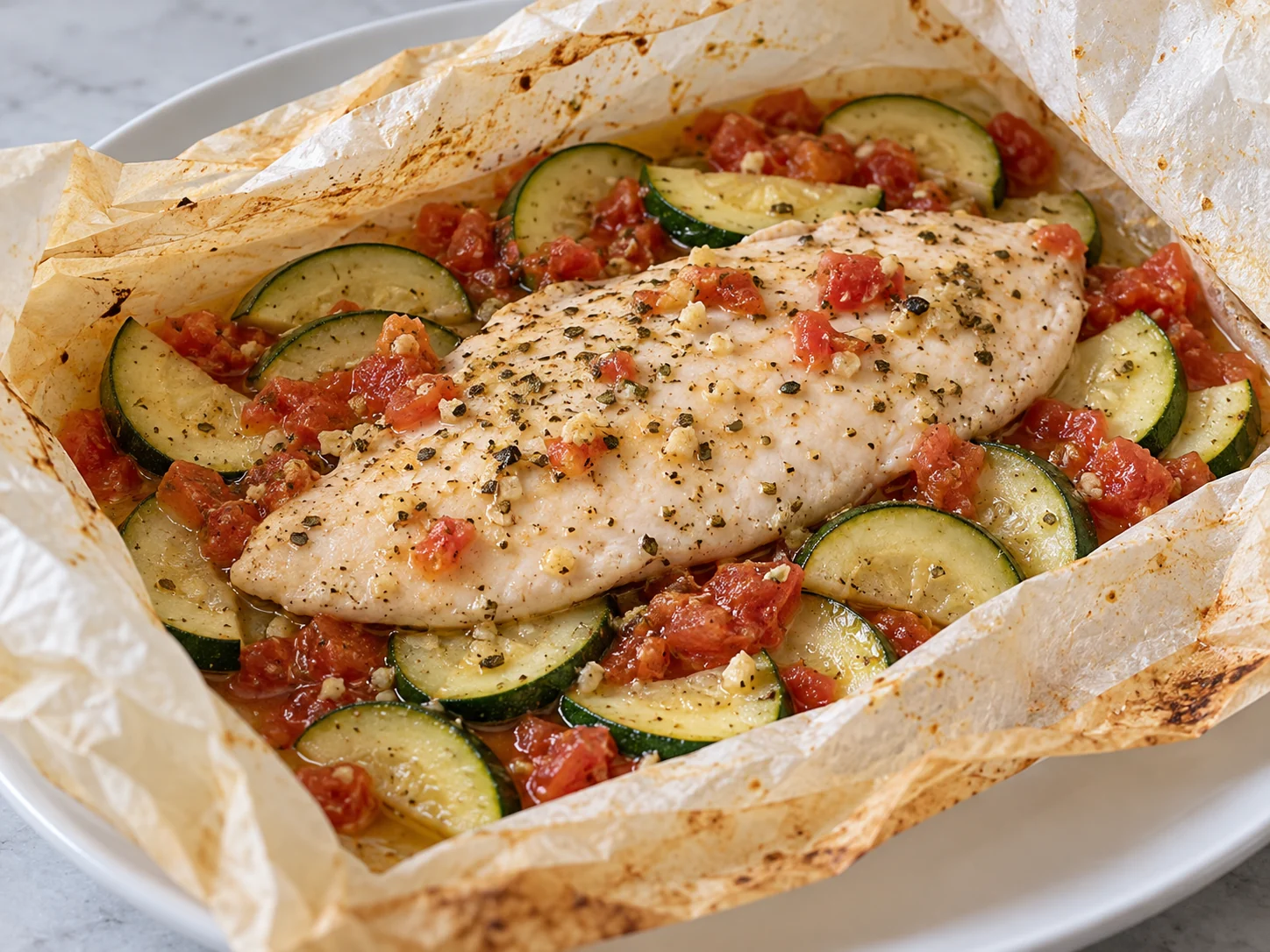
Parchment packets trap the moisture released by chicken and vegetables, creating a gently steaming environment inside a hot oven. These four individual parcels contain thin zucchini, tomatoes, lemon and dried oregano beneath evenly thick chicken breast. The result should be moist and lightly colored rather than deeply seared. A packet can look beautifully puffed before the meat is safe to eat, so the thermometer check is an essential part of the method.
Chicken, zucchini & tomato parchment packets makes 4 servings, with 1 hr estimated total time. View the standalone recipe page.
Make thickness consistent before wrapping
Divide the raw chicken into four equal portions and pound each to an even half-inch thickness between food-safe sheets. A thick bulb at one end can cook much more slowly than a thin tapered edge. Keep raw chicken tools separate from vegetables that are already prepared, and clean the work area after pounding. Do not rinse the meat. Weigh the boneless skinless chicken in its raw edible state; there is no guessed conversion from cooked weight. The four portions each receive the same amount of vegetables and seasoning.
Cut vegetables for the same cooking window
Slice zucchini thinly and keep its skin, matching the specified ingredient state. Dice the tomatoes so their moisture can spread around the packet rather than remain trapped in a large intact piece. Arrange the vegetables as a shallow bed instead of a high mound. Put the chicken on top, then share all of the oil, lemon, garlic, oregano and salt mixture across the four parcels. No extra stock is needed in this formula: the vegetables and chicken supply liquid as they cook. Keep the measured juices in the packet.
Fold an actual seal with room above the food
Use oven-safe parchment rated for the recipe's temperature, not wax paper. Large sheets leave a comfortable border around the filling. Fold one half over the other and work around the edge with small overlapping folds, pressing each firmly before making the next. Leave some room over the food rather than wrapping the paper tightly against every surface. A loosely folded corner can let steam escape and spill juices. Set the packets apart on a rimmed baking tray so any accidental leak stays contained and the parcels receive heat evenly.
Open safely and check every chicken portion
Begin checking within the stated baking window, but do not use browned paper as a doneness test. Move the tray to a stable heatproof surface and open the first fold away from your face and hands. Escaping steam can burn even when the outside paper seems manageable. Insert a clean thermometer into the thickest part of the chicken, avoiding a reading taken only from the hot vegetables underneath. Check all four portions. Any piece below 165°F / 74°C needs to be reclosed and returned to the oven before serving.
Rest, serve the juices and store promptly
After the safe temperature is reached, let the parcels stand for five minutes. Open them carefully again and serve each portion with all its vegetables and liquid. That liquid is part of the nutrition estimate, including the measured oil; leaving it behind changes what is consumed. Transfer leftovers to shallow containers rather than leaving warm parcels stacked together. Refrigerate within two hours, use within three to four days and reheat to 165°F / 74°C. Reheated zucchini will be softer, so the best texture comes from serving the freshly cooked packets promptly.
Common questions
Should the chicken be brown on top?
Deep browning is not the objective inside a moist sealed packet. Light patches may occur, but color cannot establish safety. Use the thermometer endpoint and expect a gently cooked surface rather than the crust of pan-seared chicken.
What if one packet leaks?
Keep it on the rimmed tray and check its chicken temperature like the others. If the seal has opened early, carefully refold it before continuing. Serve any safely cooked juices from the tray with that portion; never assume a leaking parcel cooked faster.
Technique & food-safety references
These primary references support the technique, safety and storage guidance. The recipe and cooking explanations are original Recipe Pinboard content.


