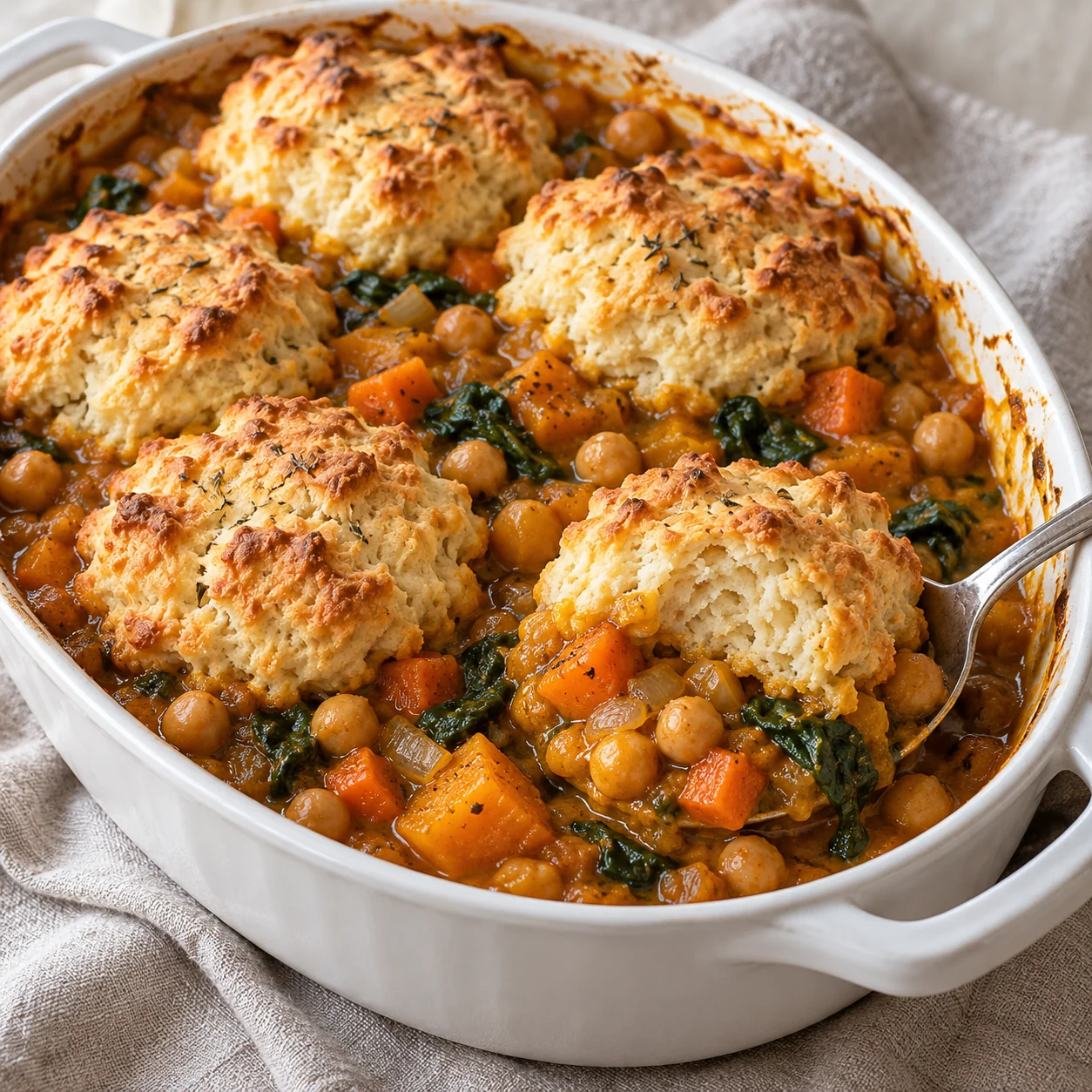
This savory cobbler combines two textures: a thick pumpkin and chickpea filling and a tender biscuit topping with browned ridges. The topping is not a pie crust and should not seal the dish completely. Use the full recipe card for the quantities, then focus on making the filling hot before the dough is added. That gives the biscuit bases a useful start and keeps the final oven stage from doing all the work at once.
Chickpea & pumpkin savory cobbler makes 6 servings, with 1 hr 25 min estimated total time. View the standalone recipe page.
Soften the carrots before adding pumpkin
Cut the carrots into small, fairly even dice so their centers soften during the covered simmer. Onion cooks with them in oil first, followed by measured water. Test a carrot piece with a knife before continuing; it should offer only mild resistance. Pumpkin puree thickens the liquid quickly, which makes it harder to cook stubbornly firm carrot pieces later. Use plain unsalted canned pumpkin, not pie filling, because sweeteners and dessert spices would change both the flavor and the nutrient calculation.
Reduce only until the filling is spoonable
Stir in the drained chickpeas, pumpkin and chopped spinach after the carrots are ready. The spinach will release some water while it wilts. Keep stirring across the bottom so the thick puree does not catch underneath an apparently moist surface. Stop when the mixture is substantial enough to support spoonfuls of dough but still moves easily from the pan. It should not resemble a dry bean mash. The measured water is part of the filling; small evaporation differences do not change the six-portion yield.
Keep butter cold and mix the dough briefly
Whisk the flour, baking powder and topping salt thoroughly before rubbing in the cold butter. Aim for a coarse crumb with small pieces of butter still visible, rather than a smooth paste. Add the milk and stir only until the dry pockets disappear. A rough, slightly sticky dough is appropriate for drop biscuits. Kneading until smooth develops a firmer texture and is unnecessary here. Raw flour can carry harmful bacteria, so do not taste the dough while checking its seasoning or consistency.
Leave gaps between six equal mounds
Transfer the hot filling to the specified shallow baking dish, then divide the dough into six comparable portions. Set them on top with spaces between the mounds. These gaps let steam escape and expose the edges of each biscuit to oven heat. Scatter the reserved fresh thyme over the tops; it is included in the measured ingredient amount. A smaller deep dish would produce a different filling depth and slower heating, so avoid compressing the same batch into a narrow bowl just because it technically fits.
Check beneath the browned exterior
Golden ridges are a useful visual cue, but they cannot confirm that the middle of a thick biscuit is cooked. Open or probe one near the center of the dish and look for a set crumb without shiny sticky dough. The filling should be hot throughout and reach 165°F (74°C). Let the cobbler rest for ten minutes before serving: the pumpkin thickens slightly and the filling is easier to spoon. Give each person one biscuit and an equal share of the vegetable base, then refrigerate leftovers promptly.
Common questions
Why are the biscuit bottoms gummy?
Cold filling, oversized mounds or too little baking time can leave the undersides undercooked. Start with hot filling, keep the six portions similar in size, and check the actual center crumb rather than judging only the golden top.
Can I make the filling ahead?
Yes, refrigerate it promptly in a shallow container and reheat thoroughly before adding freshly mixed biscuit dough. That extra cooling and reheating is outside the same-day timing in the card. The topping contains milk, butter and wheat, so this version is not vegan, dairy-free or gluten-free.
Technique & food-safety references
These primary references support the technique, safety and storage guidance. The recipe and cooking explanations are original Recipe Pinboard content.


