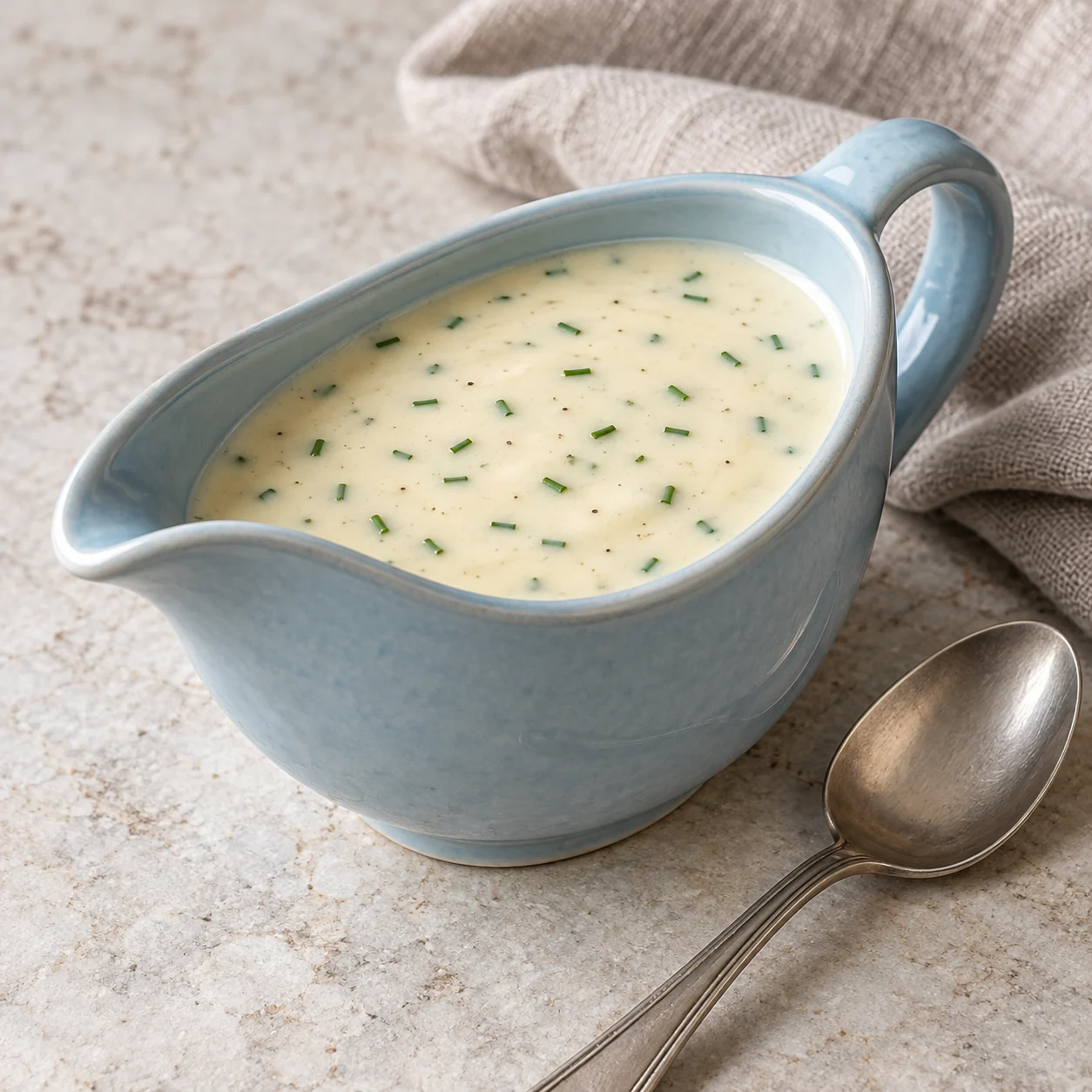
Béchamel starts with butter and flour, then becomes a smooth sauce as milk is incorporated and heated. Fresh chives go in after cooking so their small green pieces remain distinct. The complete card above makes six equal portions. The most useful checkpoints are the color of the roux, the first milk addition and the gentle bubbling that follows thickening.
Chive béchamel sauce makes 6 servings, with 25 min estimated total time. View the standalone recipe page.
Measure everything before heating the butter
Have the flour weighed, milk ready and chives washed, dried and snipped before you turn on the burner. The first two stages move quickly, and leaving a small pan unattended while searching for a whisk can darken the butter. Use whole milk for the intended consistency and estimate; cream, skim milk and plant drinks behave differently. A heavy saucepan distributes heat more evenly than a very thin one. Choose a whisk that can reach the corners, and keep a flexible spatula nearby for material that collects at the edge.
Cook the roux without browning it
Melt the butter over moderate-low heat, then whisk in the flour. The mixture should form a pale paste that moves readily under the whisk. Keep it moving for the two-minute stage instead of allowing it to sit against the pan. Small bubbles are normal, but a nut-brown color indicates a different style of roux and changes the finished appearance. Do not judge readiness by tasting the raw mixture. The flour will continue cooking in the milk stage, and raw flour paste should never be sampled.
Make the first milk addition off the heat
Remove the pan from the burner before adding the first measured portion of milk. Whisk firmly until no dry paste remains in the corners. A small amount of liquid initially produces a thick mixture, which is easier to smooth than a pan full of milk containing hidden flour lumps. Add the rest in several stages, checking the bottom each time. If you see a persistent small lump, work it against the side with the whisk rather than simply pouring more milk over it and hoping it disappears.
Watch the whole pan as the sauce thickens
Return the pan to the burner and keep whisking as it warms. The bottom often thickens before the surface changes noticeably, so a stationary whisk can leave a dense layer underneath. Once gentle bubbles appear, reduce the heat and complete the short simmer in the card. Strong boiling is unnecessary and increases the chance of scorching or overflow. The sauce should coat a spoon while still flowing. If the base catches and smells burnt, do not scrape the dark layer into the otherwise pale sauce.
Add chives and serve in measured portions
Stir in the chives after removing the pan from the heat. The short rest makes the sauce easier to handle and lets you judge its final thickness. Divide the whole pan into six portions, including the sauce on the sides. The panel counts all milk, flour and butter but none of the pasta, vegetables or other foods served underneath. Refrigerate leftovers promptly in a shallow container. When reheating, stir frequently and check the temperature; a hot surface does not prove that a thick sauce is hot throughout.
Common questions
Why did a skin form on the sauce?
The exposed surface dries as the sauce stands. Stirring before serving can incorporate a thin skin, while prolonged uncovered holding makes it more noticeable. Prepare the sauce close to serving time and avoid leaving it beside the stove for extended periods.
Can I thin it with extra milk?
Extra milk changes both the ingredient total and the nutrition estimate, so record the amount if you choose that adjustment. First check the sauce while warm: chilled béchamel is naturally firmer. Reheat gently before deciding that the original formula needs more liquid.
Technique & food-safety references
These primary references support the technique, safety and storage guidance. The recipe and cooking explanations are original Recipe Pinboard content.


