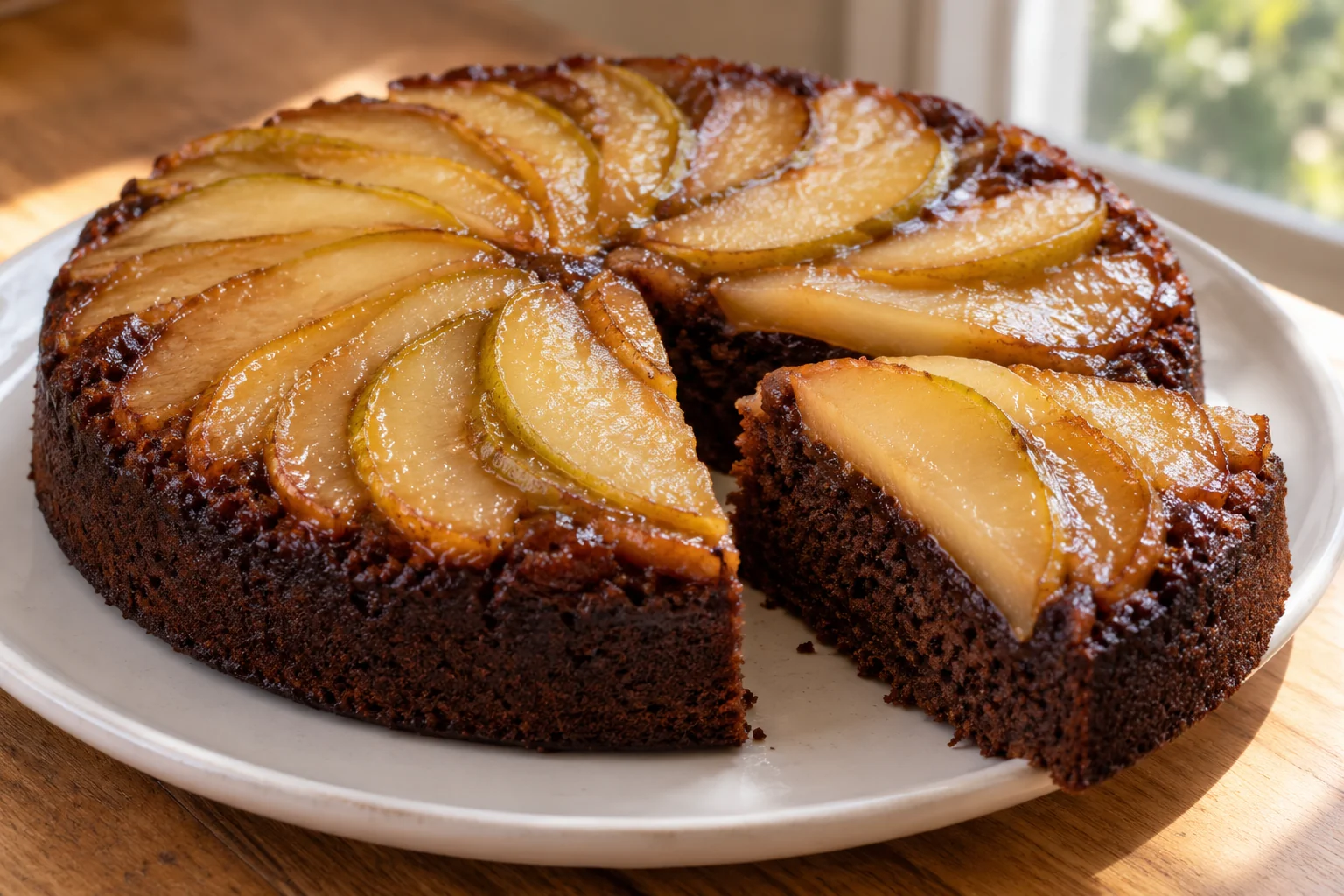
The pear layer starts underneath the cocoa batter and becomes the top after the cake is turned out. Keeping the fruit skin on gives the finished slices a defined edge, while the cake below provides a soft chocolate crumb. The recipe makes eight wedges from a nine-inch round pan. Its 155-minute allowance includes preparation, baking, the short in-pan rest and further cooling after inversion. Choose a fixed-base pan and a heatproof rimmed serving plate before you begin; escaping hot fruit syrup is the main handling concern.
Chocolate and pear upside-down cake makes 8 servings, with 2 hr 35 min estimated total time. View the standalone recipe page.
Line the pan and account for all fruit
Fit parchment across the base and around the sides without large folds that push deeply into the cake. Melt only the topping's butter first and spread it across the base, then distribute its measured sugar. Wash and core the pears before weighing the edible skin-on portion. Slice them evenly so thicker pieces do not remain firm beside collapsing thin ones. Arrange the slices in a closely overlapping layer and tuck small offcuts into gaps. Keep the released juice in the pan rather than draining away part of the measured fruit.
Mix cocoa evenly through the flour
Whisk flour, cocoa, baking powder and salt thoroughly before combining with the wet ingredients. Small dry cocoa pockets can survive a few quick folds and leave bitter streaks in the crumb. This formulation uses unsweetened natural cocoa and double-acting baking powder; sweetened chocolate drink powder is not equivalent. Melt the remaining butter and give it the stated brief cooling time before whisking with eggs and milk. There is no butter-softening step hidden outside the schedule, and no extra grease is needed beyond the measured topping butter and parchment.
Cover the pears without disturbing them
Fold wet ingredients into the dry mixture only until the flour disappears. Spoon batter in several places over the fruit instead of dropping the whole bowl into the middle, which can displace the arrangement. Level gently with the back of a spoon. Keep the batter inside the lined pan rather than pressing it into parchment folds. The fruit layer will release moisture as it cooks, so the cake directly above it may stay softer than the upper surface. That difference makes a center doneness check especially useful.
Test the cake rather than a pear slice
Begin checking during the stated baking window. The exposed cake should spring back lightly, and a skewer inserted into the cake near the center should show moist crumbs without wet batter. If the skewer passes through a juicy pear, move to another spot instead of interpreting fruit juice as raw cake. Let the baked cake stand in its pan for ten minutes. This brief rest supports the crumb before turning, while the topping remains warm enough to release. Leaving it until completely cold can make the fruit adhere more firmly.
Invert securely and finish cooling
Loosen the parchment sides, place the heatproof rimmed plate over the pan and hold both securely with dry oven mitts. Turn away from your body and set the plate down before lifting the pan. Peel off parchment slowly, returning any attached pear pieces and syrup to the top. Allow at least another forty-five minutes of cooling before cutting, so the crumb is less fragile. Divide the entire cake into eight wedges. Refrigerate covered leftovers within two hours after baking and use within three days; no cream or other garnish is included.
Common questions
Why did some pears stay in the pan?
Uneven lining or waiting too long before inversion can contribute. Lift stuck pieces carefully from the parchment and place them back on the cake while warm. Do not scrape aggressively across the exposed crumb or try to shake a hot pan above your hands.
Can I use very soft pears?
They may collapse and release more liquid than firm ripe fruit, changing the topping and bake. Choose pears that slice cleanly and retain their shape. The published quantities and timing are based on that preparation, with all skin-on edible fruit retained.
Technique & food-safety references
These primary references support the technique, safety and storage guidance. The recipe and cooking explanations are original Recipe Pinboard content.


