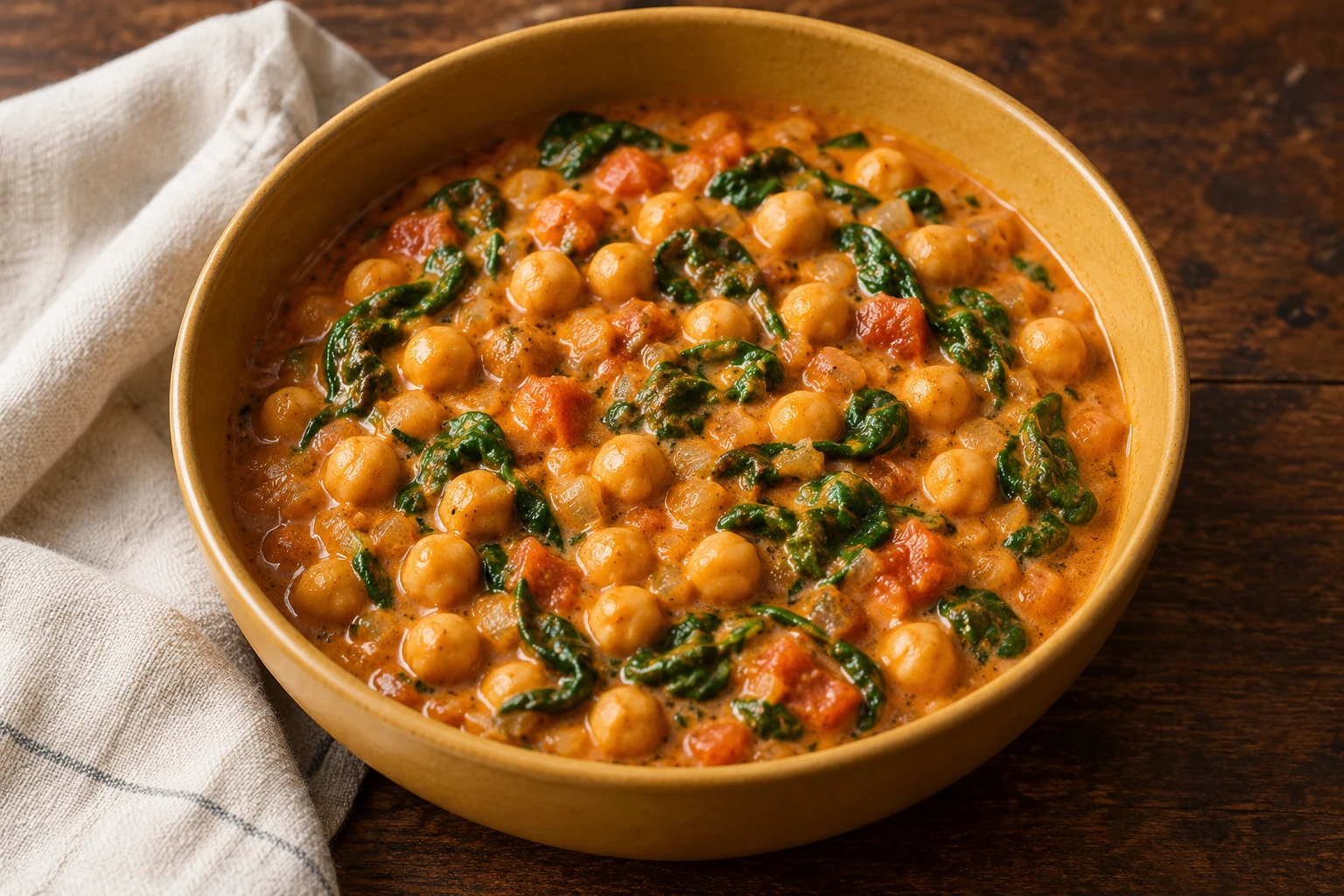
This four-serving curry is built for a 30-minute cooking session. Two cans of chickpeas supply the main texture, while diced tomatoes and coconut milk become the sauce. It is useful to think of the recipe in three stages: soften and season, simmer, then finish. Each stage changes the dish in a different way.
Coconut chickpea curry makes 4 servings, with 30 min estimated total time. Open the complete ingredient list and method.
Use the canned ingredients as specified
Drain and rinse two 15 oz cans of chickpeas. Their printed can weights include liquid, so do not interpret the recipe as calling for 30 oz of drained chickpeas. The recipe relies on already-cooked canned beans; dried chickpeas need a separate preparation and are not a direct substitution.
Use one 14 oz can diced tomatoes and one 13.5 oz can coconut milk. The tomatoes go in with their juice. Choose unsweetened canned coconut milk, rather than sweetened cream of coconut or a carton beverage intended for drinking. If the can has separated into cream and liquid, stir those parts back together before adding them.
Build an aromatic base without burning the spices
Cook the diced onion in 1 tbsp neutral oil over medium heat for 5 minutes in a deep skillet. Stir it around so the pieces soften evenly. A shallow pan with little headroom makes the later simmer harder to manage, particularly after the bulky spinach goes in.
Add two minced garlic cloves, 1 tbsp grated ginger and 1½ tbsp curry powder. Stir for just 30 seconds. This briefly warms the spice mixture and combines it with the aromatics. It is not a long dry-frying stage. Keep the open cans ready so you can add liquid promptly if the spices begin catching.
Let a gentle simmer bring the sauce together
Add the tomatoes, coconut milk, chickpeas and ½ tsp kosher salt. Stir from the bottom so no spice paste remains stuck underneath. Bring the mixture to a simmer, then cook for 15 minutes, stirring occasionally. Gentle bubbling lets the flavors combine without throwing sauce over the rim.
Curry powders differ considerably, so this is not a fixed heat level despite the recipe’s gentle description. Choosing a mild blend is more reliable than assuming every jar marked curry powder tastes the same. For the first batch, preserve the listed quantity and note which blend you used before deciding on future changes.
Add the spinach and lime at the right moment
Fold in the 3 cups baby spinach near the end, then cook for 2 minutes until it wilts. The leaves may initially sit above the sauce; turn them through it gently rather than crushing everything with vigorous stirring. They collapse quickly and spread more evenly as they soften.
Remove the skillet from the heat before adding the juice of one lime. This finishing acidity balances the rich coconut sauce and makes the spice flavors easier to distinguish. It is not a substitute for the tomato or a preservative that makes the curry safe to leave unrefrigerated. Stir it through, then taste the finished dish.
Adjust consistency and choose restrained variations
If the sauce seems thin, check whether it has completed its 15-minute simmer before making changes. Coconut milk brands and tomato juices differ, and the sauce is supposed to remain spoonable. For a thicker variation, mash a small portion of the cooked chickpeas against the side of the pan and stir them back in rather than introducing flour.
If the curry becomes too thick or begins sticking, a small splash of water is a practical adjustment. Avoid adding an entire second can of coconut milk, which would change the balance. Baby kale can replace the spinach as a variation, but tougher leaves may require additional cooking; remove thick stems and check tenderness.
Serve now or portion for another meal
Divide the curry into four servings. Rice or flatbread are optional accompaniments and are not included in this recipe’s quantities or timing. If you make rice, plan its cooking separately and cool any leftover rice promptly too.
Refrigerate curry in shallow covered containers within two hours, or within one hour when the surroundings exceed 90°F. Keep it at 40°F or below and use within 3–4 days. Reheat leftovers to 165°F, stirring through the center. A little water can loosen the sauce during reheating; a fresh squeeze of lime is an optional finishing adjustment.
Common questions
Can I use light coconut milk?
It is a possible variation, but expect a thinner, less rich sauce. It will not reproduce the same texture automatically, so assess consistency after the specified simmer.
Why does the spinach go in so late?
Baby spinach needs little cooking and loses volume quickly. Adding it for the final 2 minutes keeps it recognizable instead of simmering it for the full cooking time.
Food-safety references
These official references support the safety and storage guidance. The recipe and cooking explanations are original Recipe Pinboard content.