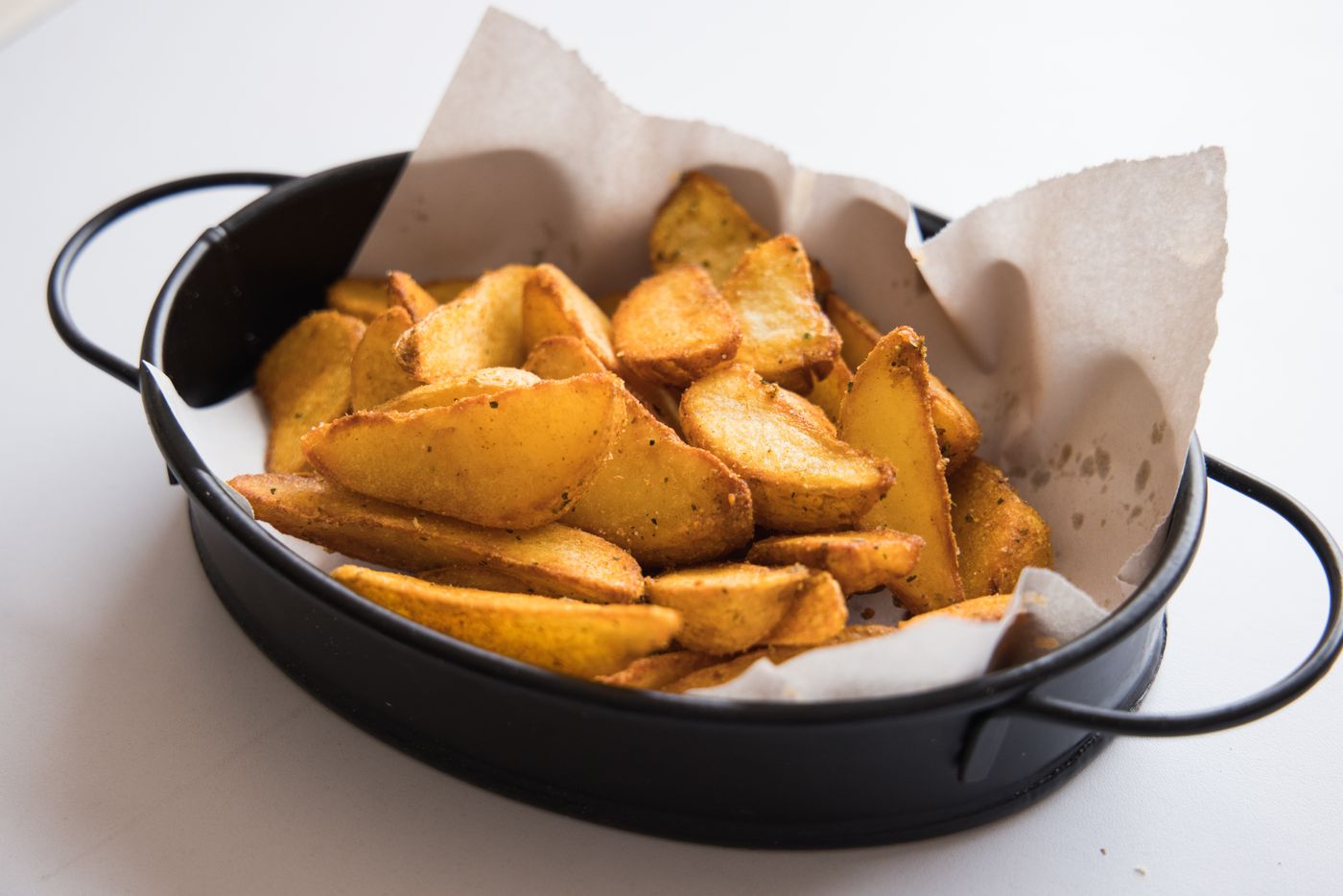
Crisp paprika potato wedges need room on the tray more than they need an elaborate preliminary treatment. This recipe serves four using 900 g russet potatoes and lists fifty minutes total, with thirty-five to forty minutes in a hot oven. The potatoes stay skin-on and are cut into eight wedges each. An even cut, thorough drying and contact between a cut surface and the tray help balance crisp edges with a cooked center.
Crisp paprika potato wedges makes 4 servings, with 50 min estimated total time. View the standalone recipe page.
Scrub the potatoes and plan the cut
Heat the oven to 425°F (220°C) so it is ready when the tray is filled. Scrub the potatoes under running water and inspect the skins while cleaning them. Choose sound potatoes and remove damaged areas; do not rely on strong seasoning to disguise poor-quality produce. Pat the whole potatoes dry before placing them on the board.
Cut each potato lengthwise into eight wedges. First halve lengthwise, then divide each half into four wedges while keeping it stable on its cut side when practical. Try to make the pieces similar in thickness, especially around their widest middle. A few very thick pieces can remain firm while narrow pieces are already browned and drying out.
Dry thoroughly before adding the oil
Pat the cut wedges dry with a clean towel, including the flat faces where water can cling. Surface water must evaporate before those surfaces brown effectively. This recipe does not include a soaking or parboiling stage, so there is no need to add one and then try to fit the extra preparation into the stated fifty minutes.
Place the dry wedges in a roomy bowl. Mix or distribute the 3 tbsp olive oil, 1 tsp smoked paprika, ½ tsp garlic powder, ½ tsp kosher salt and ¼ tsp black pepper across them. Toss until the seasoning coats the pieces rather than staying as a dry clump in the bottom. Use a spatula to collect the measured coating left on the bowl.
Arrange cut-side down with visible gaps
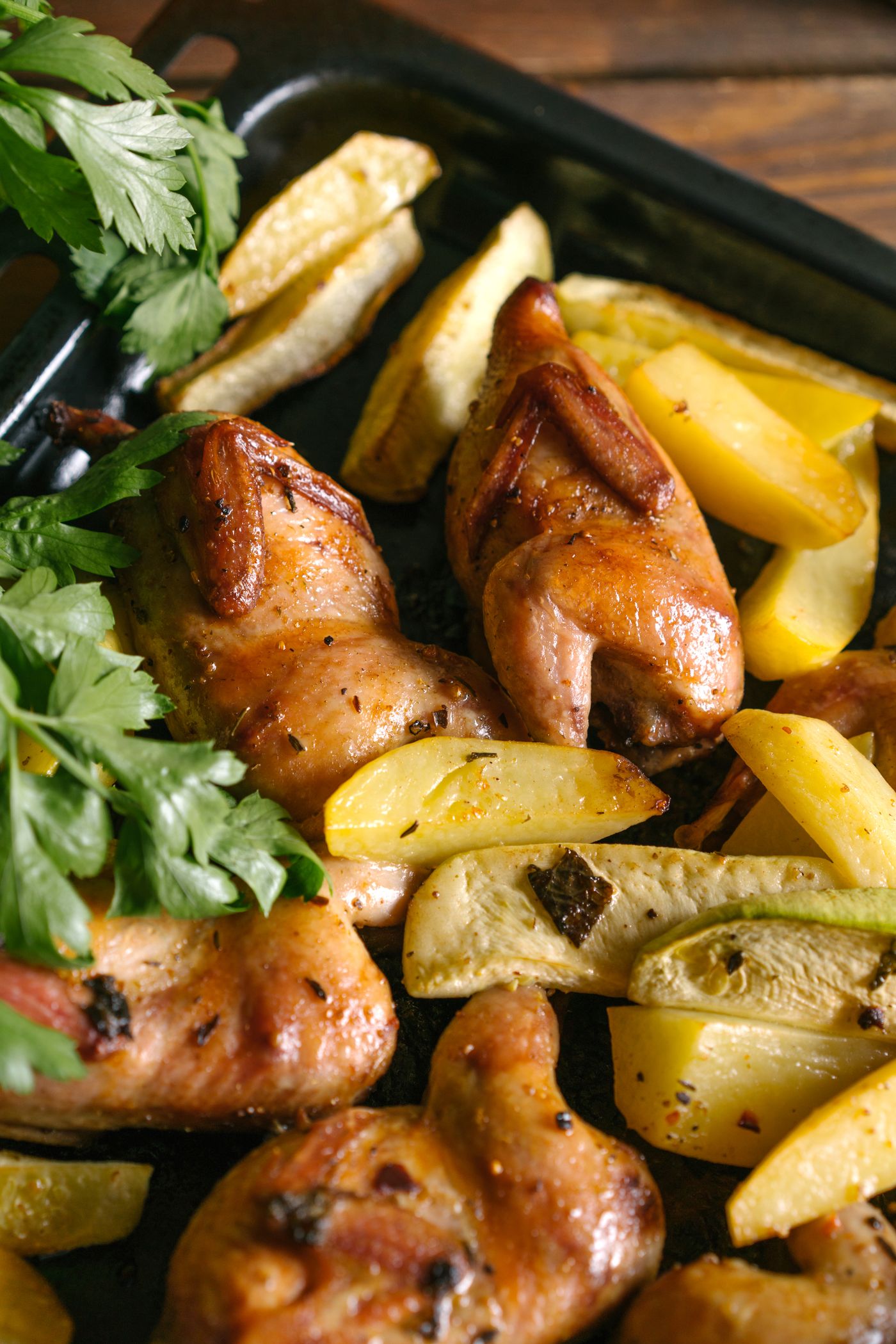
Spread the wedges on a large rimmed tray in a single layer, with a flat cut side touching the surface. Avoid balancing every wedge on its narrow skin edge; broad contact helps develop color. Leave space between pieces so released steam can escape. A tray filled edge to edge with tightly touching potatoes behaves differently from an open layer.
Use two trays if necessary rather than piling surplus wedges on top. The amount of potato stays the same; the extra tray simply gives it more room. If using two oven positions, check both during roasting and adjust their positions if one is coloring much faster. Do not assume that adding a tray leaves every oven’s airflow unchanged.
Turn halfway and check the thickest centers
Roast for thirty-five to forty minutes, turning halfway so another cut surface has a chance to brown. Use a thin spatula to lift carefully rather than scraping away a crust that is still adhering. If a piece resists, loosen it patiently and check whether it needs a little more time before releasing.
Near the end, test a thick wedge with a small knife or fork. It should slide into a tender center. Paprika makes the surface look colored early, so redness or darkness alone cannot tell you whether the potato is cooked. If centers are still firm, continue roasting and monitor the tips so they do not burn while the thicker parts finish.
Serve hot and reheat without stacking
Serve the wedges promptly in four portions. Piling them deeply in a covered bowl traps steam and softens the edges you worked to develop. Any dip is an additional serving suggestion, not an ingredient included in this recipe. Taste a wedge before adding more salt, particularly if pairing it with a salty condiment.
Refrigerate leftovers promptly in a shallow container and use within three to four days. Reheat to 165°F (74°C), spreading wedges out rather than packing them together. Oven reheating generally offers more opportunity to restore a dry surface than a covered microwave dish, but the result will still differ from freshly roasted potatoes. Do not keep the tray on the counter for hours while waiting for every piece to cool.
Common questions
Why are the wedges soft even though I used a hot oven?
They may have been wet, crowded or piled up after cooking. Dry the cut surfaces, leave gaps on the tray and serve without trapping steam. Increasing the temperature alone does not address excess moisture or lack of space.
Can I use sweet potatoes with the same method?
Sweet potatoes have a different structure and browning behavior, so this recipe’s timing is not a guaranteed match. Use the listed russet potatoes for the intended crisp-edged result. A sweet-potato version needs its own checks rather than being presented as an unchanged swap.
Technique & food-safety references
These primary references support the technique, safety and storage guidance. The recipe and cooking explanations are original Recipe Pinboard content.