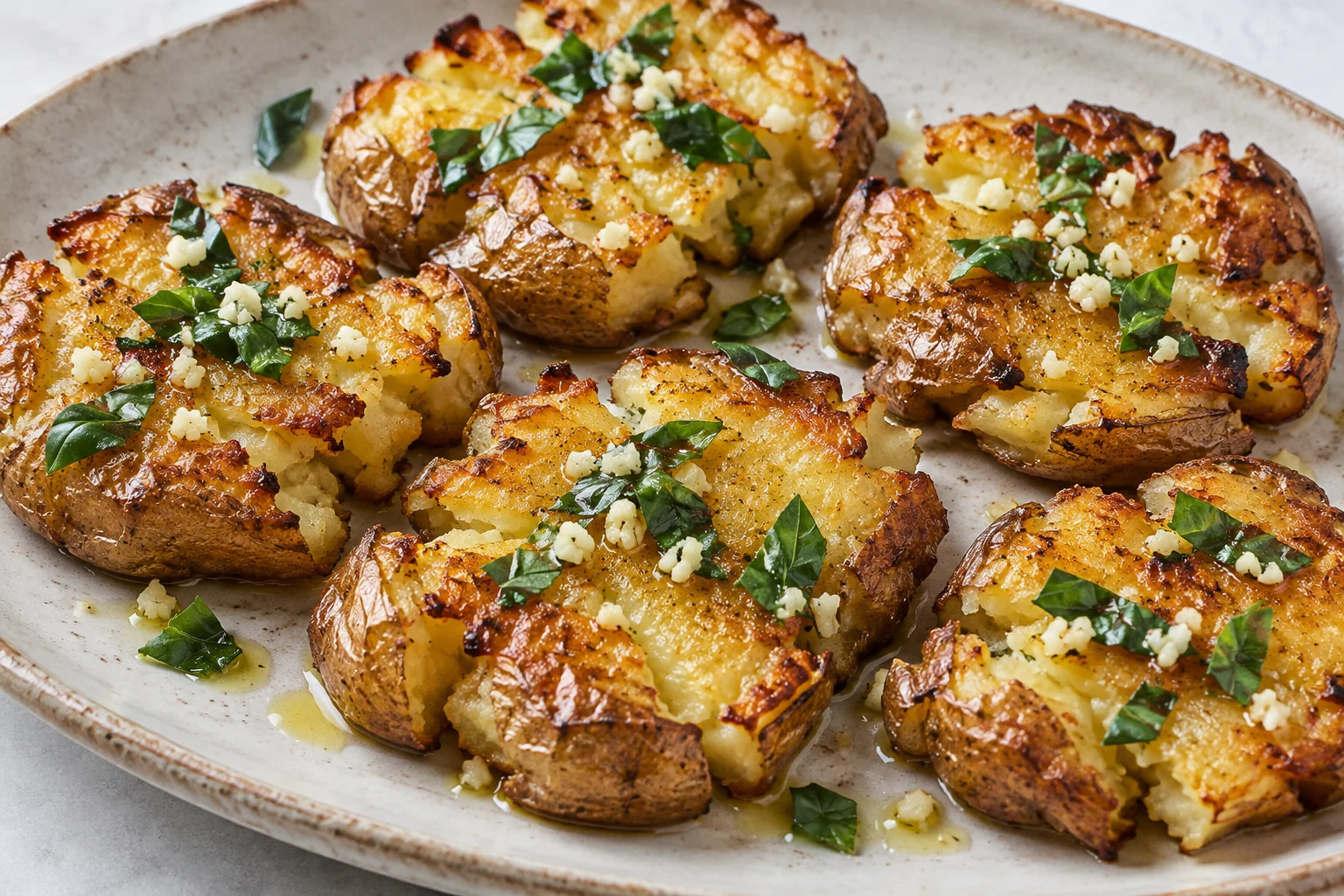
Smashed potatoes gain their texture from two different cooking stages. Boiling makes the centers tender enough to flatten, then roasting dries and browns the exposed ridges. Fresh basil and garlic go on afterward so their flavor stays distinct. This recipe uses twelve similar small skin-on potatoes and serves two per person. The loose crispy fragments belong with the portions rather than being discarded; they are part of the measured batch.
Crisp smashed potatoes with basil makes 6 servings, with 1 hr 45 min estimated total time. View the standalone recipe page.
Choose potatoes that finish together
Start with twelve small potatoes totaling eight hundred grams after removing any unsuitable bits. Similar size matters more than perfect roundness. Leave their edible skins on, scrub well and remove any green or damaged areas; replace potatoes as needed to reach the specified usable weight. The nutrition profile represents raw flesh and skin together. A few much larger potatoes would take longer to soften and make portioning less even, so do not rely on the same clock for a mixture of tiny and large examples.
Cook until the center yields
Begin in plain cold water, bring it to a boil and then maintain a simmer. Test the center of a larger potato with a knife. It should pass through easily, without a hard core that resists flattening. Drain carefully and leave the potatoes to steam-dry for ten minutes. That pause is functional: surface water delays browning in the oven. Handle the potatoes gently while draining so their skins remain useful wrappers around the soft flesh. They do not need to become mashed potatoes in the saucepan.
Flatten without losing the whole shape
Brush the tray with the first measured oil portion and give each potato room to spread. Press with a broad flat spatula until it is about one centimeter thick. Slow pressure leaves a rough connected disc, while a sudden strike scatters pieces across the tray. Keep detached fragments near their original potato. Brush the tops with the larger oil portion and season evenly. The recipe counts all the oil used on the tray and potatoes, so avoid adding unmeasured splashes simply because one corner of the pan looks dry.
Roast for crisp ridges, not just color
Use the hot oven and a metal tray with open space between the potatoes. Overcrowding traps moisture and leaves pale soft patches where the edges touch. Turn carefully halfway through, supporting the discs with a broad spatula. The final timing depends on thickness and how much water remained after draining. Look for golden ridges and a firm crisp surface, not only a single browned point. If using two trays, rotate their positions so both receive comparable heat. Give the potatoes their five-minute stand before the finishing mixture goes on.
Finish with fresh basil and measured garlic
Combine the last small oil portion with finely grated garlic and torn basil, then distribute all of it over the potatoes. Adding this mixture after roasting keeps the garlic from scorching and avoids baking the leaves for forty minutes. The pale flecks are garlic, not cheese. Divide the potatoes into six portions, including the broken crisp pieces. Serve promptly for the best contrast between edges and centers. Refrigerate leftovers within two hours, use within three to four days and reheat to 165°F / 74°C; the basil will darken and soften.
Common questions
Why did the potatoes fall apart when pressed?
Very tender potatoes can break, especially when pushed abruptly. Gather the pieces into loose flat clusters on the oiled tray and roast them anyway. Next time press more gradually and stop at the stated thickness rather than forcing them paper-thin.
Why are the bottoms sticking?
Let a crust form before turning and use a thin broad spatula to release it. Check that the initial measured oil covered the tray where the potatoes sit. A crowded wet tray also makes clean turning harder; leave visible gaps between portions.
Technique & food-safety references
These primary references support the technique, safety and storage guidance. The recipe and cooking explanations are original Recipe Pinboard content.


