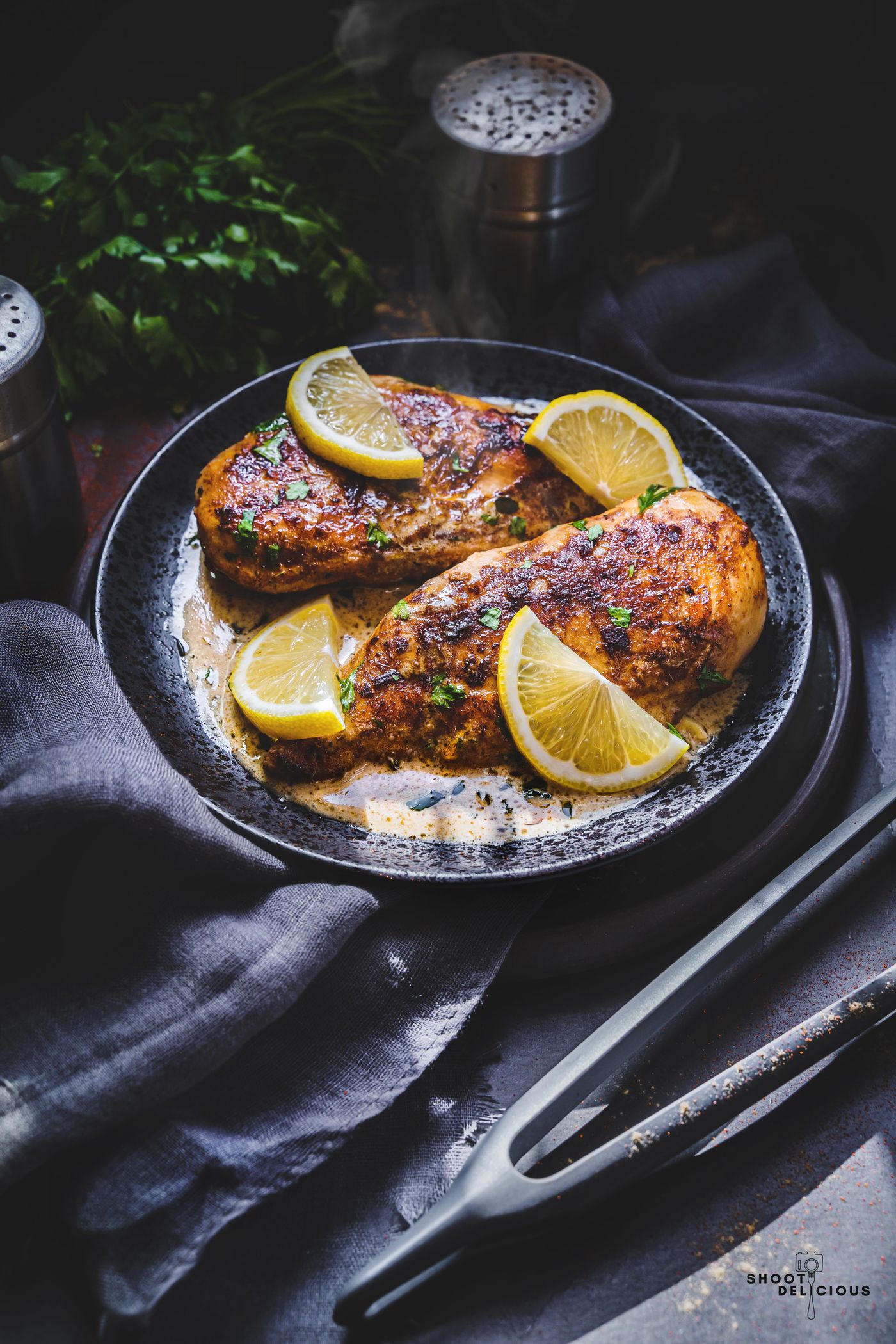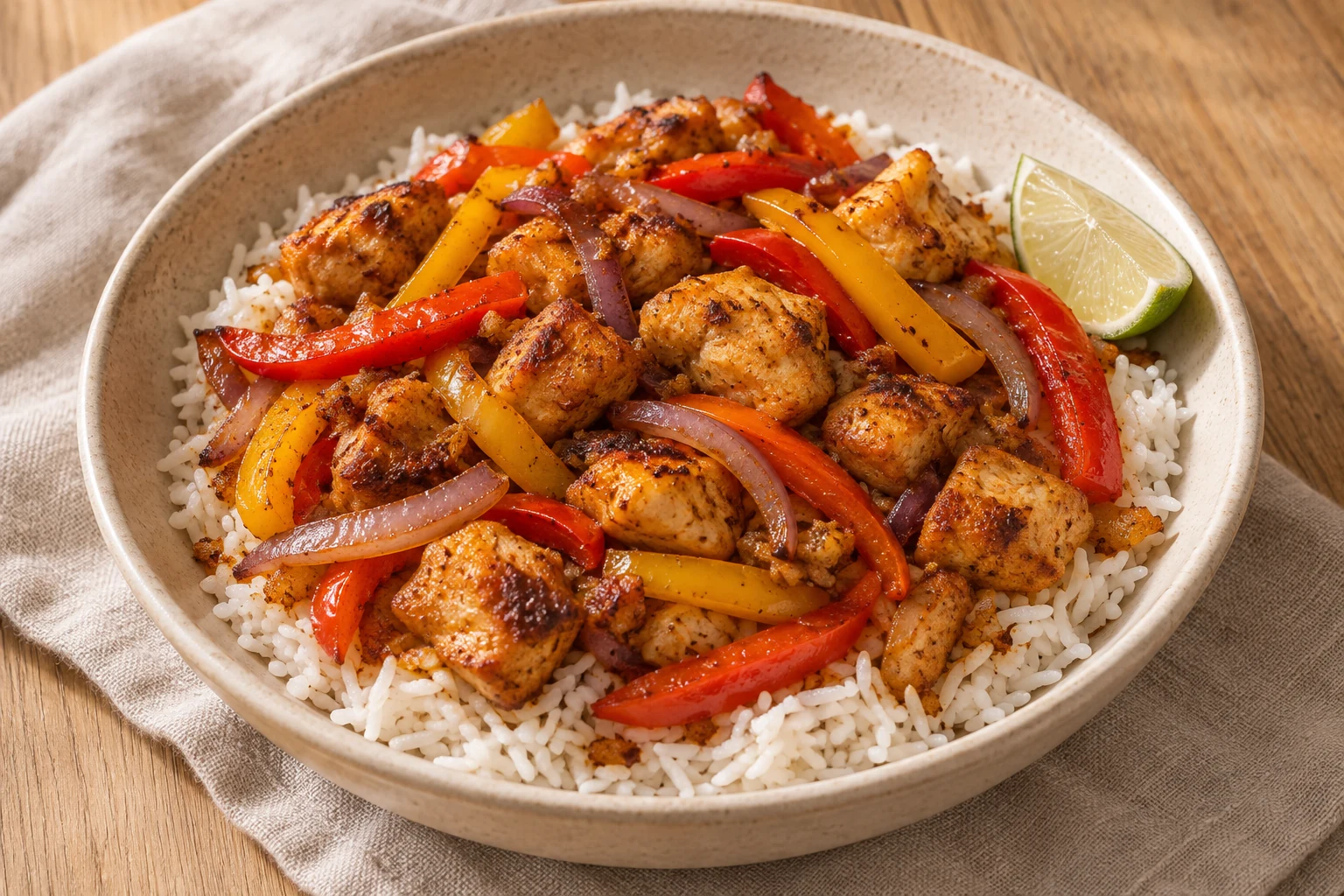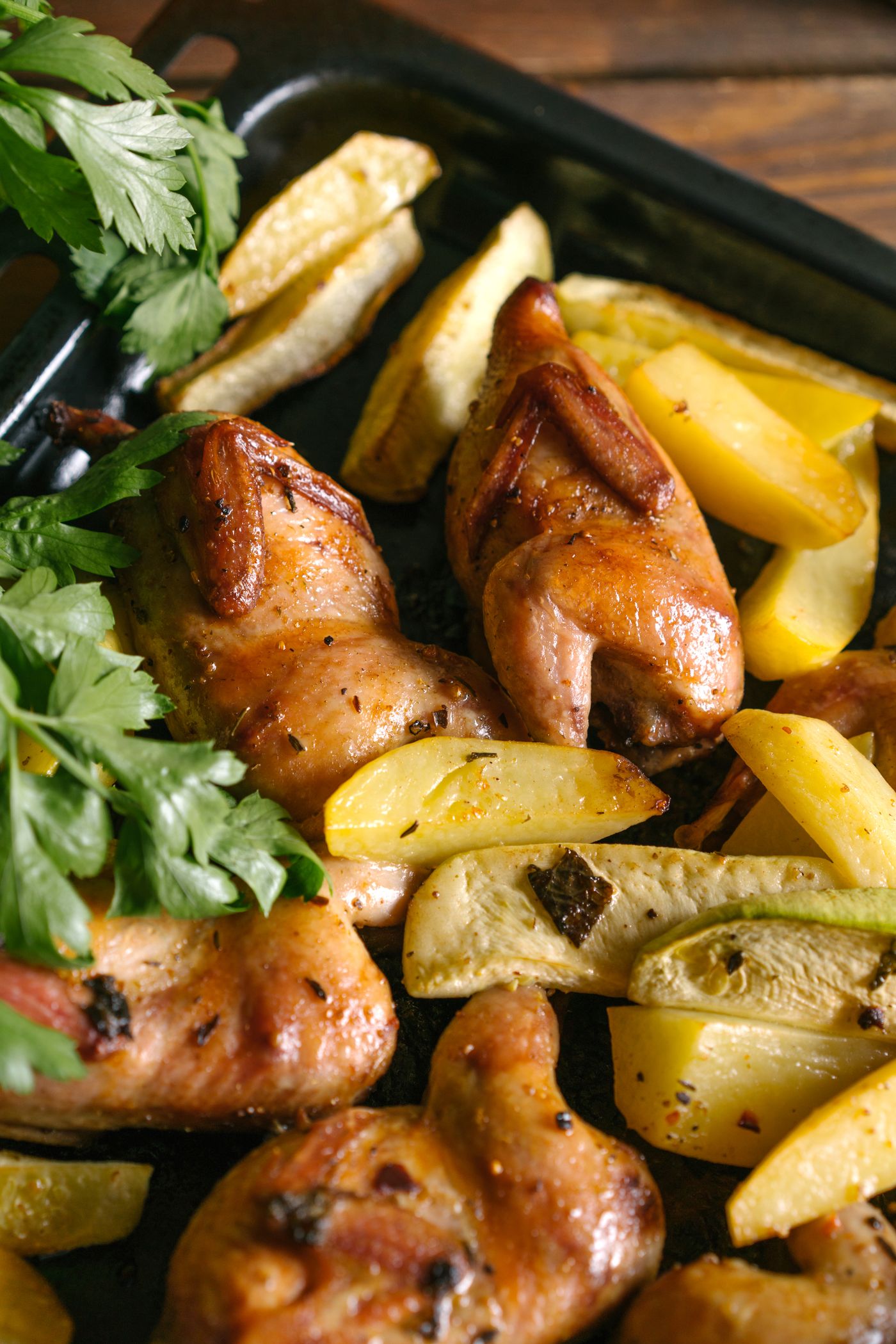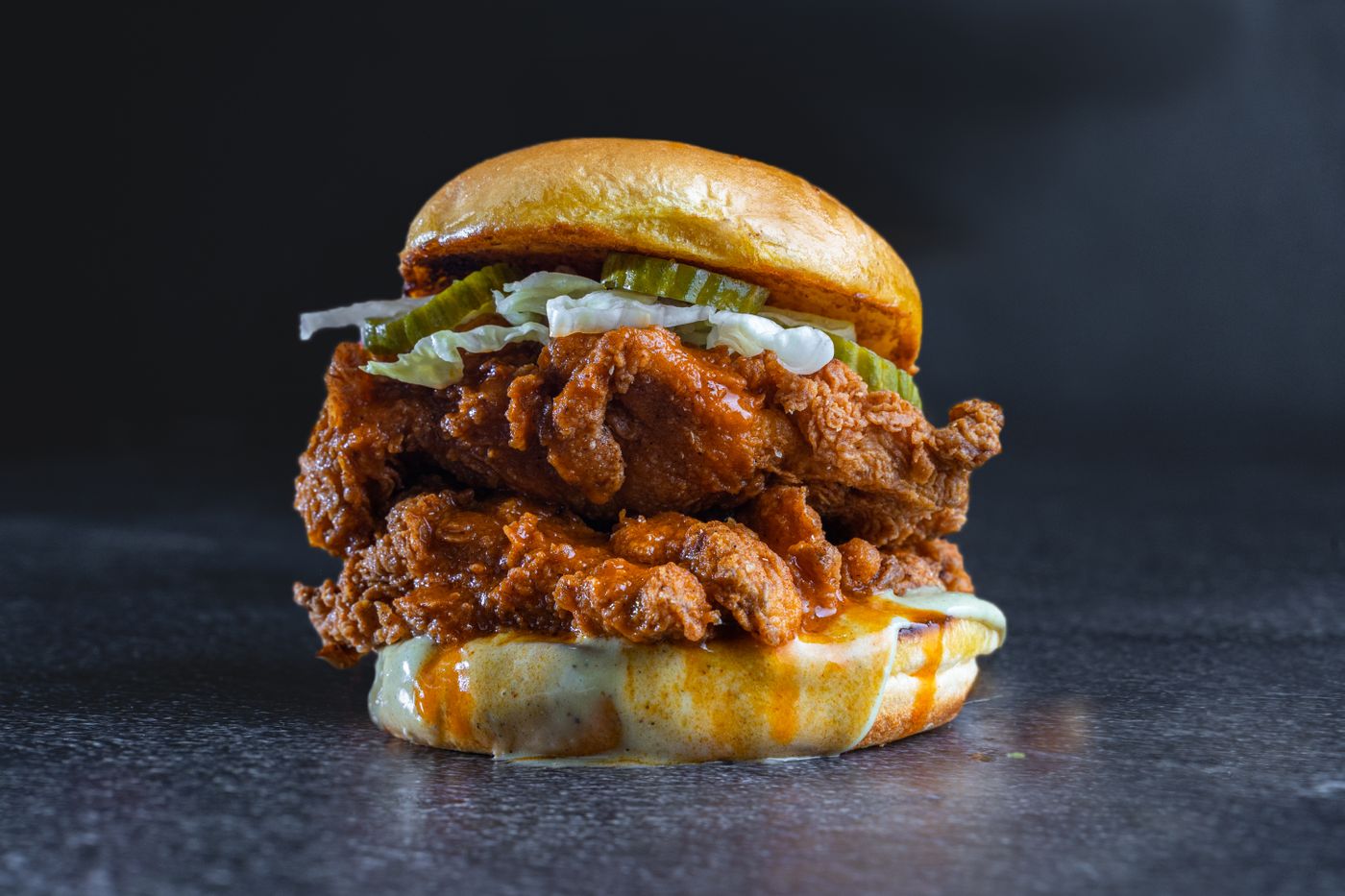
These two chicken burgers use opened-flat thigh meat, a short buttermilk soak and a flour-cornstarch coating. The cheese melts on the bottom bun rather than on chicken held under the broiler. That small assembly choice lets the fried crust remain the focus while the cool lettuce, pickles and sauce provide contrast.
Crispy Chicken Burgers with Pickles and Cheese makes 2 servings, with 1 hr estimated total time. View the standalone recipe page.
Open the thighs and keep the soak refrigerated
Each boneless, skinless thigh weighs about 180 g. Unfold the thicker overlapping sections so the piece lies relatively flat; do not bundle it into a compact mound. Similar thickness makes the cooking time more useful and helps the crust finish at about the same time as the meat beneath it.
Mix one gram of the salt into the buttermilk, coat the chicken and refrigerate for twenty minutes. This is a short preparation pause, not an overnight-marination requirement. Set up clean lettuce, pickles and buns elsewhere while the chicken chills, and keep the mayonnaise-mustard sauce refrigerated until the burgers are ready to assemble.
Build the coating from the measured dry mixture
Combine the flour, cornstarch, paprika, garlic powder and remaining two grams of salt in a wide dish. Break up visible lumps so each piece of chicken meets a consistent mixture. The cornstarch is part of this formula; replacing its entire amount with more flour would change the coating rather than preserve the same recipe.
Lift chicken from the buttermilk and let excess drip back before pressing it into the seasoned flour. Press the dry mixture onto creases and edges without leaving a thick pocket of loose powder. Once the chicken is coated, discard the leftover raw-chicken buttermilk and dredge. Neither belongs in the serving sauce.
Choose the pan by oil depth and working room
The pan should hold a two-centimeter oil depth while remaining less than half full. Its diameter determines the volume required, so the 600 ml listed is a frying supply rather than a consumed ingredient amount. Use a deep, heavy pan and leave clear space around the stove before bringing the oil to about 340°F (170°C).
Lower the chicken into the oil carefully and keep the pieces separated. If both thighs crowd the pan, cook them in separate batches and allow more time. A crowded pan makes turning awkward and can drop the oil temperature sharply. Prepare a rack and clean tongs before frying, rather than reaching over hot oil to find them.
Cook the center, then drain without steaming the crust
The recipe suggests about six minutes per side, but unfolded thigh thickness and pan performance vary. Adjust the burner to keep the oil steady and use a thermometer at the thickest point of each piece. Chicken must reach at least 165°F (74°C). A craggy brown exterior is a texture cue, not a substitute for that reading.
Transfer fully cooked chicken to the rack for three minutes. Avoid piling the pieces or wrapping them while hot, which traps moisture against the coating. Stay attentive to the oil until the heat is off, and let it cool before moving or disposing of it. Never pour water into a pan of hot cooking oil.
Melt cheese on the bun and close the burgers last
Split and broil the bun cut sides for one to two minutes, watching continuously. Put one cheese slice on each bottom bun and return them briefly until the cheese melts. This keeps cheese at the base of the final stack without reheating the entire cooked chicken under a fierce broiler while the buns are still waiting.
Spread the clean mayonnaise-mustard sauce on the top buns, then stack chicken, shredded lettuce and drained pickle slices onto the cheese. Close and serve immediately. The sixty-minute plan includes the refrigerated soak, coating, frying and assembly; separate frying batches may extend it. Store any leftovers promptly with the cold toppings separate from the chicken.
Common questions
Why does the coating slide off?
Excess liquid, loose dry powder and rough handling can all weaken it. Let buttermilk drip away, press the seasoned mixture onto the chicken and avoid repeated turning before the crust begins to set.
Do I count the whole bottle of frying oil as part of each burger?
No. The listed oil establishes a safe working depth; only an unknown part is absorbed. The recipe does not invent a retained-oil amount or publish missing nutrition fields as zero.
Technique & food-safety references
These primary references support the technique, safety and storage guidance. The recipe and cooking explanations are original Recipe Pinboard content.