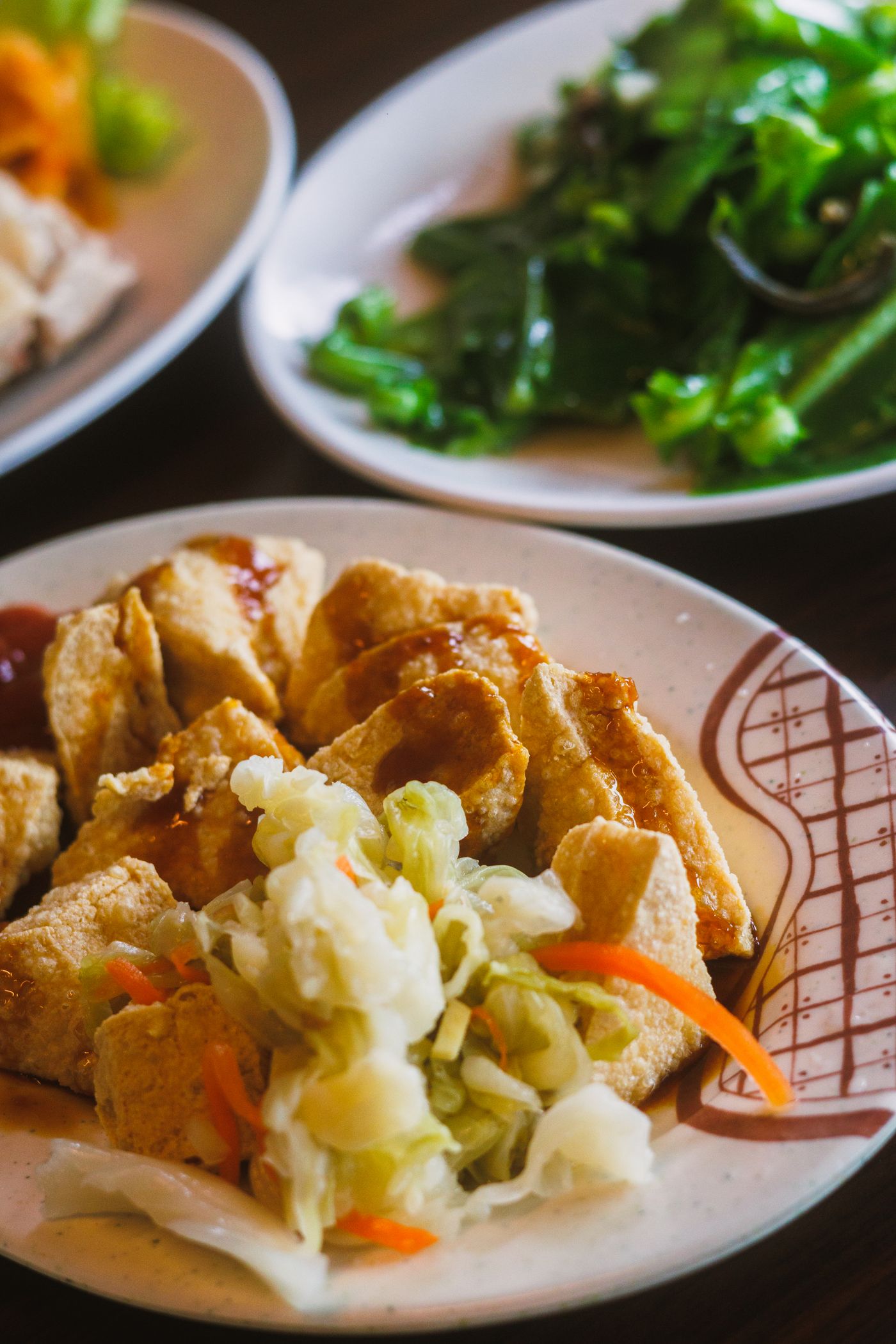
Crisp tofu and juicy cabbage need different treatment. The tofu benefits from drying, a light starch coating and controlled frying, while the slaw needs a short time in its vinegar dressing. This fifty-minute recipe makes four plates without a rice base. Organizing the cold components first lets the final batch of tofu go straight from the draining rack to the table.
Golden Crispy Tofu with Cabbage Slaw makes 4 servings, with 50 min estimated total time. View the standalone recipe page.
Press the tofu without crushing it
Start with 600 g drained extra-firm tofu, rather than a soft or silken block. Wrap it in a clean towel, place a plate over it and add a moderate, stable weight for fifteen minutes. Set everything on a rimmed surface to catch liquid. An unstable tower or excessive pressure can crack the tofu before you cut it.
Use this interval to measure the cornstarch and seasonings and prepare the slaw vegetables. When pressing is finished, cut the tofu into roughly three-centimeter pieces and pat the new cut faces dry. Water left between pieces turns the powdery coating into a paste and can cause more spluttering when the tofu reaches hot oil.
Dress the cabbage while keeping the garnish separate
Whisk rice vinegar, toasted sesame oil, sugar and 2 g of the salt in a large bowl. Give the sugar time to dissolve rather than leaving a gritty layer beneath the vegetables. Toss in the finely shredded cabbage and carrot matchsticks, lifting from the bottom so the dressing reaches the entire mixture.
Fold in half the scallion greens and keep the remainder for the plates. Thin cabbage shreds soften more evenly than a mixture of thick chunks and fine strands. A little liquid collecting in the bowl is expected as the slaw sits. Lift out the vegetables when plating instead of pouring a large puddle under the tofu.
Apply a thin, even starch coating
Mix the 70 g cornstarch with garlic powder, white pepper and the remaining 3 g salt before introducing the tofu. Otherwise individual pieces can pick up pockets of concentrated seasoning. Turn gently to cover the surfaces and shake away loose powder. A thick, floury crust is not the goal, and there is no egg batter in this recipe.
Coat close to frying time rather than leaving the pieces in a wet heap for an extended period. Lay them apart while the oil reaches temperature. If two coated faces stick together, ease them apart before lowering them into the pan. Handling with a light touch protects the corners that are easiest to knock off.
Fry in batches with room to turn
Use a deep frying pan with a 1.5 cm depth of neutral oil, keeping the pan less than half full. The listed 600 ml is cooking oil, not an amount to pour over the finished food. Heat to 350°F/175°C and use suitable utensils to lower the tofu carefully, away from your body.
Cook two uncrowded batches for six to eight minutes each, turning gently to color several sides. Monitor the oil between batches because adding tofu lowers its temperature. Do not compensate with uncontrolled high heat that sends the oil smoking. If your pan cannot hold half the tofu with space, smaller batches will require additional cooking time.
Drain on a rack and assemble immediately
Transfer cooked pieces to a rack rather than stacking them in a bowl. Air can circulate underneath, and the coating is less likely to sit in trapped steam. Keep the first pieces separated while the second batch cooks. Prepare all four plates during this interval so the hot tofu does not wait while you find serving dishes.
Divide the dressed slaw first, then place the tofu on top and scatter over the reserved scallion greens. Serve immediately. The longer the coating touches the moist cabbage, the softer its underside becomes. For any planned leftovers, keeping tofu and slaw separate preserves more texture than refrigerating already assembled plates.
Common questions
Why did my tofu coating become gummy?
Excess surface water, a heavy layer of cornstarch or oil that cooled too much can all contribute. Press and pat dry, shake away loose starch and allow the oil to recover between batches.
Can I use the same instructions for silken tofu?
No. The recipe depends on extra-firm tofu holding three-centimeter pieces through pressing, coating and turning. Silken tofu has a different structure and would need a different handling and cooking method.
Technique & food-safety references
These primary references support the technique, safety and storage guidance. The recipe and cooking explanations are original Recipe Pinboard content.