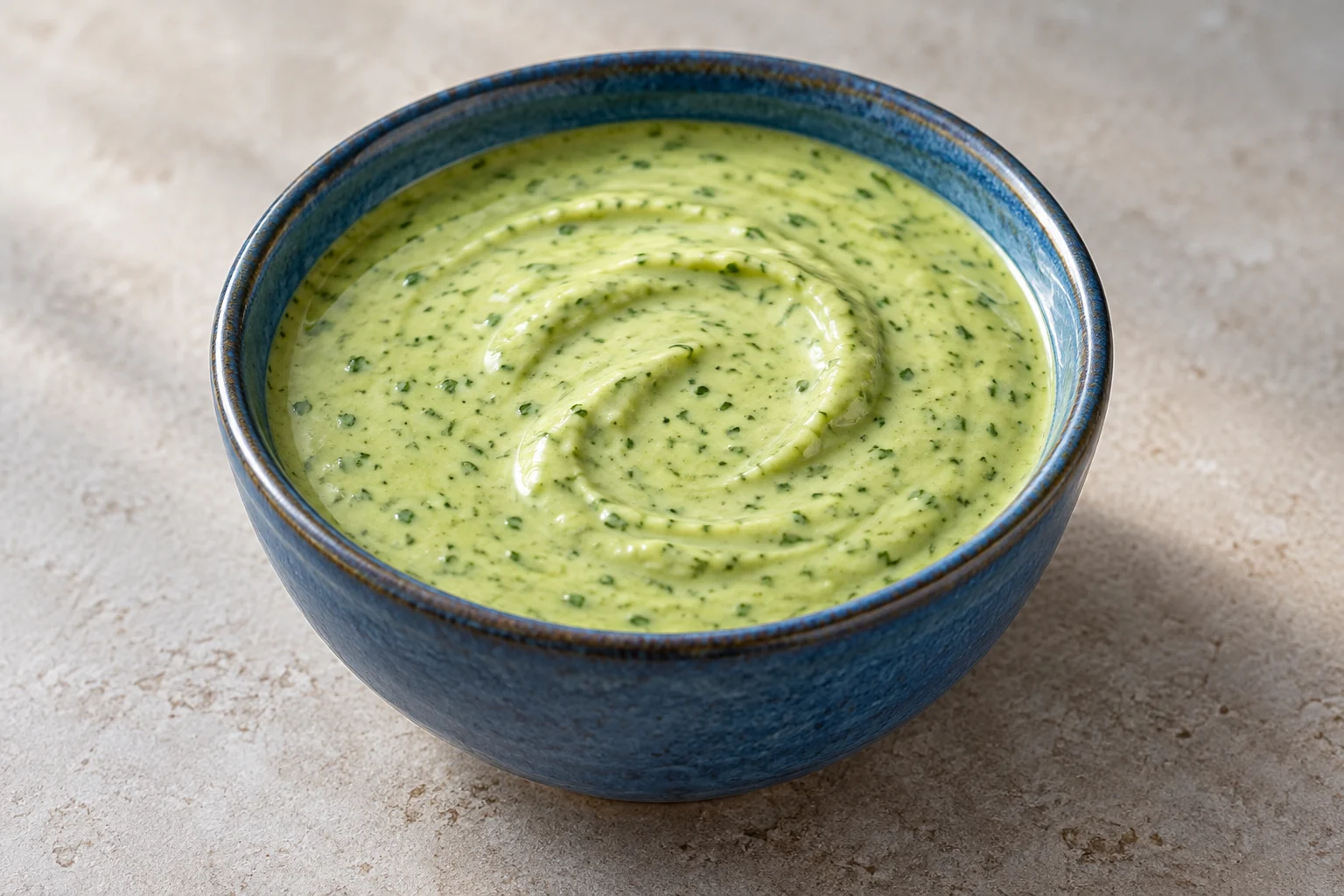
This sauce gets its body from ripe avocado and its lighter texture from cucumber. It is meant to be spoonable, with tiny cilantro flecks, rather than a stiff dip or a thin salad dressing. Blending the watery ingredients first helps a small appliance circulate without requiring extra oil. The full recipe above fixes the quantities and makes eight condiment portions.
Cucumber, avocado & lime sauce makes 8 servings, with 15 min estimated total time. View the standalone recipe page.
Start with flesh that is ready to blend
An avocado that barely dents under gentle pressure can still have firm flesh that leaves small lumps. Choose one that yields slightly without collapsed or spoiled areas. Wash the outside before cutting, then weigh 200 g of edible flesh after removing the pit and skin. This distinction matters because whole-fruit weight does not tell you how much avocado enters the sauce. Cut the flesh into pieces before adding it to the blender. A hard, underripe avocado cannot be corrected simply by running the motor for longer.
Use cucumber as part of the liquid system
The cucumber is included with its peel, so wash it well and trim the ends. Small chopped pieces settle around the blades more easily than long wedges. Blend them first with the water, lime and garlic to establish a moving liquid base. Then add the avocado and cilantro. If the mixture sits above an air pocket, stop the machine and scrape down safely rather than pushing a utensil into running blades. A narrow small blender is usually more effective for this quantity than an oversized processor bowl.
Keep the finished texture intentional
A smooth sauce still has visible herb flecks; those are not evidence that the avocado is under-blended. Stop once no firm pale chunks remain. Repeated long blending can warm the mixture and introduce unnecessary air. The stated 40 g water makes a starting consistency, while the water content of individual cucumbers introduces natural variation. For a thinner serving sauce, a small measured splash of water can be stirred into your portion; water does not add nutrients. Extra oil or yogurt would change the nutritional estimate and dietary screening.
Protect color with cold storage and limited air
Lime supplies acidity and helps the flavor stay bright, but it does not permanently prevent oxidation. Spoon the sauce into a small clean container with limited empty space and cover promptly. Refrigerate at 40°F (4°C) or below and use within two days for the best color. A slightly darker surface is a quality change, not a reliable test of food safety. Do not leave the sauce on the table for hours because it contains citrus. Bring out the amount needed and keep the remaining container cold.
Match the serving to the rest of the meal
Eight portions means one eighth of the complete sauce, not eight large bowls. Divide the finished mixture evenly if using the displayed per-serving nutrition. Its avocado and oil contribute most of the richness, while the cucumber and water make that richness easier to spread. It can accompany cooked vegetables or a grain bowl, but those foods are separate from the card and its diet tags. The generated dish image depicts the color and blended texture; it is not a portion measurement or a claim that the exact recipe was photographed after cooking.
Common questions
Why does the sauce taste bitter?
A large amount of raw garlic, tough cilantro stems or underripe avocado can make the flavor harsh. Use the listed small garlic quantity and tender stems. Avoid scraping deeply browned or spoiled avocado flesh into the sauce, and do not try to mask spoilage with lime.
Can I make it dairy-free without a substitute?
Yes. The listed recipe contains no dairy: avocado provides the creamy texture. Check any packaged additions before using them, since a flavored sauce or seasoning blend can introduce milk ingredients. This ingredient screen does not guarantee freedom from cross-contact.
Technique & food-safety references
These primary references support the technique, safety and storage guidance. The recipe and cooking explanations are original Recipe Pinboard content.