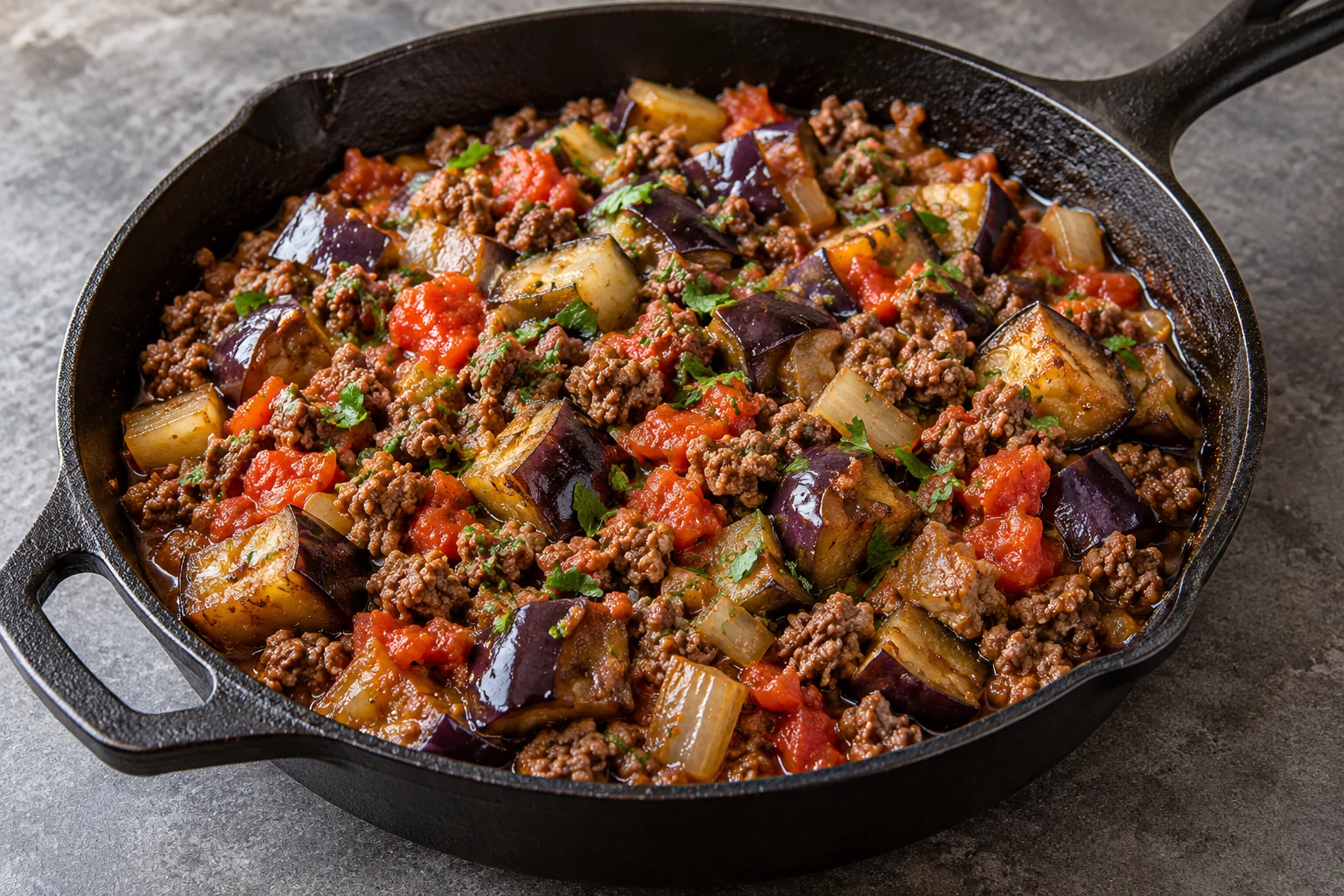
Although the meal finishes in a skillet, the eggplant begins in the oven. Separate roasting lets its cubes become tender and browned while the ground beef cooks with onion and tomato. The recipe makes four portions in about 55 minutes, with 30 minutes of active work. Two large roasting sheets are part of that plan.
Cumin beef & roasted eggplant skillet makes 4 servings, with 55 min estimated total time. View the standalone recipe page.
Give the eggplant room on two trays
Trim and weigh 800 g eggplant, then cut it into 2 cm cubes. Toss with 25 g oil and 1 g salt so the coating is distributed before the cubes reach the pans. Spread in a single layer across two large rimmed sheets. Putting the same quantity on one crowded tray changes how moisture can escape.
Roast at 425°F (220°C) for 25–30 minutes, turning after 15 minutes. Look for browned surfaces and tender interiors. The cubes should not feel spongy and resistant in the middle. Avoid compensating for pale, crowded eggplant by adding unmeasured oil; the first useful check is spacing, followed by tenderness and the stated roasting window.
Soften the onion while the oven handles the eggplant
Use a large, deep skillet for the final volume of beef, tomatoes and roasted vegetables. Heat the remaining 10 g oil over medium heat, then cook the 150 g finely diced onion for six to eight minutes until soft. A deep enough pan makes the later folding easier without scattering sauce over the burner.
Add 600 g raw 93%-lean ground beef and break it into small crumbles. Cook for eight to ten minutes until cooked through, checking several places with a thermometer for 160°F (71°C). Brown color is not a substitute for the temperature check. Keep utensils that touched raw beef from contacting the chopped finishing parsley.
Bloom the spices briefly before adding tomato juice
Stir garlic, cumin, cinnamon, black pepper and the remaining 2 g salt into the cooked beef for one minute. The cumin and smaller cinnamon amount are meant to spread throughout the meat, not collect in dry patches. Measure them in advance so the garlic does not sit on the heat while you locate the spices.
Add the full 400 g can of diced tomatoes, including its juices, and simmer uncovered for eight to ten minutes. The liquid is part of the sauce, so draining the can would change the method. Retain the meat juices as directed. Stir occasionally, especially around the outer edge where sauce can reduce faster.
Combine only after both components are ready
Fold the tender roasted eggplant and any tray juices into the skillet. Simmer everything together for three to four minutes. The short final stage is for bringing the cooked components together; it is not long enough to reliably soften large, still-firm eggplant cubes. Complete the oven stage before relying on the tomato sauce.
Use a broad utensil to lift the mixture rather than pressing the eggplant against the pan. Some pieces will soften into the sauce, but the dish should still have recognizable cubes among the beef. If the trays finish at different speeds, check both before combining, rather than treating one tender cube as proof for the entire batch.
Stir through parsley and portion the whole skillet
Add the 10 g chopped parsley and stir thoroughly enough to distribute beef and vegetables. Weigh and divide all the finished mixture into four equal portions. Ladling only from the surface can leave more meat and sauce at the bottom. Rice, bread and other sides are not included in this recipe's stated portions.
Move saved portions into shallow containers and refrigerate at 40°F (4°C) or colder within two hours, or one hour above 90°F (32°C). Use within three to four days and reheat to 165°F (74°C). Stir during reheating and check the dense mixture in more than one place so a hot edge does not hide a cooler center.
Common questions
Why roast the eggplant instead of adding it raw to the beef?
The recipe gives 800 g eggplant its own space and cooking stage before a brief combined simmer. Adding it raw changes the moisture, pan capacity and timing, and can leave firm cubes in a finished beef sauce.
Should I drain the beef or the canned tomatoes?
This method retains the meat juices and uses the canned tomatoes with their liquid. Those details are part of the measured sauce. Use the specified 93%-lean beef rather than changing the meat and then compensating with an unplanned draining step.
Technique & food-safety references
These primary references support the technique, safety and storage guidance. The recipe and cooking explanations are original Recipe Pinboard content.