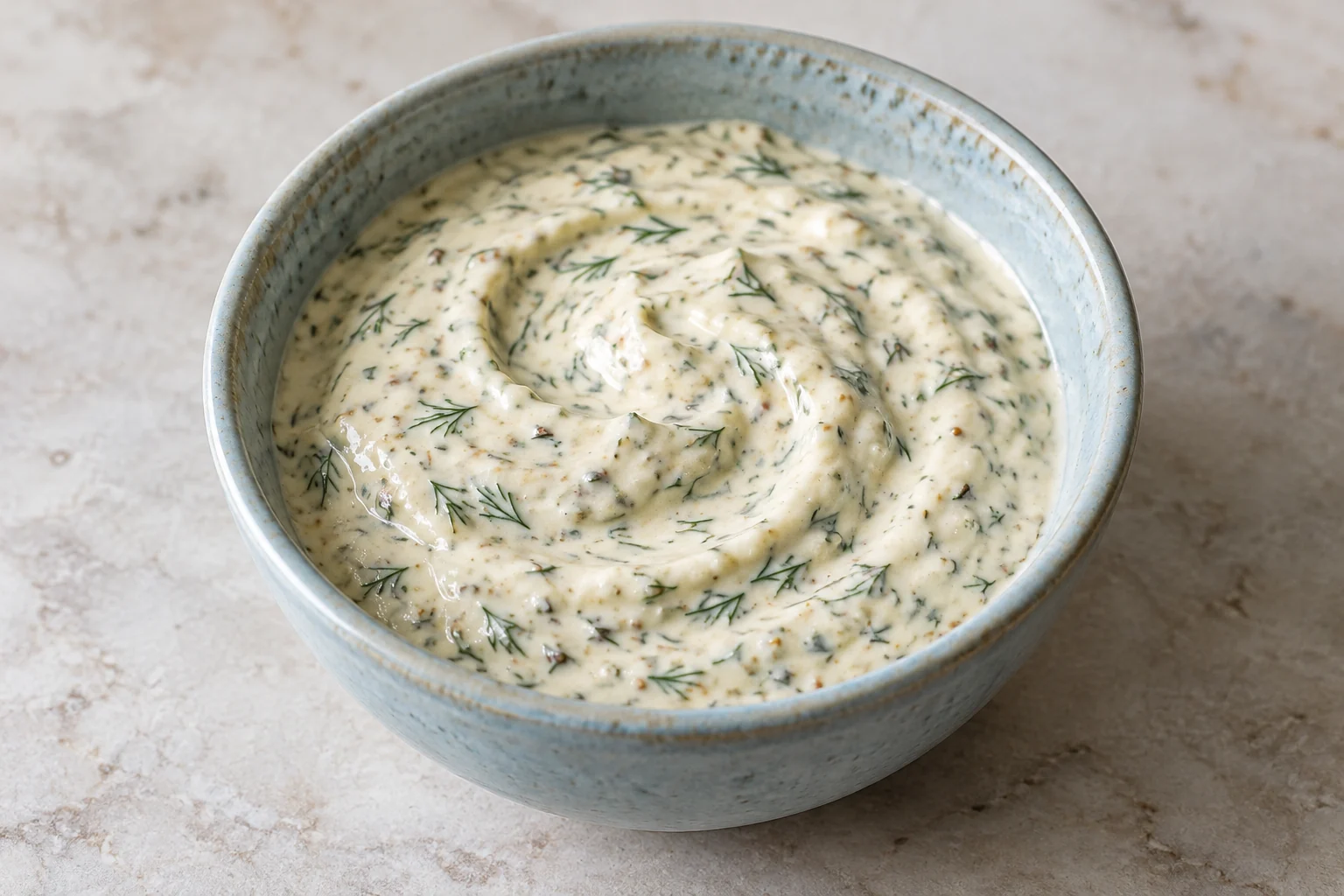
This cold sauce depends on the texture of the yogurt before anything else goes into the bowl. Lemon and prepared mustard bring their own moisture, while chopped dill disperses through the mixture without needing a blender. The goal is a spoonable accompaniment that holds a soft ridge, rather than a thin salad dressing. A short chilled rest lets the garlic settle into the other flavors.
Dill & mustard yogurt sauce makes 8 servings, with 20 min estimated total time. View the standalone recipe page.
Choose the yogurt before mixing
Use plain whole-milk Greek yogurt for the stated recipe and nutrition estimate. Stir the container gently before weighing so a spoonful does not contain only thick curd while another contains mostly separated whey. A naturally loose product will produce a looser sauce; adding more mustard to compensate only adds acidity and salt. Flavored yogurt, sweetened yogurt and thin drinking yogurt are different ingredients. If you choose another brand, keep its label for reference because protein, fat and sugar can vary even among plain products.
Distribute the mustard and garlic
Whisk the yogurt and prepared yellow mustard first. This makes it easier to see that the mustard is fully distributed before green herbs obscure the mixture. Grate the small weighed quantity of garlic finely; a large raw chunk can dominate one bite even though the overall amount is modest. Scrape the grater into the bowl rather than adding another clove to replace what seems missing. The recipe does not call for honey mustard or a seeded mustard, so those substitutions would change sweetness or texture.
Chop dill without making a wet paste
Rinse the dill, dry it well and chop the tender fronds and fine stems with a sharp knife. Water carried into the bowl on wet herbs can visibly thin a small batch of sauce. Repeatedly chopping a damp pile can also press the leaves into a compact green paste. Aim for small separate flecks, then fold them through with the lemon juice and oil. A blender is unnecessary here and makes it harder to preserve the deliberately light, speckled appearance.
Use the cold rest as part of the method
The ten-minute refrigerated rest is included in the twenty-minute estimate. It gives the chopped ingredients time to distribute their flavor, but it is not a thickening treatment for a watery yogurt. Stir after resting and inspect the texture on the back of a spoon. Small beads of whey after longer storage can be stirred back in. If the sauce smells spoiled or shows mold, discard it rather than attempting to rescue it with lemon; acidity in the recipe is not a preservation process.
Portion the sauce separately from the meal
Divide the finished batch into eight equal condiment portions. Those portions describe the sauce only, not the vegetables, fish, bread or meat served beside it. Use a clean spoon when taking sauce from the storage container, and put a small amount on the table instead of repeatedly warming the full batch. Keep the sauce cold and follow the refrigeration timing in the card. Heating this particular mixture can cause the dairy to separate, so spoon it onto hot food after cooking rather than simmering it in the pan.
Common questions
Can I make it thinner for a dressing?
Yes, but that becomes an adjusted recipe. Start with a separately portioned amount and record any added liquid; the published quantities describe the thicker condiment.
Why does the garlic taste stronger later?
Finely grated raw garlic continues to flavor the mixture during storage. Keep the listed small amount for the first batch and taste the rested sauce before deciding on a future adjustment.
Technique & food-safety references
These primary references support the technique, safety and storage guidance. The recipe and cooking explanations are original Recipe Pinboard content.