A double cheeseburger is built from two manageable patties rather than one unusually thick lump of beef. This 35-minute recipe makes two burgers from four 100 g patties, with a cheddar slice on each. Lettuce, tomato and onion are the only listed toppings. Get those ready first so the short interval between cooking the beef, melting the cheese and closing the buns stays simple.
Double Beef Cheeseburgers with Lettuce and Tomato makes 2 servings, with 35 min estimated total time. View the standalone recipe page.
Prepare toppings before handling raw beef
Wash and dry the lettuce, cut four tomato slices and make thin onion rings. Arrange them on a clean plate. Dry leaves matter inside a burger as much as in a salad: water caught in their folds can wet the bun before the burger reaches the table. Keep the topping plate away from raw-beef preparation.
Split the two sesame buns and unwrap the four cheddar slices. Once patties are cooking, searching for cheese or cutting vegetables interrupts the quick final stages. This recipe uses 400 g of 90% lean ground beef; changing to a much fattier mixture would change the amount of fat released onto the griddle.
Shape four patties with similar thickness
Divide the beef into four 100 g balls, then gently flatten each to about 1 cm thick and slightly wider than the buns. Compare their edges and centers. A thick central dome cooks more slowly than a thin rim, even if two patties have the same weight. Aim for similar thickness across the whole surface.
Bring loose edges together without repeatedly kneading the meat. The mixture needs to hold together under a spatula, but it does not need to become a smooth, tightly compacted paste. Leave the salt and pepper for seasoning the outside just before cooking, following the recipe's simple beef-patty method.
Toast the buns before the griddle becomes greasy
Heat a griddle or two frying pans over medium-high heat. Toast the cut sides of the buns for 1–2 minutes, then move them to serving plates. This order gives the bread a dry toasted surface before the beef releases juices and fat onto the cooking surface. Watch the buns closely because they can color faster than expected.
Brush the griddle with 5 g neutral oil. Season both faces of the patties with the measured salt and pepper, then add them with room for a turner between pieces. If the surface cannot fit all four comfortably, work in batches instead of overlapping their edges and tearing them when you flip.
Cook the center before melting the cheese
Allow roughly 3–4 minutes per side, using a broad spatula to turn the patties. Avoid repeatedly pressing them during cooking. The patties were flattened before they entered the pan, so further squeezing is not needed to achieve their intended shape. Adjust the burner if the exterior darkens much faster than the middle heats.
Check every patty reaches 160°F / 71°C with a thermometer inserted from the side into its center. The probe should sit within the thin layer of meat, not poke through to the hot griddle. Once cooked, put a cheddar slice on each and cover for 30–60 seconds to melt. Cheese color and bubbling cannot substitute for the beef temperature check.
Stack the burgers and serve promptly
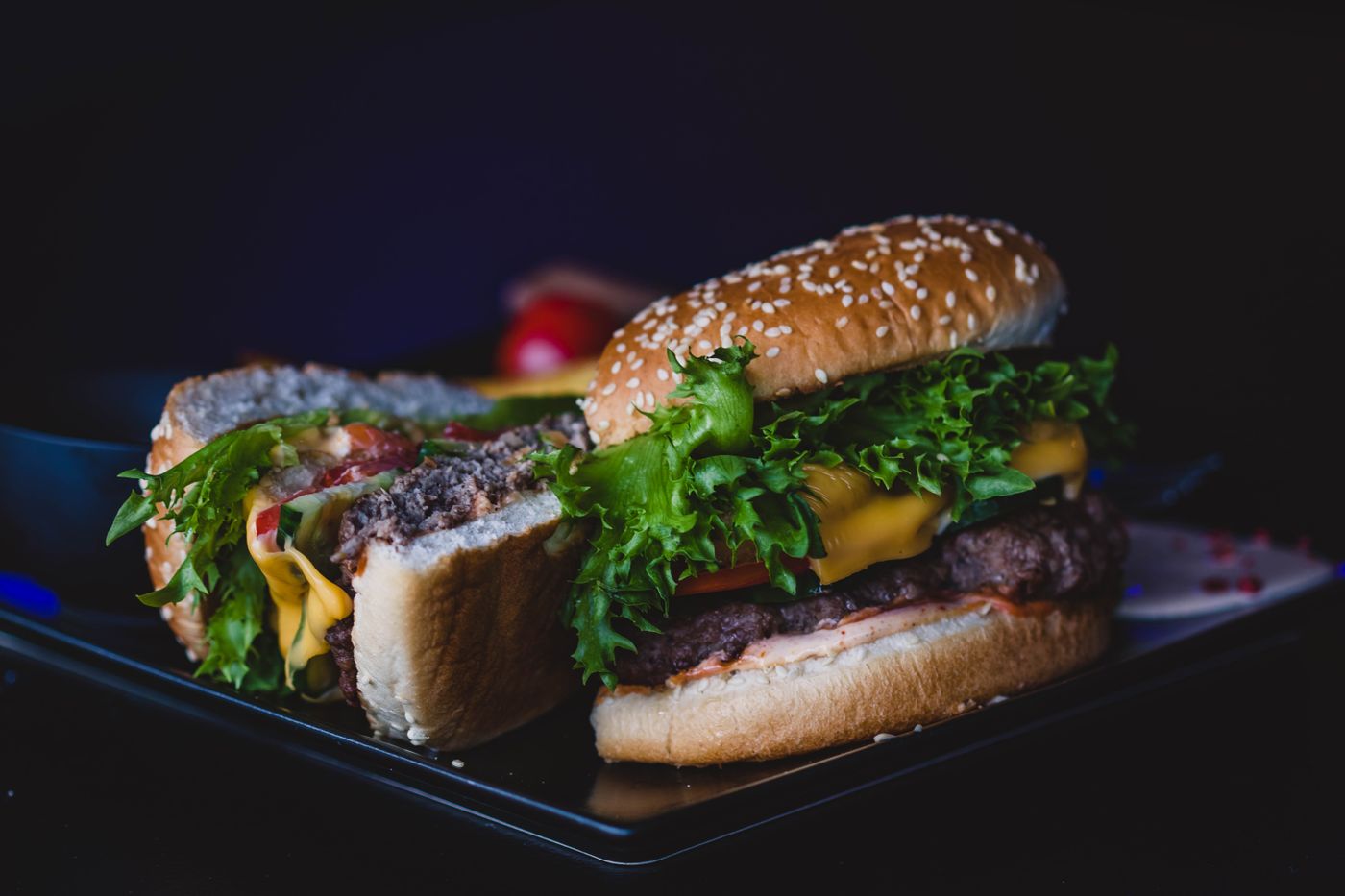
Place a cheesy patty on each bottom bun, then add a second. Layer the prepared lettuce, two tomato slices per burger and onion rings above the beef, then close with the bun tops. Use clean serving utensils rather than returning cooked patties to a dish that previously held raw beef.
The stack is tall, so distribute toppings flat instead of bunching the lettuce into a thick ball. Serve immediately while the buns retain their toast and the cheddar is soft. If cooking in batches, have all plates and toppings ready before the first batch finishes so you can assemble without leaving cooked beef waiting through another round of preparation.
Common questions
Can I use the steak temperature for these burgers?
No. These are ground-beef patties and must reach 160°F / 71°C in the center. The lower whole-steak temperature and rest schedule are not the method for this recipe.
How do I measure a patty only 1 cm thick?
Insert the thermometer horizontally from the side so its sensing area reaches the middle of the meat. Avoid touching the hot cooking surface or reading only an outer edge.
Technique & food-safety references
These primary references support the technique, safety and storage guidance. The recipe and cooking explanations are original Recipe Pinboard content.