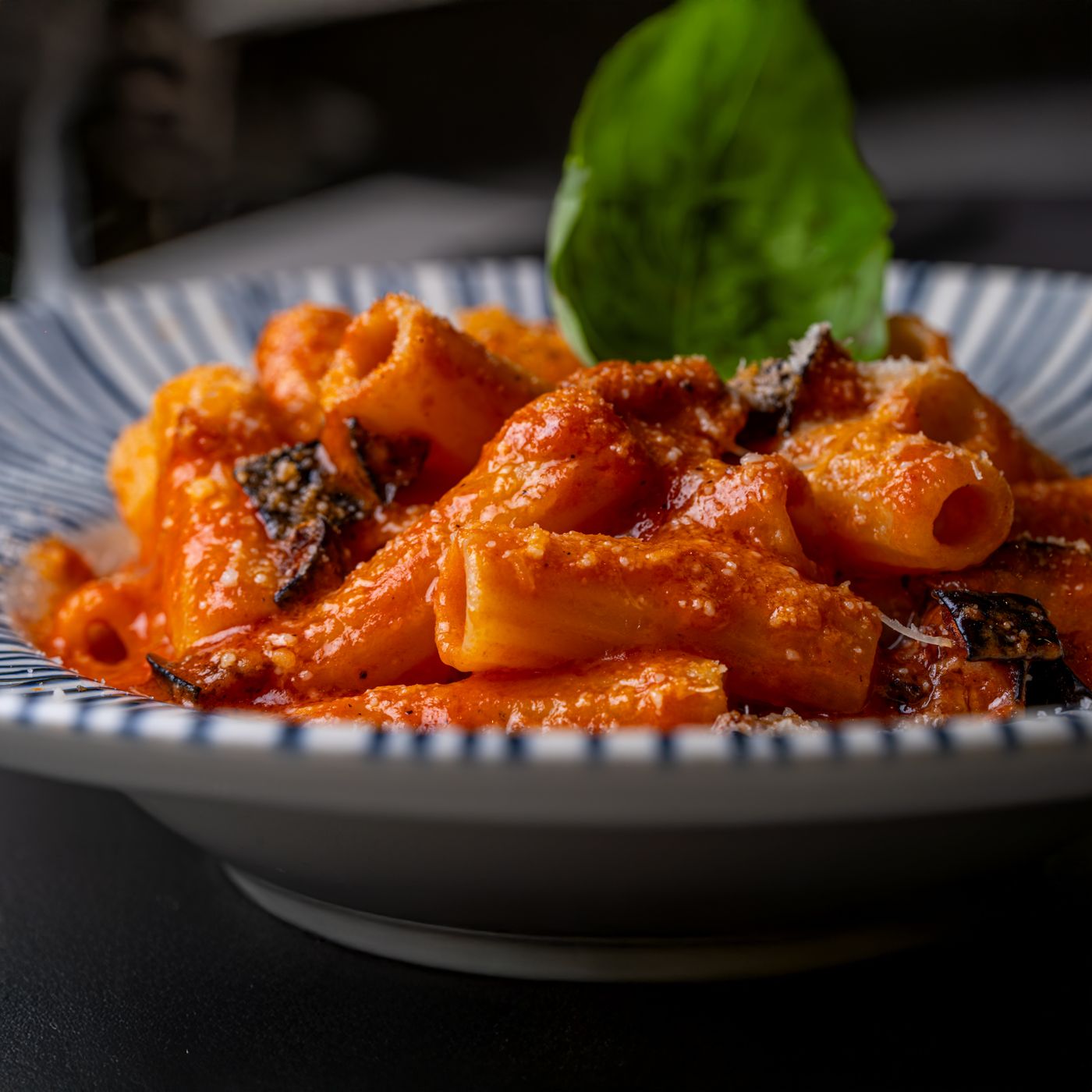
Eggplant can be browned outside yet stubbornly firm within, so this pasta needs more than a glance at its roasting tray. The recipe uses about 500 g eggplant cut into two-centimeter cubes, a separate crushed-tomato sauce and 340 g rigatoni. Keeping those stages coordinated gives tender vegetable pieces that survive the final fold instead of disappearing into a heavy mash.
Roasted eggplant rigatoni makes 4 servings, with 40 min estimated total time. View the standalone recipe page.
Make the cubes similar before adding oil
Cut the large eggplant into roughly two-centimeter cubes, keeping the pieces close in size. A mixture of tiny scraps and large chunks cannot finish together: the small pieces may darken while the biggest retain a firm middle. The card does not call for peeling or a separate salting-and-draining stage.
Toss the cubes with two tablespoons of the olive oil and half the measured salt. The remaining tablespoon of oil and remaining half of the salt belong in the tomato sauce. Distribute the coating carefully rather than adding oil repeatedly because some cut surfaces absorb it quickly.
Give the oven access to the sides
Spread the eggplant across a roasting tray rather than leaving it in a mound. At 425°F, it needs space to brown as moisture escapes. Turn the cubes once during the 25–30-minute roasting period, exposing another face while keeping them intact.
Check a larger cube with a fork near the end. It should be tender through the center as well as browned outside. If it resists firmly, the color alone is not the finish line. Conversely, once tender, avoid repeatedly turning and pressing the cubes, which breaks their softened structure.
Simmer the sauce while the eggplant roasts
Use the remaining tablespoon of oil to warm the three minced garlic cloves briefly, stirring for thirty seconds before adding the tomatoes. Have the can ready so the garlic does not continue frying while you prepare another ingredient. Scorched garlic would affect the whole small sauce batch.
Add the 400 g crushed tomatoes, oregano, remaining salt and pepper, then simmer for fifteen minutes. Stir along the bottom and edges. The sauce should still be loose enough to fold through the rigatoni; pasta cooking water is available later for fine adjustment rather than a reason to cook the tomatoes completely dry.
Coordinate pasta timing with the roasting tray
Cook the rigatoni in salted water according to its package. Start it so it finishes near the sauce and eggplant, taking the packet's actual time into account. Collect 150 ml cooking water before draining; once the colander is empty, the convenient source of that starchy liquid is gone.
Fold the drained pasta and roasted eggplant into the sauce, using broad movements. Add reserved water a little at a time only if the coating is too tight. The full reserve is a maximum available amount, not a compulsory addition. The cubes should remain identifiable among the pasta tubes.
Finish and store without crushing the eggplant
Divide among four servings and add the 40 g Parmesan and 10 g fresh basil. Tear the basil close to serving so it reaches the bowls with its fresh aroma. Scoop from the bottom when portioning to distribute both tomato sauce and eggplant instead of leaving the vegetables behind.
Refrigerate leftovers in shallow covered containers within two hours, or one hour above 90°F, and use within three to four days. Reheat to 165°F with a little water if the pasta has absorbed the sauce. Stir gently during reheating; the already-soft eggplant will break down further if vigorously worked.
Common questions
Why is my roasted eggplant chewy?
Large or uneven cubes can brown before becoming tender inside. Keep the two-centimeter cut, leave space on the tray and check a larger piece with a fork before combining.
Should I salt and drain the eggplant first?
That step is not part of this recipe. Its half teaspoon of salt is split between the roasting cubes and sauce; adding a separate salting stage changes the intended seasoning.
Technique & food-safety references
These primary references support the technique, safety and storage guidance. The recipe and cooking explanations are original Recipe Pinboard content.