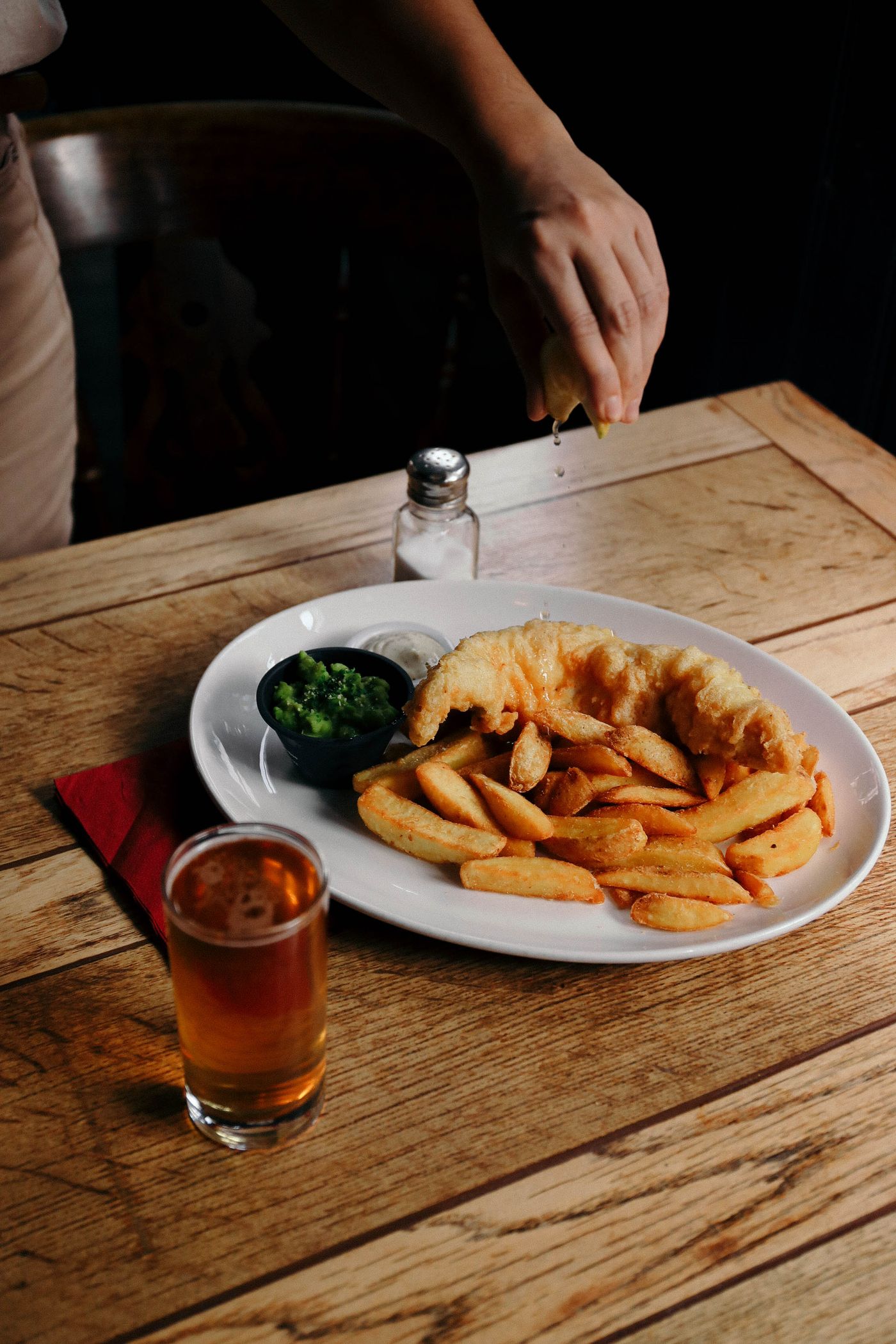
This fish-and-chips dinner uses the oven for thick potato chips and a deep pan or fryer for the fish. The four-serving recipe takes about 70 minutes, with 900 g potatoes and four 150 g white-fish fillets. The oil for deep-frying is cooking equipment as well as an ingredient; the listed 1.5 litres is not a claim about how much the food absorbs. Have a thermometer, rack and suitable vessel ready first.
Crisp Fish with Thick Chips and Peas makes 4 servings, with 1 hr 10 min estimated total time. View the standalone recipe page.
Give the chips their head start
Heat the oven to 425°F / 220°C with a large baking tray inside. Cut the potatoes into 1.5 cm-thick chips, boil for 5 minutes, then drain carefully and steam-dry for 3 minutes. Surface water should evaporate before you toss the potatoes with 30 g oil and 3 g salt.
Spread on the hot tray and roast for 40–45 minutes, turning halfway through. Use oven gloves and work steadily when loading the preheated metal. A single layer with space is easier to brown than a deep pile. The fish preparation begins later, so use the first part of the roast to organize the coating ingredients and serving plates.
Set up the frying pan with safe headroom
When the chips have about 15 minutes remaining, heat the frying oil to 350°F / 175°C. Use a deep, heavy saucepan or suitable fryer with roughly 5 cm oil depth while keeping the vessel less than half full. Choose a vessel that accommodates both requirements; do not fill a small pan higher to use all the listed oil.
Keep the area clear, with a lid nearby, and never add water to hot oil. Dry utensils and fish surfaces help limit splattering. Do not leave the hot oil unattended while taking a distant break or finishing unrelated preparation. The oil temperature needs checking before each batch, not just when you first turn on the burner.
Mix the cold batter close to frying time
Pat the fillets dry and season with 2 g salt and the pepper. Put 30 g flour on a plate. Briefly whisk the remaining 130 g flour with cornstarch, baking powder, 2 g salt and the chilled sparkling water. Keep the mixing short; the aim is a batter that coats the fish, not an extensively beaten dough.
Dust each fillet with flour before dipping it into batter. Shake away thick flour patches so the coating does not conceal pockets of dry powder. Work close to the hot pan with enough clear space to move safely, keeping the raw-fish coating station separate from the rack and utensils used for finished fish.
Fry in two batches and check the flesh
Carefully lower two coated fillets into the oil away from you. Fry for 5–7 minutes until golden and the thickest fish reaches 145°F / 63°C. Lift a piece safely onto a suitable utensil to check the center rather than putting your hand over the oil. Batter color alone cannot establish fish doneness.
Drain cooked fish on a rack, keeping the coating exposed to air instead of sealing it under a lid. Let the oil recover to its target temperature before the second batch. Adding all four fillets at once can drop the temperature and remove safe headroom. Discard remaining batter and dusting flour that contacted raw fish.
Finish peas and bring the components together
Boil the peas for 3–4 minutes, drain and toss with 15 g butter and the final 1 g salt. Coordinate this short job with the final fish batch, but keep attention on the fryer. If cooking alone, measuring the butter and salt beforehand avoids rummaging through cupboards while oil is hot.
Divide fish, chips and peas among four plates and serve immediately. Keep the first fish batch on its rack while finishing the second rather than stacking pieces on top of each other. If the chips are already ready, prioritize safely finishing the fish over rushing the second batch or raising the oil temperature beyond the recipe.
Common questions
Why does my batter look greasy instead of crisp?
Oil that is too cool or overloaded can produce a heavier coating. Check 350°F / 175°C before each batch, fry only two fillets at once and drain on a rack.
Can I save unused batter for another meal?
Discard batter and flour that have been exposed to raw fish. Mix the stated batch near frying time rather than planning to store contaminated coating ingredients.
Technique & food-safety references
These primary references support the technique, safety and storage guidance. The recipe and cooking explanations are original Recipe Pinboard content.