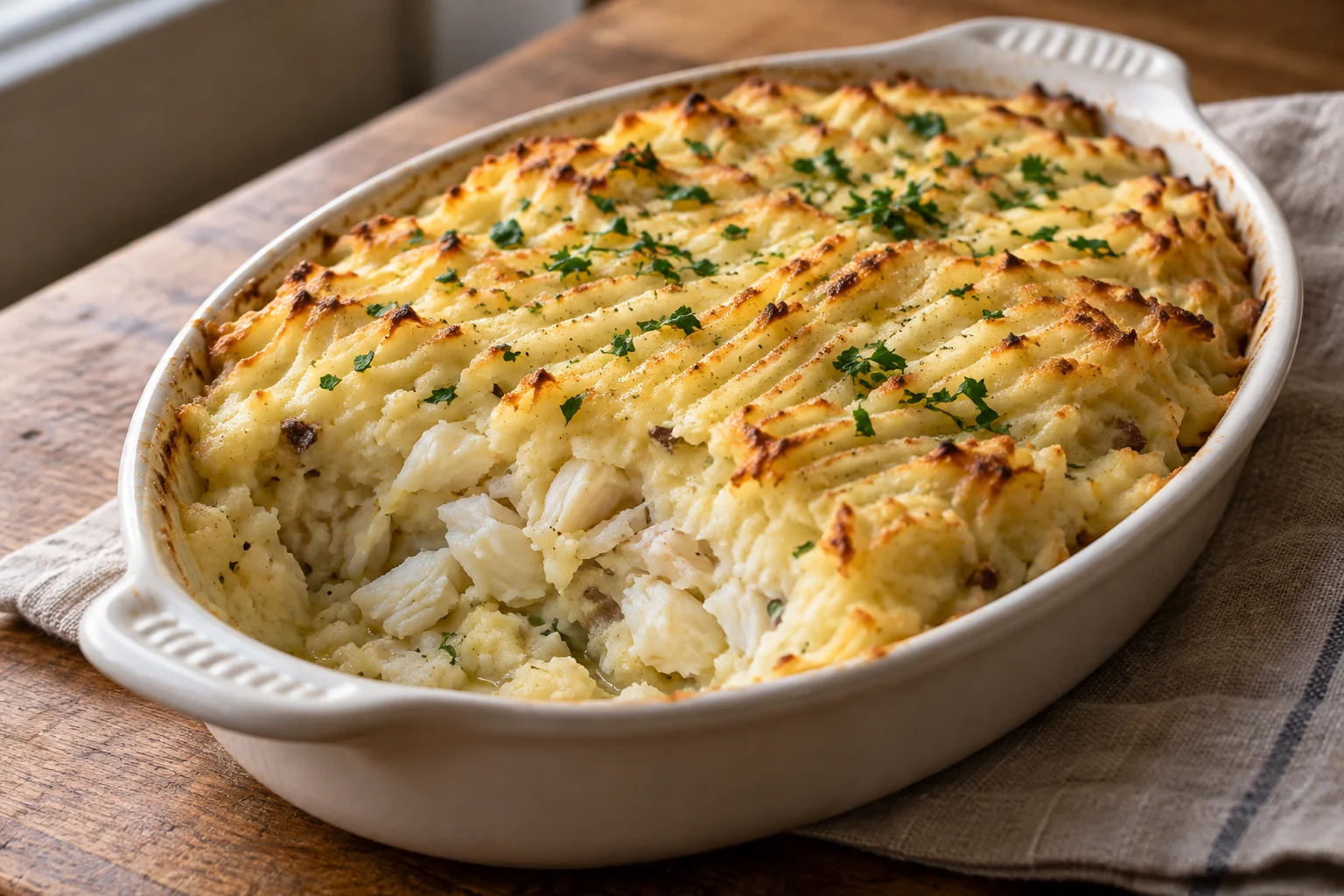
This is a fresh-cod interpretation of brandade, made with unsalted fish rather than dried salt cod. The preparation combines gently poached fish, skin-on potato, garlic and olive oil into a textured bake. It does not need a soaking stage, and substituting salt cod would change both the method and seasoning substantially. The full card makes four portions and includes the final oven bake and short rest. Begin with the potatoes, then poach the fish while they soften.
Fresh cod & potato brandade makes 4 servings, with 1 hr 20 min estimated total time. View the standalone recipe page.
Start with small, evenly cut potato cubes
Scrub the russet potatoes before cutting, because their skins stay in the dish. Small cubes cook more evenly than an assortment of large wedges and tiny fragments. Simmer them until a fork enters without resistance; firm centers will remain lumps after mashing. Drain completely and give the cubes the stated steam-drying interval. Mash them by hand while warm, breaking the skins into small flecks. This is deliberately a rustic mash, so a few visible flecks are appropriate rather than a defect to strain away.
Soften the garlic before adding the fish
The milk has two jobs: it carries the garlic flavor and becomes part of the final mash. Warm it gently with the sliced garlic until the slices soften, watching the pan so milk does not climb the sides or scorch. Choose a small, wide saucepan that holds the four fish pieces comfortably. The milk does not need to submerge them completely because the covered pan also traps steam. Turn each piece once so both sides receive gentle heat, without repeatedly breaking it apart.
Check doneness before flaking
Use a thermometer in the thickest part of the fish and follow the card's 145°F endpoint. Color alone is less useful when a pale fillet is surrounded by milk. Lift the cooked pieces onto a clean plate, flake them and check for overlooked bones. Keep the poaching milk and softened garlic: they are measured ingredients, not waste liquid. Avoid replacing that milk with an unmeasured fresh pour, which would change the consistency and the amount served. Clean utensils after handling the raw cod.
Combine with a spoon rather than a blade
Mash the softened garlic into the warm potato before stirring in the milk and fish. Add the measured oil and seasonings, then work with a wooden spoon until the mixture holds together. Small fish flakes should remain visible. A blender can produce an unnecessarily smooth, sticky result, and this formula does not require that treatment. The finished mixture will be softer than plain mashed potato because it includes all the milk. Spread it evenly instead of piling a thick mound in the center.
Use shallow depth to finish evenly
The specified dish keeps the mixture no deeper than about one and a half inches. Fork ridges give the surface raised points that can color while the interior stays moist. Spread the reserved oil over those ridges without adding cheese or crumbs. Check the center temperature as well as the top; a golden edge does not establish that the middle is hot. After the brief rest, divide the entire bake into four portions and add the reserved parsley. Refrigerate leftovers promptly in a shallow container.
Common questions
Can I use salt cod without changing the recipe?
No. Salt cod requires a separate desalting process and has a different salt level and food-state profile. This card specifically uses fresh unsalted Atlantic cod; its timing and nutrition estimate should not be carried over to dried fish.
Why is my brandade loose before baking?
The recipe retains all the milk, so it begins as a soft mash. Drain the potatoes thoroughly and use the shallow dish. Do not discard poaching milk or add extra flour to force a stiff consistency; those changes alter the formula.
Technique & food-safety references
These primary references support the technique, safety and storage guidance. The recipe and cooking explanations are original Recipe Pinboard content.


